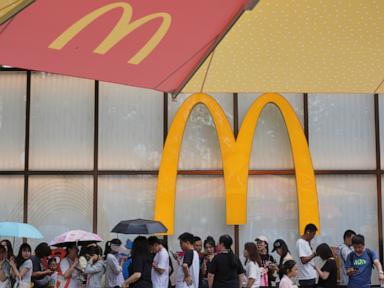
Fast food is changing fast. If you've tried grabbing a quick bite recently, you've probably noticed longer wait times, fluctuating prices, and a heavier reliance on mobile apps. McDonald's is feeling the squeeze. To fix traffic drops and fend off aggressive competitors like Burger King, the Golden Arches just announced a massive multi-year modernization blueprint.
The company is committing billions to a comprehensive strategy called McDonald's NEXT. We are talking about an $8.5 billion injection geared toward transforming how over 46,000 global restaurants operate, cook, and serve customers. But this isn't just about slapping a fresh coat of paint on the dining room walls. It is a fundamental shift toward artificial intelligence, automation, and menu diversification.
The Reality Behind the $8.5 Billion Modernization Plan
Let's look at the financial weight of this announcement. Standard decade-long store remodels usually run franchisees up to $450,000. Under this new initiative, requirements are scaling up to roughly $800,000 per location. That is a staggering capital requirement for independent operators. To make it work, corporate headquarters is stepping in with a combination of direct capital support and rent relief.
Why spend this much right now? Simply put, traditional value promotions haven't been enough to sustain traffic growth. Consumers are feeling cost-of-living pressures, and fast-food loyalty is fragile. The corporate strategy aims to generate an estimated four-year payback for franchisees after partnering, targeting about $100,000 in annual cash flow benefits per average U.S. restaurant once fully deployed.
Scaling Generative AI and ArchIQ
Artificial intelligence is taking center stage behind the counter. After previous automation trials hit roadblocks—including the termination of an early drive-thru ordering partnership with IBM—McDonald's is doubling down on proprietary tech.
Enter ArchIQ, a generative AI-powered system designed to streamline drive-thrus, kitchen operations, and order accuracy. Order-accuracy scales and tracking tools are already live in roughly 10,000 restaurants globally and are projected to hit 20,000 locations by 2028.
The goal isn't necessarily to cut headcounts. Instead, leadership insists that automation handles repetitive friction points so employees can pivot toward hospitality or specialized food prep tasks. When order screens stop messing up custom modifications, customer frustration drops. That translates directly to faster turnover and higher repeat visits.
Shifting Focus From Beef to Chicken
While the Big Mac remains iconic, growth targets require expanding horizons. McDonald's is aggressively targeting market share gains in the chicken and beverage categories.
The corporate roadmap calls for capturing an additional 1.5 percentage points of market share in both chicken and beverages by 2030, all while defending its dominant beef position. You are going to see more hand-breaded chicken items, grilled options, wraps, and alternative morning formats like egg bites and bowls rolling out to capture health-conscious diners.
Beverages are the other half of this equation. Specialty coffees, cold drinks, and upgraded energy bundles are designed to capture high-margin afternoon foot traffic—a battleground currently dominated by chains like Starbucks and regional drive-thru drink stops.
What This Means for Your Local Drive-Thru
Change won't happen overnight. Upgrading tens of thousands of storefronts takes years of construction, equipment installation, and staff training. However, the operational shift is already underway.
If you run a franchise, the immediate future involves navigating higher upfront remodeling costs balanced by corporate subsidies and long-term efficiency gains. If you are a regular customer, expect sharper order accuracy, faster drive-thru lanes managed by smart software, and a broader menu that goes way beyond standard burgers and fries. The fast-food race is entering a high-tech era, and McDonald's is betting its entire system that software and chicken can secure its dominance for the next decade.


