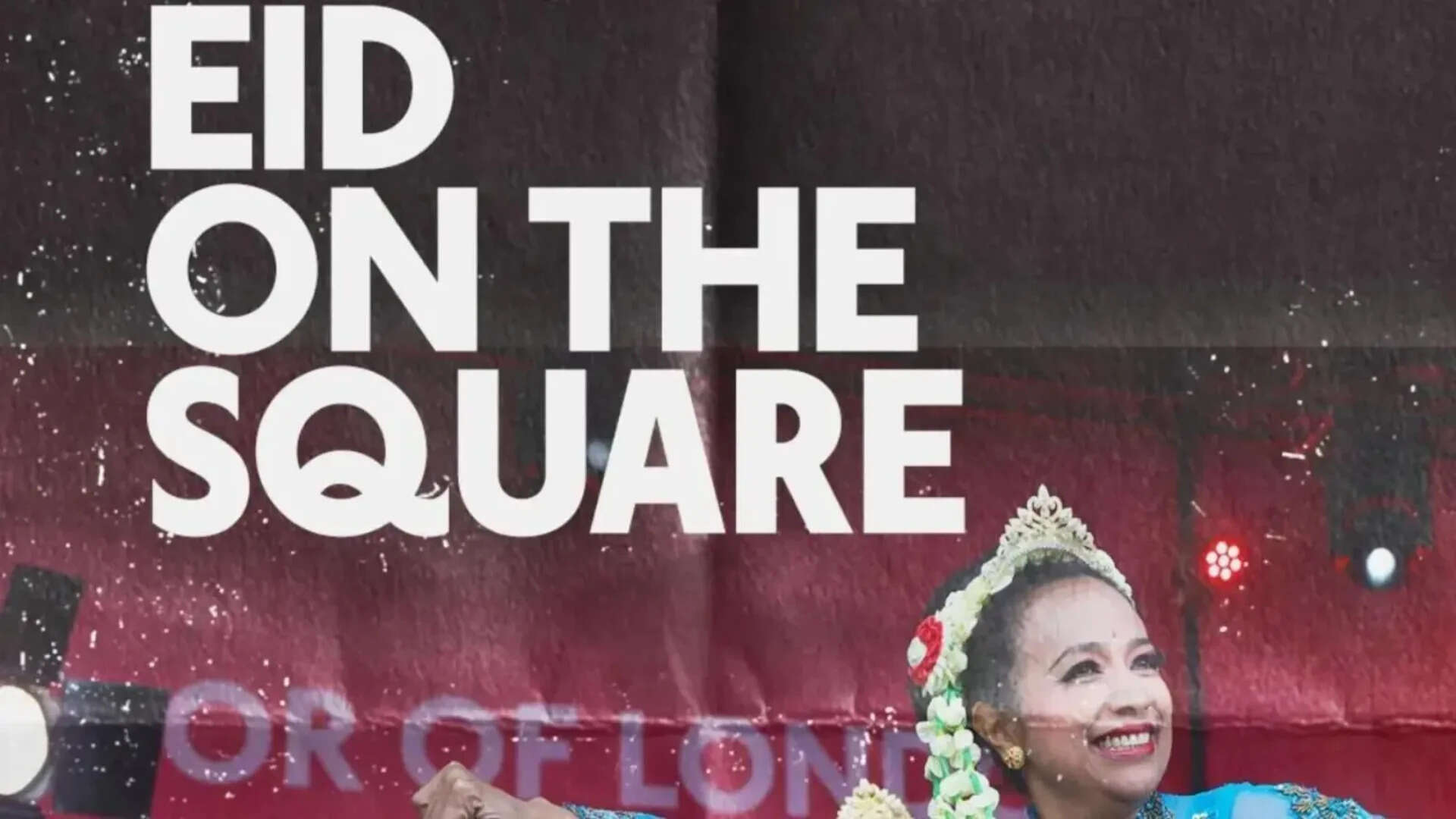
The press releases are out, the photo ops are cleared, and London’s City Hall is patting itself on the back. Today, Trafalgar Square plays host to the 20th anniversary of Eid on the Square. If you read the mainstream event listings or the official mayoral updates, you are treated to a sterile narrative about a free, family-friendly festival uniting the capital through a predictable mix of food stalls, live music, and corporate-sponsored charity booths.
It is the classic bureaucratic approach to culture: flatten a deeply spiritual, globally diverse milestone into a municipal street fair.
I have spent fifteen years managing major urban public events and navigating the politics of cultural funding. I know exactly how these municipal sausage factories operate. When a local government steps in to institutionalize a religious holiday, the result is rarely a true reflection of the community. Instead, you get a sanitized, committee-approved checklist of multiculturalism designed to maximize political goodwill while offering the public a surface-level experience.
Eid on the Square 2026 is a textbook example of this dynamic. By trying to be everything to everyone, it dilutes the actual substance of what it claims to honor.
The Flaw of Corporate Multiculti
The core issue with municipal festivals like the one in Trafalgar Square is the forced consolidation of vastly different global cultures under a single, generic umbrella. The marketing copy boasts about representing Turkish, Middle Eastern, Palestinian, Malaysian, Indonesian, North African, and South Asian communities all at once.
But when you try to jam the distinct culinary, theological, and historical traditions of half the globe into a six-hour window between noon and 6:00 PM, you do not get representation. You get a caricature.
Imagine a scenario where a city council tries to celebrate the entirety of Christian Europe by putting a Spanish tapas stand next to a Polish pierogi booth, hiring an Irish folk band, and calling it a day. It would be laughed off as lazy and reductionist. Yet, when it comes to Islamic culture, Western institutions routinely treat billions of people across continents as a monolith that can be adequately summarized by a Halal German Hot Dog stall and a 20-minute Qawwali performance.
This is not a celebration of depth; it is cultural tourist management. The real nuance of these communities gets stripped away to make the event palatable and digestible for the widest possible audience, stripping the celebration of its authentic texture.
The Performance of Inclusion
Look past the stage-managed lineup and analyze the actual design of the event. We are told that the festival features activities like calligraphy sessions, lantern-making, and fencing demonstrations. These are safe, highly visual activities that look fantastic in a post-event marketing reel for City Hall, but they completely divorce the festival from the actual occasion it is supposed to mark: Eid al-Adha.
Eid al-Adha is fundamentally an occasion of deep spiritual reflection, sacrifice, charity, and community obligation. It is not a secular carnival. When a government body secularizes a religious holiday to ensure it fits the parameters of public-square neutrality, it commits a quiet form of erasure. The festival becomes an exercise in optics.
Furthermore, the reliance on high-profile corporate and charity sponsorships introduces an uncomfortable paradox. When organizations use these platforms, the event shifts from a pure community gathering to a branding exercise. The attendee is no longer a celebrant; they are a target demographic in a highly coordinated brand-activation strategy.
The Logistics of Public Convenience
Then there are the hard logistical realities that the glossy brochures ignore. Trafalgar Square is an iconic location, but it is fundamentally built for tourism, not community cohesion.
- The Transport Bottleneck: Central London is facing severe travel disruption, with tube and train closures heavily impacting the final weekend of May. Telling families to pack into overloaded transit hubs just to stand on concrete stairs is a failure of imagination.
- The Six-Hour Limit: A real celebration does not operate on a strict bureaucratic schedule from 12:00 PM to 6:00 PM. True community gatherings are organic, extending late into the night, built around shared meals and unhurried conversations, not a rushed afternoon controlled by private security and strict venue exit times.
- The Commercial Markup: Free admission is a classic marketing hook, but once inside the barriers, families face heavily marked-up street food prices from vendors paying premium pitch fees to the organizers.
If the goal is truly to support local communities, centralizing the celebration in the most commercialized, expensive square mile of the city is the wrong way to do it.
How to Actually Support Cultural Spaces
If we want to move past the superficiality of mayor-sponsored festivals, the entire approach to cultural funding needs to change. Local governments need to stop trying to be event promoters. They are bad at it.
Instead of spending public funds on massive centralized productions that serve as political PR, municipalities should decentralize their support. Imagine if the budget allocated for a single massive afternoon in Trafalgar Square was instead distributed directly to independent community centers, grassroots arts spaces, and neighborhood-specific initiatives across London's boroughs.
True cultural preservation does not happen under the watchful eye of city press officers or corporate charity sponsors. It happens in the suburbs, in local community halls, and in neighborhood streets where traditions are lived, not staged.
Stop settling for the sterile, committee-approved versions of heritage served up on historic concrete. Skip the central London gridlock and the overpriced food trucks. The real celebrations are happening far away from the mayoral stage, in the spaces built by the community, for the community, entirely on their own terms.