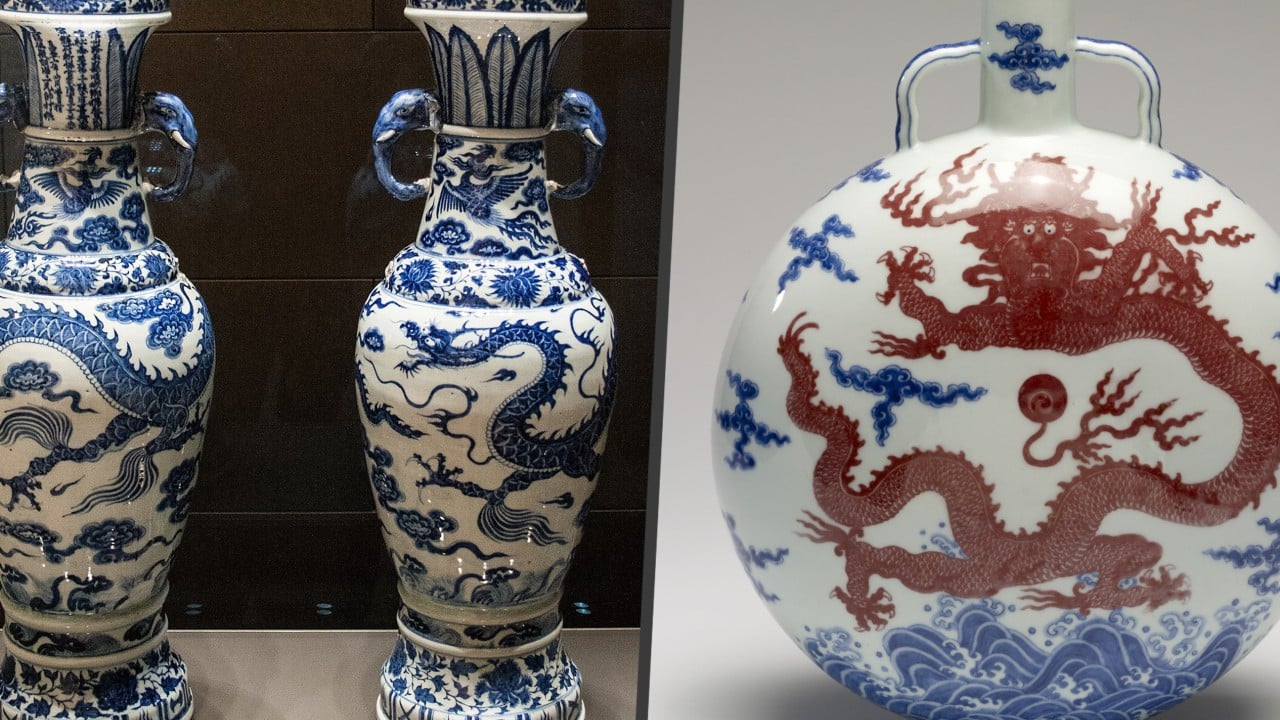
Cultural artifacts operate as lagging economic indicators. In the context of imperial Chinese history, the dragon motif (long) functioned not merely as an aesthetic choice or an abstract symbol of divine right, but as a direct material manifestation of state capacity, fiscal health, and centralized authority. By treating the evolutionary morphology and production mechanics of imperial iconography as data points, we can construct an analytical framework that maps the exact trajectory of dynastic trajectories.
The traditional historical narrative treats the rise and fall of empires as a series of moral or political pivots. A rigorous, data-driven approach instead views these fluctuations through production economics, material supply chains, and resource allocation. The structural shifts in dragon iconography from the Neolithic era through the Qing Dynasty demonstrate that artistic complexity is directly bound to the state's extraction efficiency and fiscal solvency.
The Production Function of Imperial Iconography
To understand how an artistic motif correlates with geopolitical stability, the phenomenon must be viewed through a standardized production function. The physical execution of an imperial dragon motif relies on three primary inputs:
- Fiscal Capital: The state's capacity to subsidize non-productive elite labor, maintain state-monopolized kilns (such as the imperial workshops at Jingdezhen), and procure premium, often imported, raw materials.
- Technological Infrastructure: The mastery of pyrotechnics, chemical metallurgy, kiln aerodynamics, and material sciences required to achieve specific physical outputs.
- Logistical Security: Safe, state-protected trade routes capable of transporting fragile finished goods from regional production centers to the political capital, as well as securing the inbound flow of critical components like cobalt or high-grade kaolin clay.
When these three inputs are fully optimized, the physical manifestation of the dragon reaches its peak structural density. Conversely, when a dynasty suffers from fiscal compression or institutional decay, the visual output of the icon collapses along measurable metrics: geometric complexity, anatomical precision, and material purity.
The Evolution of Structural Complexity: A Historical Timeline
Phase I: Tribal Aggregation and Morphological Unification (5000 BCE – 220 CE)
The earliest iterations of the dragon motif, found in Neolithic contexts such as the Yangshao and Hongshan cultures, lack a standardized anatomy. These early representations—often formed from jade loops or shell mosaics—exhibit a snake-like, limb-free morphology. This fluidity reflects a decentralized political landscape characterized by regional chiefdoms and localized tribal totems.
The first major inflection point occurred during the Qin (221–206 BCE) and Han (202 BCE – 220 CE) dynasties. With the centralization of the state under Qin Shi Huang, the dragon underwent its first systematic unification. The state needed a singular, omnipresent visual asset to codify the concept of absolute authority. The dragon transitioned into a composite beast, integrating elements of diverse regional fauna (snake bodies, tiger features, and reptilian scales). This morphological synthesis directly mirrored the political absorption of regional tribes into a singular, unified Han identity.
Phase II: Standardized Manufacturing and Aesthetic Capital (618 CE – 1368 CE)
During the Tang (618–907 CE) and Song (960–1279 CE) dynasties, the dragon motif stabilized into its contemporary beast-like form, complete with distinct limbs, horns, and highly defined scales. This stabilization coincided with the formalization of civil bureaucracy and the expansion of maritime and overland trade routes.
By the Song period, the dragon motif transformed from an ideological tool into a heavily regulated intellectual property asset owned by the state. Emperor Huizhong institutionalized legal monopolies over the icon, imposing severe penal sentences for unauthorized replication. This legal framework established the dragon as the definitive visual anchor of imperial legitimacy, laying the groundwork for strict categorical stratification.
Phase III: The Claws Metric and Monopolistic Regulation (1368 CE – 1912 CE)
The Ming (1368–1444 CE) and Yuan (1271–1368 CE) periods introduced a rigid taxonomy based on visual markers, specifically the number of claws on the dragon’s foot. The five-clawed dragon (long) became the exclusive property of the emperor, while four-clawed versions (mang) were relegated to lower princes and high officials.
[Imperial Monopoly] ---> 5-Clawed Dragon (Long) -> Restricted to Emperor
[Bureaucratic Tier] ---> 4-Clawed Dragon (Mang) -> Granted to Nobility/Officials
[Public Demarcation] --> 3-Clawed Dragon        -> Permitted for Common Commerce
The enforcement of this taxonomy was absolute. The state treated visual encroachment as treason. During the Qing Dynasty, unauthorized production of five-clawed iconography at production sites like Jingdezhen carried a mandatory capital sentence for the artisan and triggered systemic corruption audits of local officials. This structural rigidity transformed the icon into a quantifiable metric of the state's administrative reach.
Comparative Case Study: The Qing Zenith vs. Dynastic Compression
The predictive value of this framework is most clearly demonstrated by comparing the physical outputs of two specific eras within the final imperial dynasty: the reign of the Qianlong Emperor (1735–1796) and the reign of the Guangxu Emperor (1875–1908).
The Qianlong Surplus: High-Density Ornamentation
The Qianlong era represented the fiscal peak of the Qing Dynasty, characterized by massive treasury surpluses, agricultural stability, and expansive territorial borders. The material artifacts from this period, particularly falangcai (enamels painted on porcelain) and blue-and-white wares, display an unprecedented level of structural density.
The dragon iconography of this era is characterized by:
- Extreme Intricacy: Dragons are rendered with highly complex brushwork, featuring razor-thin, uniform scales, distinct muscle definitions, and multi-layered backgrounds consisting of churning waves and cloud scrolls.
- Lavish Material Cost: The use of high-purity, vibrant cobalt blue and costly overglaze enamels reflects a supply chain operating at maximum efficiency with zero budgetary constraints.
- Technological Perfection: The physical vessels show zero warping, pitting, or glaze impurities. The state-run kilns could afford to destroy millions of imperfect test pieces to ensure that only flawless assets reached the court.
The aesthetic preference for the dense, complex, and ornate during the Qianlong reign was fundamentally enabled by an economic environment where the marginal cost of elite artisan labor was fully absorbed by a highly efficient revenue collection system.
The Guangxu Compression: Fiscal Depletion and Structural Collapse
In contrast, the late 19th-century reign of the Guangxu Emperor was defined by systemic disruptions: the aftermath of the Taiping Rebellion, severe Western imperialist encroachment, crushing foreign indemnity debts, and a depleted state treasury. The dragon iconography from the Guangxu period serves as a physical record of this macroeconomic collapse.
When analyzing porcelain artifacts from this era, several structural downgrades become immediately apparent:
- Geometric Simplification: The line work depicting the dragon’s body becomes noticeably thicker, less precise, and hurried. The intricate, interlocking scale patterns of the Qianlong era are replaced by loose, generalized cross-hatching or block fills.
- Anatomical Degradation: The posture of the dragon loses its dynamic, sinuous tension. The limbs appear stiff, the claws are often unevenly spaced or poorly defined, and the overall composition lacks depth, frequently appearing as flat, two-dimensional fills.
- Material and Pyrotechnic Deficiencies: The cobalt blues appear dull or unevenly fired, indicating a reliance on inferior, lower-grade domestic colorants rather than premium imports. Physical imperfections, such as firing cracks and uneven glaze applications, are common, confirming that the imperial kilns no longer possessed the financial buffer to enforce strict quality control or discard defective inventory.
The artisans of the Guangxu era were trapped in an environment dictated by financial survival rather than artistic mastery. The state's inability to adequately fund the imperial workshops forced a shift from time-intensive, high-precision craftsmanship to rapid, low-cost production cycles designed simply to meet quotas under severe resource constraints.
Systemic Bottlenecks in Material Representation
The decline in iconographic quality cannot be attributed to a sudden, collective loss of artistic skill among Chinese craftsmen. Instead, it must be analyzed as a systemic response to bottlenecks within the imperial economic structure.
The first bottleneck was the disruption of the material supply chain. High-quality porcelain production requires a stable mix of kaolin clay and porcelain stone, alongside specific mineral colorants. When internal rebellions or foreign occupations cut off access to primary mining regions or blocked major river transport veins, workshops were forced to substitute local, lower-grade materials. This structural substitution directly degraded the physical canvas upon which the imperial motifs were executed.
The second limitation involves the reallocation of human capital. During periods of geopolitical stability, the state could easily maintain thousands of specialized artisans within hereditary workshop systems. As military crises escalated, however, state revenue was diverted from cultural production to defense and debt servicing. The resulting wage stagnation or non-payment in the imperial workshops caused a talent drain, as top-tier master artisans either fled to private commercial markets or abandoned the craft entirely, leaving production lines in the hands of less skilled, low-cost laborers.
Strategic Framework: Artifact Analysis as a Predictive Model
The structural transformation of the dragon motif provides a highly reliable methodology for assessing the underlying strength of a centralized political entity. By analyzing the physical properties of a regime's primary visual output, analysts can diagnose institutional health far more accurately than by relying solely on official court records, which are frequently distorted by political bias.
+-------------------------------------------------------------+
|               ARTIFACT MORPHOLOGY ANALYSIS                  |
+-------------------------------------------------------------+
                               |
            +------------------+------------------+
            |                                     |
            v                                     v
   [High Structural Density]             [Low Structural Density]
            |                                     |
            v                                     v
  - Ornate, precise geometry            - Coarse, simplified lines
  - Premium, imported materials         - Low-grade domestic substitutes
  - Flawless pyrotechnic execution      - Frequent material defects
            |                                     |
            v                                     v
+-----------------------------+       +-----------------------------+
| DIAGNOSIS: Fiscal Surplus   |       | DIAGNOSIS: Revenue Crisis   |
| & Secure Supply Chains      |       | & Institutional Decay       |
+-----------------------------+       +-----------------------------+
When evaluating the long-term stability of an institutional model, the primary indicator is never the explicit message of its propaganda, but rather the material integrity of the medium through which that propaganda is delivered. A state operating at peak capacity leaves a record of its efficiency in the flawless execution of its highest cultural symbols. When that same state enters a phase of terminal decline, its fiscal and structural decay is inevitably carved into the very artifacts meant to project its immortality.