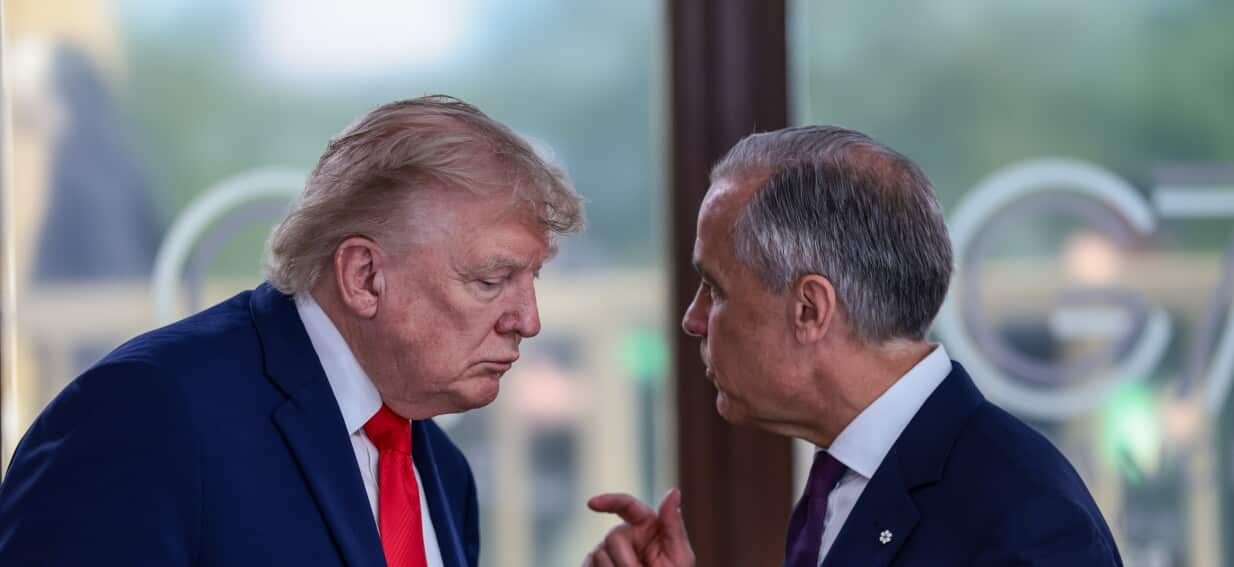
You are at war when you get attacked. That is how Prime Minister Mark Carney described the breakdown of trade talks between Ottawa and Washington. For decades, the world's longest undefended border carried a sense of neighborly routine. Trucks crossed daily, families visited, and politicians spoke of an unbreakable alliance. That routine is gone. When negotiations collapsed in Washington, Canada walked away from a proposed agreement that Carney called a bad deal for the country.
President Donald Trump hit Canadian exports with heavy 50 percent tariffs covering billions in goods. Ottawa responded by promising dollar-for-dollar matching tariffs on American products. This high-stakes showdown leaves many wondering if Canada can withstand the economic pressure. The gamble is massive, but bowing down was never a realistic alternative for a government facing demands that threatened national sovereignty.
Why The Trade Talks Fell Apart
The collapse happened fast. Just days prior, officials sounded optimistic about finding a compromise on long-standing disputes involving dairy, alcohol regulations, and manufacturing rules. Optimism faded when the Trump administration introduced late demands regarding Canadian cultural protections, auto sector components, and restrictions on independent trade deals with other nations.
Carney pointed out that the terms asked too much and offered too little. Provincial leaders rallied behind the decision to walk. Ontario Premier Doug Ford supported the rejection, arguing that the proposed terms would have gutted manufacturing and steel plants in his province. Quebec and British Columbia officials similarly condemned the late additions as an encroachment on sovereignty designed to shrink Canadian autonomy.
Washington officials countered that their proposals were fair and represented preferential treatment compared to other global exporters. Yet the gap between what the White House demanded and what Ottawa could accept proved insurmountable.
The Economic Toll On Both Sides
Tariffs of this magnitude do not leave anyone unscathed. Industries up north face immediate disruption, particularly small exporters who rely heavily on American buyers. Federal estimates suggest tens of thousands of jobs are at risk across manufacturing hubs in Ontario, Quebec, and western provinces. Factories that integrated supply chains across the border over decades now face sudden cost barriers that make cross-border production uneconomic.
At the same time, the White House faces its own domestic political pressures. Midterm elections loom large, and voters are sensitive to food and consumer goods inflation. Measures affecting everyday costs can quickly turn public opinion. By escalating trade disputes with a primary economic partner, the administration risks creating localized shortages and pushing prices higher for American consumers.
Can Carney’s Gamble Pay Off?
Standing up to a superpower is risky. Canada sends the vast majority of its exports south, meaning economic pain will be felt acutely at home. Carney’s strategy banks on national unity and public fatigue with constant concessions. If Canadians accept short-term economic hardship to protect long-term independence, the political gamble wins.
Ottawa plans to roll out financial support programs to buffer affected businesses and workers. The federal government intends to sustain these supports for the duration of the conflict. Matching tariffs on American goods will target specific political and industrial pressure points down south.
The old economic relationship is finished. Trade integration is no longer viewed through a purely commercial lens, but as a strategic battleground. Whether this firm stance forces Washington back to a more balanced negotiating table remains uncertain. For now, Canada is digging in its heels and preparing for a prolonged economic standoff.