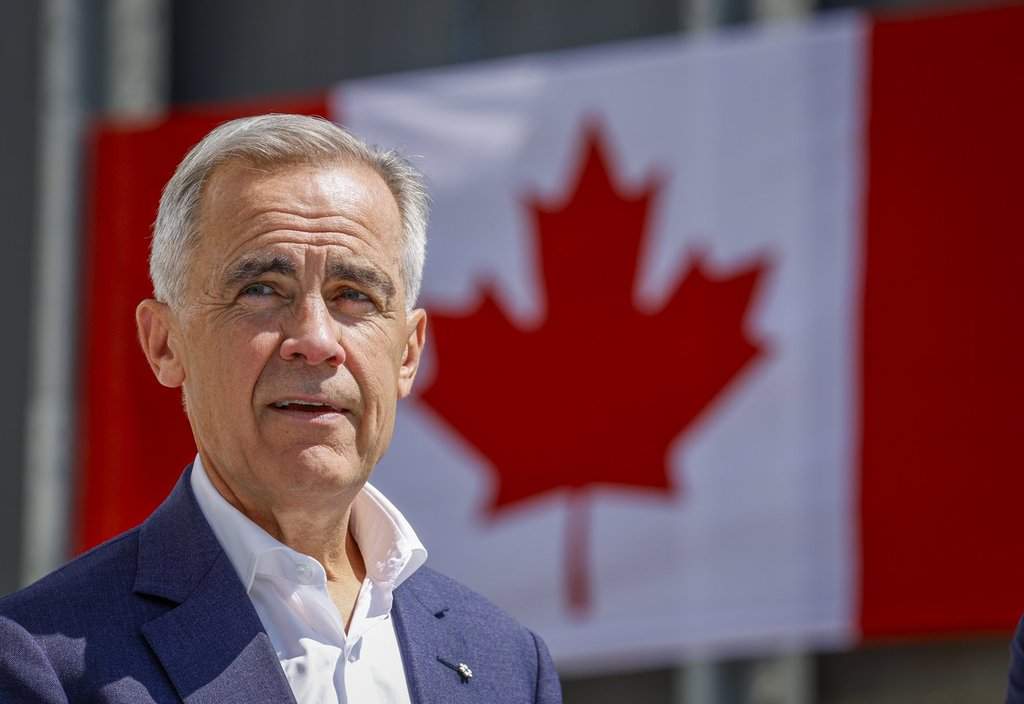
Every financial publication in the country is hyperventilating over Mark Carney stepping up to headline a premier investment summit and showcase Canada's grand economic agenda. The lazy consensus in every newsroom right now is simple. Bring in the former central banker, wave around some institutional credibility, and watch foreign capital flood back into our stagnant markets.
It is a comforting narrative for people who prefer press releases to balance sheets. It is also completely detached from reality. Learn more on a connected topic: this related article.
I have watched institutional allocators evaluate Canadian assets for over a decade. They do not care about keynote speeches at summit conferences. They care about productivity, tax friction, regulatory paralysis, and risk-adjusted returns. Right now, Canada scores failing grades across the board. Pretending that a high-profile investment summit fixes structural rot is like putting a fresh coat of paint on a house with a compromised foundation.
Let us dismantle the core premise of this summit circuit. The political and financial establishment wants you to believe that Canada suffers from a marketing problem. They argue that if global investors just understood our clean energy potential, our critical minerals, and our educated workforce, the money would pour in. Further journalism by Forbes highlights comparable views on this issue.
This diagnosis is dead wrong. Canada does not have a branding problem. We have a capital allocation and productivity crisis of our own making.
Look at the numbers that the conference panels conveniently gloss over. Business investment per worker in Canada has been in a secular decline relative to the United States for years. Why would institutional capital deploy into a jurisdiction burdened by interprovincial trade barriers, crushing regulatory approval timelines for major projects, and a tax code that penalizes risk-taking? You cannot keynote your way out of structural anti-growth policies.
When Carney stands at the podium to pitch Canada as a stable destination for capital, institutional investors look past the rhetoric and look at the regulatory roadblocks. They remember how long it takes to build a pipeline, a mine, or a transmission line. They see venture capital drying up because domestic pensions refuse to take domestic risks, preferring instead to invest in American technology ecosystems where returns actually scale.
The real conversation should not be about how to package Canada for foreign buyers. The conversation should be about why domestic capital is fleeing the country in the first place. When Canadian companies list on foreign exchanges to access deeper liquidity and realistic valuations, you do not have an investment attraction problem. You have an economic retention failure.
To understand why this summit agenda misses the mark entirely, we have to look at how capital actually moves in global markets. Global allocators operate on math, not optimism. When they compare the regulatory drag of developing a natural resource project in Northern Ontario or British Columbia against jurisdictions in other G7 economies, the friction in Canada makes investment non-viable. Every month spent in environmental assessments and legal challenges destroys the present value of the cash flows. No amount of charm from a former central governor changes the discount rate.
Of course, acknowledging this reality requires admitting that our policy choices over the last decade created this hostile environment. That is why the establishment prefers summits. Summits are theater. They allow politicians and financiers to look busy while avoiding the hard work of tax reform, permitting overhaul, and industrial deregulation.
If we want to fix Canadian capital markets, we have to stop treating investment as a public relations campaign. We need to strip away the regulatory barriers that choke private enterprise. We need to stop penalizing resource extraction and energy development—the very sectors where Canada actually holds a generational competitive advantage.
The contrarian truth is uncomfortable. Mark Carney cannot save Canadian capital markets because Mark Carney does not control the tax code, the Supreme Court rulings on project approvals, or the provincial trade barriers that fragment our domestic market into a collection of petty fiefdoms. Until we fix those structural impediments, every high-profile summit is just an expensive exercise in wishful thinking.
Stop waiting for a savior in a tailored suit to restore economic momentum. Capital goes where it is welcome, and right now, Canadian policy tells capital to go just about anywhere else.