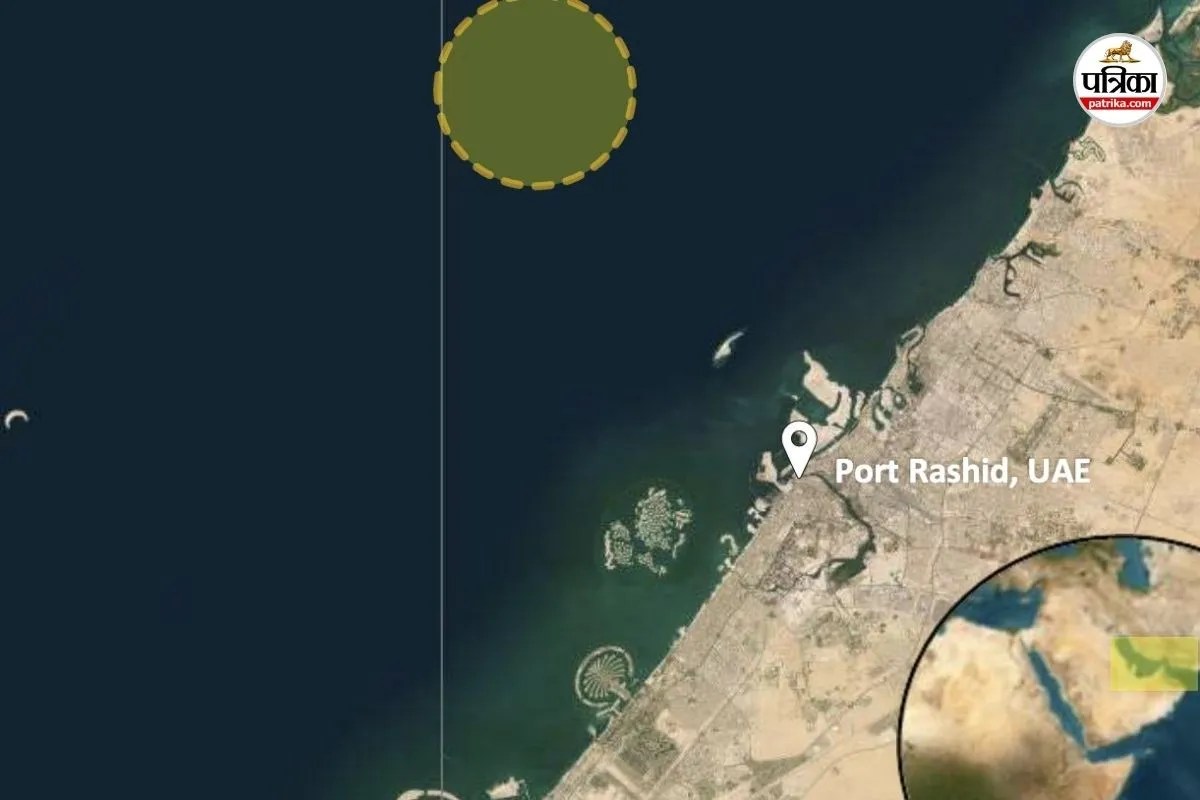
Commercial shipping security within the Arabian Gulf has transitioned from a localized geopolitical friction point to a systemic operational constraint. When the United Kingdom Maritime Trade Operations issued an advisory regarding a vessel listing twenty-four nautical miles northwest of Port Rashid, the event exposed the fragile cost structures governing maritime transit near the Strait of Hormuz. Analyzing this incident requires stripping away sensationalized media framing and examining the hard variables of supply chain vulnerability, insurance mechanisms, and regional choke-point economics.
The Structural Anatomy of Gulf Transit Vulnerability
Geographic concentration dictates maritime risk in the Middle East. The Strait of Hormuz handles roughly a fifth of global petroleum liquids consumption, making every commercial hull passing through the region an implicit variable in regional power projection.
When an unknown projectile impacts a merchant vessel near critical commercial hubs like Dubai, the immediate physical damage is secondary to the systemic shock inflicted on the marine insurance and logistics sectors.
The incident near Port Rashid highlights three primary exposure vectors for commercial fleet operators:
- Hull Integrity and Structural Compromise: Projectile impacts below or near the waterline induce asymmetric flooding. This results in the characteristic listing observed by third-party mariners, threatening total vessel stability and cargo loss.
- Velocity Degradation: Navigational chokepoints force vessels into predictable, narrow transit lanes. These corridors maximize target acquisition windows for asymmetric state and non-state actors, eliminating the tactical advantage of open-ocean dispersion.
- Information Asymmetry: Incidents reported via third-party observers rather than direct master transmissions delay institutional response times, compounding panic across commercial dispatchers.
The Economics of Maritime Risk and Insurance Escalation
Logistical systems absorb security failures through sharp adjustments in financial pricing models. Underwriters do not price risk based on sentimental projections; they utilize deterministic formulas factoring in hull value, cargo sensitivity, and historical attack frequency within specific coordinates.
An attack twenty-four nautical miles off Port Rashid shifts the perimeter of perceived safety closer to mainland economic infrastructure. This geographical creep instantly triggers War Risk Premium adjustments across the entire southern Persian Gulf.
Cargo owners and vessel charterers face an immediate cost function shift:
$$\text{Total Transit Cost} = \text{Base Freight Rate} + \text{War Risk Surcharge} + \text{Fuel Deviation Penalty}$$
When insurance underwriters designate the southern Gulf waters as high-risk zones, voyage premiums escalate from fractions of a percent to multi-percentage points of the total insured value per transit. For a Very Large Crude Carrier carrying millions of barrels of crude, a minor percentage shift translates into hundreds of thousands of dollars in incremental overhead per voyage.
Fleet operators response matrices typically follow a strict tiered escalation. First, they mandate mandatory transponder tracking enhancements and daylight-only transit windows through narrow sectors. Second, if projectile incidents recur near major anchorages, operators begin diverting vessels to safe havens outside the Gulf basin, transferring cargo via costly overland pipelines or smaller feeder vessels.
Operational Sequencing and Market Response Mechanics
The immediate operational aftermath of a strike near a major regional port involves a cascading series of safety protocols and logistical bottlenecks.
Maritime authorities enforce mandatory port state inspections for vessels operating in adjacent sectors, creating artificial queue times at anchorage zones. These queues restrict port throughput capacity, trapping capital assets in stationary holding patterns rather than productive transit.
Simultaneously, charterers recalibrate their risk appetite. Spot freight rates volatilely react to reduced effective tonnage availability. If shipowners perceive transit to UAE anchorages as legally or physically untenable, the supply curve for regional shipping capacity shifts sharply inward, elevating global energy delivery costs.
Navigational safety protocols now require continuous monitoring of real-time advisories from agencies like the UKMTO. Captains must weigh commercial pressure to maintain delivery schedules against the absolute liability of exposing multi-million-dollar assets and crew lives to unmitigated kinetic hazards.
Mitigating these exposures demands a fundamental shift in how fleet operators evaluate regional exposure. Rather than relying on historical safety assumptions tied to territorial waters, operators must implement real-time telemetry tracking, hardening of bridge structures, and dynamic route optimization algorithms that treat littoral zones as active threat environments. The events near Port Rashid signal that commercial maritime operations in the Gulf can no longer decouple themselves from kinetic military friction.