The sound does not arrive as a bang. It arrives as a shove.
First comes the displacement of air, a heavy palm pressed flat against your chest from across the street. Then the windows rattle in their rotting wooden frames, a dry, shivering clatter like teeth in a fever. Finally, the noise catches up: a dull, subterranean thud that vibrates through the soles of your boots before it ever reaches your ears. Meanwhile, you can explore other developments here: The Paper Trail Left Behind.
Another one. Somewhere three blocks east, near the skeleton of the municipal library.
In Washington, D.C., six thousand miles and seven time zones away, the air smells of polished mahogany, stale coffee, and dry-cleaned wool. In the West Wing, aides lean over walnut tables beneath warm, recessed lighting. They trace the contours of eastern Europe with expensive fountain pens. They speak in terms of off-ramps, diplomatic architectures, and bilateral frameworks. They draw elegant, sweeping lines on color-coded maps, carving out buffer zones and sketching hypothetical lines of control. To understand the complete picture, we recommend the recent analysis by TIME.
In the city of Toretsk, no one cares about the architecture. They care about the basement.
To understand what is happening on the front line of Ukraine while the White House pushes frantically for a negotiated peace, you have to abandon the abstraction of geopolitics. You have to step down into the dark.
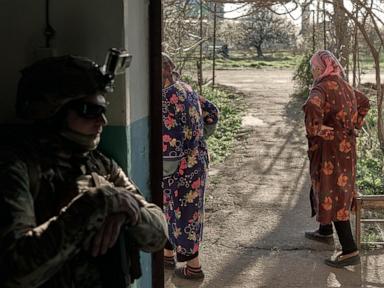
Consider Maria. She is a hypothetical composite of a hundred different women I have watched move through the bombed-out thoroughfares of the Donbas, though her grief is entirely real. Maria is seventy-two. Before the invasion, she taught high school literature. She knew the cadence of Chekhov and the weight of Tolstoy. Now, she knows the difference in pitch between a gliding FAB-1500 aerial bomb and an incoming mortar round.
Maria lives in a fifth-floor apartment that no longer has a fourth floor beneath it. A gaping chasm of jagged reinforced concrete and twisted rebar hangs where her neighbor's kitchen used to be. Yet, Maria stays. Why? Because the human mind is a stubborn instrument that refuses to let go of its own geography. To leave is to become a ghost, floating untethered through overcrowded shelters in Lviv or drafty refugee camps in Poland. To stay is to suffer, but it is your suffering. It is your dust.
"They talk about peace," Maria says, her voice dry as autumn leaves, gesturing vaguely toward a portable radio that crackles with static from a battery she keeps wrapped in a wool sock to preserve the charge. "In America. In Europe. They talk about it like it's a switch you can flip on a wall. Like turning off a light."
She looks down at her hands. They are stained black with soot from the small camp stove she uses to boil water in the hallway of her building.
"They forget," she whispers. "The war isn't in Washington. The war is in the floorboards."
The White House peace push is born of a distinct American anxiety. Time is running out. Electoral calendars tick downward like unexploded ordnance. The cost of sustaining a multi-year artillery duel against a nuclear-armed state has become a domestic political football, kicked back and forth across cable news networks. Officials in the administration speak with a quiet, exhausted urgency. They want a deal. They want a freeze. They want a line drawn in the mud that both sides can agree to hate equally, allowing Washington to pivot its gaze toward other burning horizons.
It is a logical desire. Wars are expensive. Blood is heavy.
Yet, logic is a poor match for momentum. On the ground in eastern Ukraine, the Russian military machine does not operate on the cadence of American presidential cycles. It operates on the brutal mathematics of attrition. It is a slow, grinding grinder that moves forward meters at a time, chewing through infantry and armor with absolute indifference.
When diplomats in Washington suggest a ceasefire along current lines, they are imagining a pause. They picture soldiers freezing in place, putting down their rifles, and walking back to warm barracks.
The reality on the front line is entirely different.
A ceasefire, whispered about in the halls of power, is interpreted by the men holding the trenches as an invitation to annihilation. To stop shooting while the enemy is still leaning forward is to hand them your throat. The non-stop Russian assaults—wave after wave of small infantry groups backed by relentless drone surveillance and devastating glide bombs—do not pause for diplomatic communiqués. They intensify. Every rumor of peace seems to trigger a fresh surge of violence, as both sides scramble to grab another hundred yards of charred earth before the music stops.
Step into a command bunker three miles behind the contact line. The air is thick with the scent of wet wool, cheap tobacco, and the copper tang of sweat and fear. A young battalion commander named Dmytro—thirty years old, with eyes that look like they belong to a man of sixty—stares at a cluster of computer screens.
On the monitors, thermal imaging feeds glow in sickly shades of neon green and amber. Small, insect-like dots crawl across the landscape. FPV drones. Reconnaissance eyes in the sky.
Dmytro points a calloused finger at a screen.
"See that?" he asks, his voice barely above a whisper so as not to wake two soldiers sleeping fitfully on folding cots behind him. "That's a trench line we held yesterday. It's gone. Not damaged. Gone. Vaporized by a three-ton glide bomb."
He looks up, leaning back in his plastic chair. The chair groans under his weight.
"They talk about peace negotiations," he says, a faint, bitter smile touching the corners of his mouth. "Wonderful. Let them come here and negotiate with the glide bombs. Let them sit in this bunker while the ceiling dusts their coffee with plaster. Do you think the Kremlin cares about a peace push from Washington when they think they are winning the math?"
This is the central tragedy of the diplomatic push. Peace cannot be declared into a vacuum. It requires a convergence of pain, and right now, the pain is dangerously asymmetric. Moscow believes it can outlast Western political will. Kyiv believes that stopping means national erasure. When two irreconcilable beliefs collide in a ruined city, diplomacy is reduced to a whisper in a hurricane.
We must confront an uncomfortable historical pattern. Frozen conflicts rarely freeze neatly. They fester. They are amputated limbs that continue to itch long after the blade has done its work.
If a ceasefire were somehow forced upon the combatants tomorrow—if the maps were frozen, if the White House secured its elusive diplomatic win—what happens the day after?
Does Maria get her apartment back? No. Her kitchen remains a crater. Does Dmytro lay down his rifle and return to his software engineering job in Kyiv? Not safely. He knows that a pause is not an end; it is merely a reloading phase. A frozen border in the Donbas would not be a border of peace; it would be a festering scar, heavily mined, lined with razor wire, and watched over by millions of hostile eyes across a hundred kilometers of ruined steppe.
The human cost of this geopolitical choreography is rarely itemized in policy papers. It is measured in quiet, unrecorded moments.
It is the sound of an old man crying in a cellar because his cat ran away during a barrage and he cannot go look for it. It is the young woman who works as a paramedic, pulling bloody fragments of teenage soldiers from armored vehicles, who has forgotten what it feels like to sleep for more than three hours without waking up to the phantom whistle of incoming fire. It is the steady, unyielding erosion of hope, replaced by a grim, mechanical endurance.
Back in Washington, the memo is finalized. The talking points are distributed to the press corps. The narrative is shaped for the evening news cycle: Diplomatic momentum builds as administration pushes for path to peace.
In Toretsk, the sun goes down, but it brings no darkness, only a different kind of visibility. The horizon flashes a sickly orange, pulsing rhythmically like a dying heart. Thud. Thud. Shove.
Maria sits in her dark kitchen, wrapping another layer of wool around her cold hands. She doesn't read the memos. She doesn't track the shifting moods of the White House press briefings. She only listens to the night, waiting to see if the roof will hold until morning, wondering how many maps have to bleed before the people drawing them finally understand that peace is not something you negotiate on paper.
It is something you have to survive.


