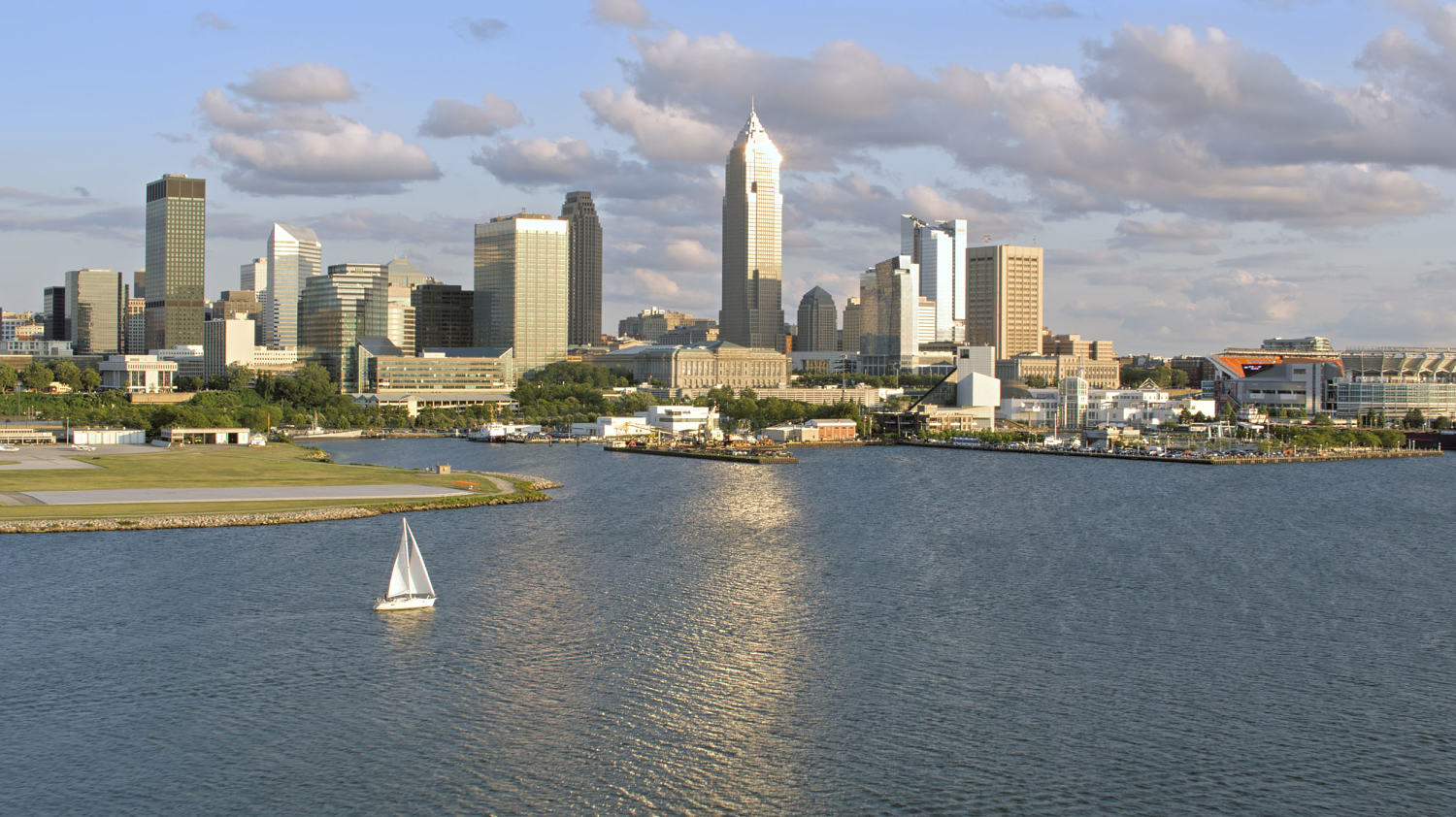
The coffee at the diner on West 25th was tasting particularly like burnt copper this morning, heavy and sharp enough to make your molars ache. Outside, the Cuyahoga River rolled under the steel skeleton of the bridge, a dull, oil-slicked gray that refused to mirror the pale blue of a November sky. It was the kind of water that looked like it had seen too many decades of heavy industry and too few apologies.
Arthur adjusted his glasses, folding the morning paper with a dry snap that made the woman at the next table jump. The headline glared back at him in fat, indifferent ink. Ohio city council joins the renaming trend with Gulf of Cleveland. If you found value in this post, you might want to read: this related article.
He let out a short, wet laugh, shaking his head. A gulf. Cleveland. Right here on the south shore of a lake that had once burned so famously it became an American punchline.
"You see that, kid?" Arthur muttered, gesturing with a spoon toward the young waiter wiping down the laminate counter. "They're fixing the geography now. Must be easier than fixing the potholes." For another perspective on this development, refer to the recent update from Reuters.
The waiter paused, looking at the headline, then out the streaked window toward the grey horizon where Lake Erie stretched out flat and cold toward Canada. "A gulf," he repeated, tasting the word. "Sounds warmer. Like you could swim in it without wearing a dry suit and a respirator."
That is the trick of it, isn't it? When the world we built starts feeling too small, too heavy, or too permanently stained by our own mistakes, we don't always pack our bags and leave. Sometimes, we just reach for a Sharpie and redraw the lines on the map. We rename the water. We squint at the horizon and pretend the salt spray is just out of sight, just over the next sandbar, waiting for us to catch up.
For months, a quiet contagion has been creeping through municipal chambers across the country. It started as a joke, a localized bit of municipal satire born out of landlocked boredom and coastal envy, but it has curdled into something stranger: a collective performance art of geographic wishful fulfillment. City councils from towns that haven't seen a coastline in three generations are voting to declare themselves maritime hubs. They are drafting resolutions. They are debating whether their municipal swimming pools qualify as tidal basins.
And now, Cleveland has stepped into the theater.
To understand why a city built on steel, coal, and the stubborn grit of the rust belt would suddenly fancy itself a tropical inlet, you have to understand the specific weight of living in a place that the rest of the country only remembers when it’s burning or winning a championship.
Cleveland has spent fifty years playing the punchline in America's long-running stand-up routine. When the river caught fire in 1969, Time magazine immortalized the city not as a cradle of industry, but as a burning fuse. Even after the environmental movements scrubbed the filth from the water, even after the banks were planted with greenways and the Flats transformed from grease-slicked shipping lanes into upscale craft-beer dens, the ghost of that smoke hung over the city limits.
You can clean a river. You can stock it with walleye until the sportfishermen line the docks three deep on a Saturday dawn. But changing how a city sees its own reflection in that water? That takes a different kind of magic.
Or a zoning amendment.
The meeting at City Hall last Tuesday was supposed to be about stormwater management fees and local paving contracts—the dry, bureaucratic gristle that keeps a municipality's heart beating. Instead, it devolved into a philosophical debate about hydrography and aspiration.
Councilman Thomas, a man whose family has worked the docks for four generations and whose skin still holds the faint, permanent pallor of winter shift work, stood at the podium. He wasn't talking about culverts. He was talking about horizons.
"We are an ocean people," Thomas told the chamber, his voice echoing off the marble walls with the practiced cadence of a Sunday preacher who had lost his flock to the suburbs. "We just forgot how to smell the salt."
The room had stirred. Some laughed—a dry, knowing sound that rattled off the radiators. Others leaned forward, caught by the sheer audacity of the proposition. Why not? If landlocked towns in Oklahoma could vote to designate their municipal retention ponds as international ports of entry just to secure federal maritime grants, why couldn't the North Coast lay claim to the open sea?
Lake Erie is technically a lake, of course. Limnologists will tell you about retention times, depth profiles, and freshwater ecosystems. They will explain that Erie is the shallowest, warmest, and most biologically productive of the Great Lakes, a delicate soup of phytoplankton and yellow perch.
But limnology doesn't pay the psychological rent.
When a city's industrial spine is broken by global shifts in manufacturing, when the young people pack their Volvos and head for Austin or Brooklyn, the remaining residents are left holding a vast, hollowed-out infrastructure designed for a million souls, now shared by a third as many. The empty warehouses loom like ancient cathedrals to a god of iron who packed up and left. In those spaces, a little harmless geographic delusion starts to look less like a joke and more like oxygen.
Consider what happens when a name changes.
In 1991, a small town in New Mexico temporarily renamed itself to a brand of computer software just to get free upgrades for its public school computers. In the nineties, towns changed area codes like mood rings, chasing the prestige of metropolitan adjacency. We are a culture that believes deeply, almost superstitiously, in baptism by nomenclature. If we call the lake a gulf, does the water taste different? Does the wind coming off the water carry the scent of salt instead of diesel?
Of course not. The water remains what it has always been: cold, freshwater slate, tasting of limestone and the ghosts of old freighters.
Yet, as the clerk read the resolution aloud—Be it resolved that the municipal waters of the Cleveland harbor shall henceforth be recognized, in spirit and in civic ambition, as an extension of the great maritime trade routes of the world—something shifted in the room. The cynicism didn't vanish; it just softened around the edges.
Arthur finished his coffee, leaving a dark ring at the bottom of the white ceramic cup. He tossed a couple of crumpled dollar bills onto the counter, his joints popping as he pushed himself up from the vinyl booth.
He walked out into the crisp autumn air, the wind off Lake Erie hitting him square in the chest with the familiar, biting slap that had greeted every morning of his seventy-two years on this earth. It wasn't the Gulf of Mexico. There were no pelicans diving into turquoise shallows, no white-sand beaches baking under a subtropical sun. There were only rusted container cranes standing like rusted giraffes against the grey sky, and the distant, low groan of a freighter making its slow way toward the locks.
He pulled his wool coat tighter around his throat, squinting against the glare off the water.
A gulf. Let them call it a gulf. Sometimes you have to lie to the map just to find your way home.


