Salt crusts the windshield of a tugboat idling near the Omani coast. The air tastes of sulfur, heavy and unmoving, baking under a white-hot Gulf sun that makes the horizon shimmer like wet steel. For thousands of years, this water has carried the world’s quietest heartbeat. Twenty percent of all petroleum consumed on Earth squeezes through a gap barely twenty-one miles wide at its narrowest point. The Strait of Hormuz.
To the men and women who crew the supertankers creeping through these lanes, the name is a compass, a warning, and a lifeline. It is a choke point guarded by geography and history. But names, it turns out, are elastic.
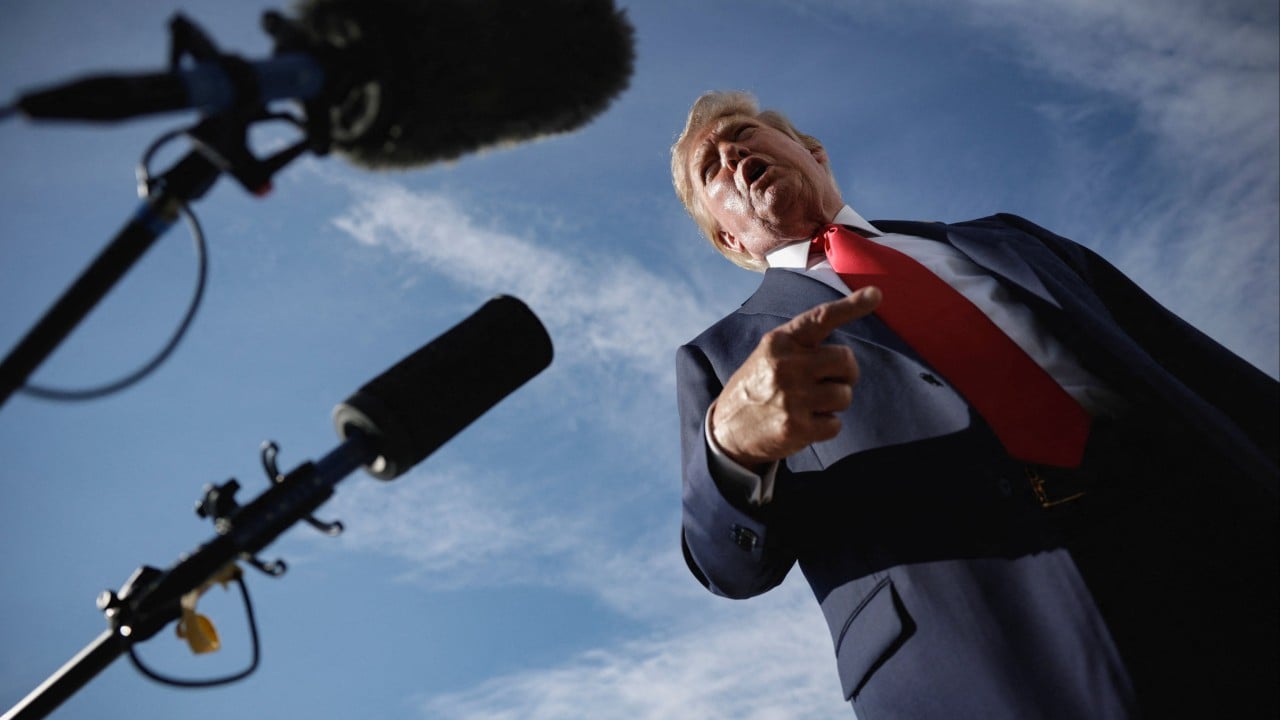
Consider what happens next when a politician thousands of miles away looks at that same narrow strip of blue ink on a map and decides it needs an ego. Donald Trump recently floated a casual, transactional thought that sent ripples through foreign ministries from Tehran to Tokyo. Why not rename it? Why not call it the Trump Strait?
It sounds like a punchline until you remember that maps are written by whoever holds the pen—or the artillery.
To understand why this idea matters, you have to smell the diesel of a tanker captain who has six hours to navigate a shifting shipping lane while Iranian fast attack craft track his radar profile from the shadows of Qeshm Island. Geography here is not an abstraction. It is a series of razor-thin margins. The inbound lane is two miles wide. The outbound lane is two miles wide. In between sits a two-mile buffer zone designed to keep nuclear-armed tempers from flaring into a global economic depression.
When a leader suggests stamping a personal brand over a centuries-old maritime identifier, it is never just about typography. It is an assertion of dominance. It is a psychological wedge driven into an already fractured region.
Imagine Captain Sarah Al-Harthy, a fictitious master mariner whose real-world counterpart stares at this exact electronic chart every single night. She does not care about branding exercises in Washington or cable news debates in New York. Her concern is the draft of her vessel, the clearance beneath her keel, and the VHF radio frequency where the Revolutionary Guard routinely challenges foreign flags. When the name of the water changes in political rhetoric, the danger in the water spikes. Iran views the Strait as its sovereign front porch, a strategic moat defended by naval doctrine and domestic pride. To brand that water with the name of an American president is a deliberate provocation, a linguistic thumb in the eye designed to elicit a reaction.
And reaction is currency.
Geopolitics often operates on the level of high-stakes theater. We forget that behind every statistic about barrel prices and liquefied natural gas sit human anxieties. When oil futures jump fifty cents because a prominent figure muses about cartographic rebranding, families in Seoul, London, and Chicago pay for it at the pump three weeks later. The invisible stakes of the Strait of Hormuz are tied directly to the cost of a loaf of bread, the heating bill of an elderly couple in winter, and the fragile stability of emerging markets that depend on uninterrupted trade.
Naming things is an ancient form of conquest. The Romans renamed cities after their emperors to signal absolute permanence. British cartographers dropped the names of kings across continents they barely understood. But in the twenty-first century, branding a geopolitical choke point feels less like empire-building and more like digital-age noise, a way to dominate the news cycle by turning a vital international waterway into a floating billboard for personal legacy.
Yet the water does not care.
The tides will continue to push through the Musandam Peninsula regardless of what sign is painted on the conceptual map. The tankers will keep burning bunker fuel, their crews watching the radar screens for any blip that deviates from the norm. The sailors will sweat through their coveralls, balancing the terrifying mathematics of modern energy logistics against the whims of men who will never have to smell the sulfur in the air or feel the dead weight of a crisis unfolding at zero knots.
Names carry weight only so long as people agree to carry them. In the high-stakes game of global brinkmanship, trying to rename the world’s most volatile oil artery is an attempt to own the unownable. It reduces a complex web of history, sovereignty, and survival to a soundbite.
The tanker clears the traffic separation scheme, slipping at last out of the Gulf and into the broader expanse of the Gulf of Oman. Behind it, the narrow passage narrows once more, holding its breath in the heat, waiting for the next word from the shore.