Close your eyes.
Right now, in the quiet theater behind your forehead, a universe of eighty-six billion cells is whispering. They do not speak in words. They speak in crackling bursts of electricity, in chemical tides sweeping across microscopic bridges, in a silent, ceaseless symphony that lets you read these lines, remember your childhood kitchen, or feel the sudden, cold pinch of anxiety.
For the vast majority of human history, that universe was locked behind bone and shadow. We knew the brain existed, of course. We knew it felt pain, generated thought, and held the fragile architecture of identity. But we had no way to watch it think. We could only inspect the ruins after a storm had passed, mapping the damage on silent, static cadavers. We were astronomers trying to understand the music of the spheres while standing blindfolded in a cave.
Then came the quiet revolution.
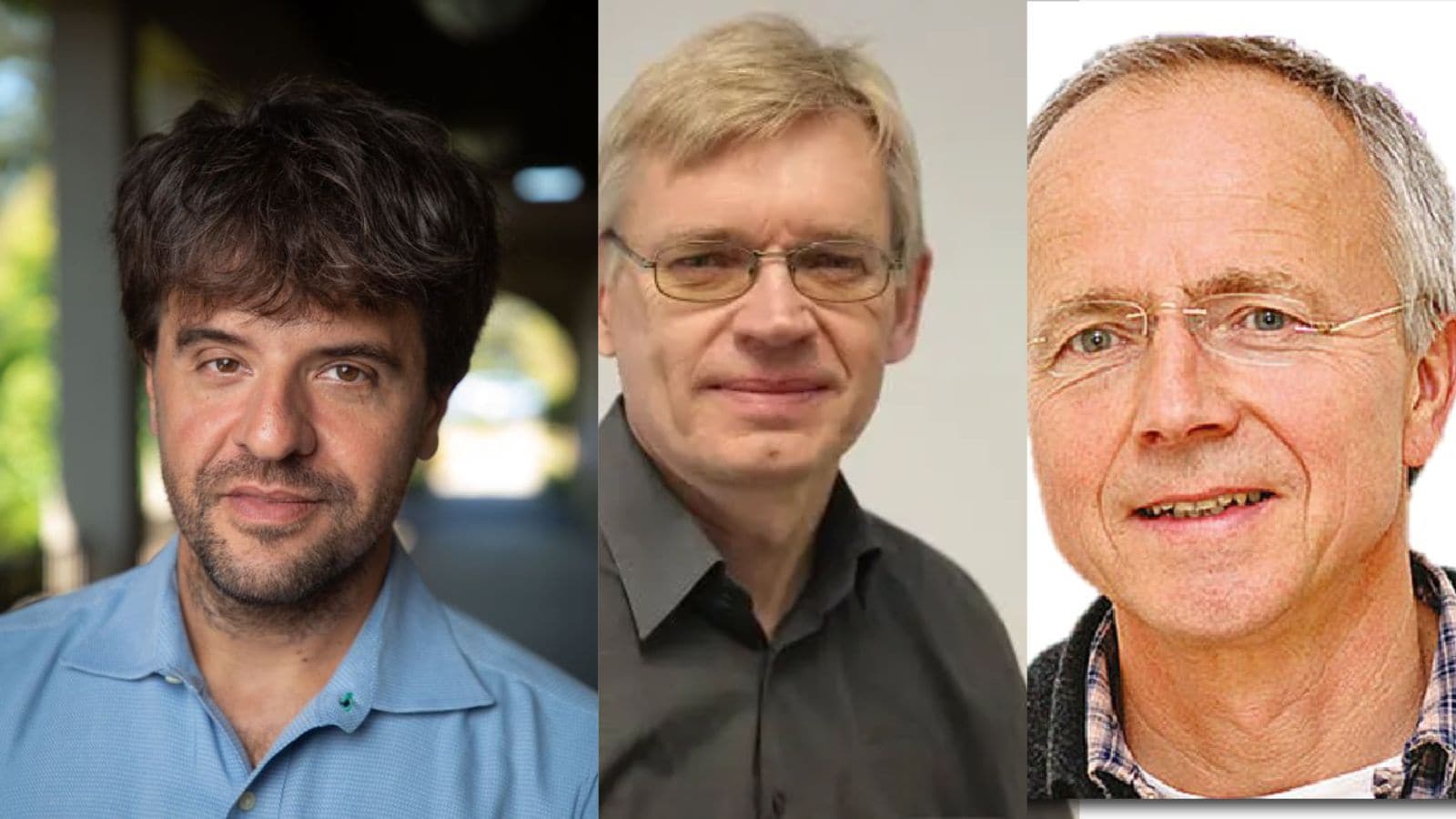
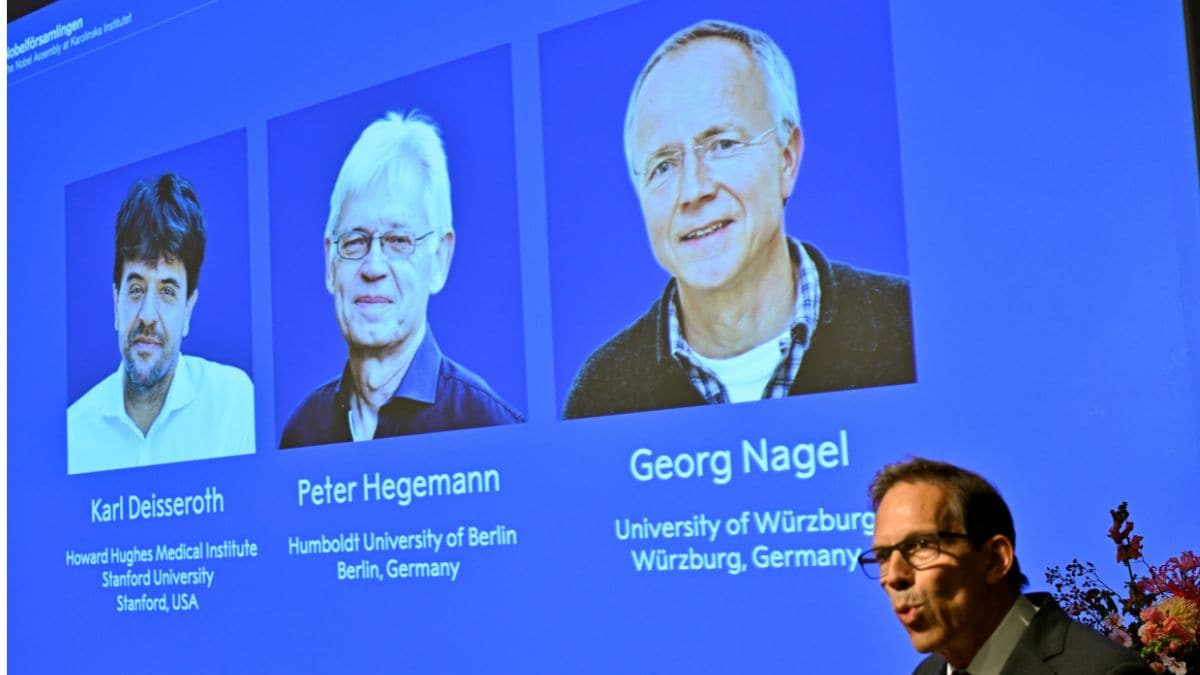
It did not arrive with explosions or cinematic breakthroughs. It arrived through decades of stubborn, obsessive curiosity. Three scientists—investigators who spent their lives staring into the microscopic static of cellular activity—managed to do what once felt impossible. They found a way to illuminate the dark.
The Problem of the Living Ghost
To understand why their work changed everything, you have to appreciate the profound frustration of neuroscience in the mid-twentieth century.
Imagine you are handed a sprawling, intricate clockwork machine the size of a city. You are told it keeps the time of a human life—regulating breath, translating light into memory, orchestrating fear and joy. But you are forbidden from opening it while it runs. You can only smash it open with a hammer and stare at the broken cogs.
That was neurology for generations. We could see the hardware—the tangled thickets of neurons, the white highways of axons—but the software was invisible. The actual electrical impulses carrying thoughts zipped across synapses in milliseconds, too fast, too small, and too ghost-like to catch.
Scientists knew that neurons communicated via electrical signals, but recording those signals inside a living, moving organism felt like trying to catch a single falling snowflake during a hurricane without touching any of the others. The tools were too blunt. The instruments were too loud. Every time researchers tried to listen to the brain's internal conversation, the act of listening disrupted the message.
Progress stalled against an invisible wall. The brain remained a black box.
The Spark in the Dark
Breakthroughs rarely happen because someone sets out to conquer the world. They happen because someone becomes unreasonably obsessed with a tiny, seemingly insignificant puzzle.
In laboratories scattered across continents, three researchers—David Julius, Ardem Patapoutian, and their colleagues—began asking a deceptively simple question: How do we actually feel the world?
Think about the last time you touched a hot stove. Your hand jerked back before your conscious mind even had time to panic. Why? Or think about the pressure of a lover's hand on your shoulder, the sting of menthol, the warmth of a fever. These are not abstract concepts. They are physical translations. The outside world hits the body, and the nervous system turns that physical force into an electrical message that the brain can decode.
For years, science understood that this translation happened, but the molecular translators were ghosts.
David Julius looked at chile peppers. Not because he wanted to write a cookbook, but because he was haunted by a chemical called capsaicin—the compound that makes hot peppers burn your tongue. He realized that capsaicin wasn't just causing a chemical irritation; it was tricking the nervous system into believing it was being burned by actual heat. By tracing how sensory nerve endings reacted to this chemical trap, Julius and his team isolated the specific molecular sensor on the cell membrane that reacts to high temperatures. They found the biological thermostat.
Meanwhile, Ardem Patapoutian was wrestling with an even more elusive ghost: touch. How does a cell know it is being pushed, squeezed, or stretched?
His laboratory took a methodical, agonizingly slow approach. They cultured mechanical-sensing cells and tested seventy-two candidate genes one by one, knocking them down individually to see which one silenced the cell's response to pressure. On the seventy-third try, they found it. A single gene encoding a protein that acts like a microscopic spring door. When pressure hits the cell, the protein opens, ions rush in, and an electrical signal shoots up to the brain. They named it Piezo1, derived from the Greek word for pressure.
Suddenly, the invisible machinery of sensation was laid bare.
When the Map Becomes a Mirror
We live in an era that worships speed, software, and silicon, yet the most sophisticated computer on Earth sits quietly behind your eyes, powered by the equivalent of twenty watts of energy—less than a dim household lightbulb.
When Julius and Patapoutian mapped these temperature and pressure receptors, they did more than solve a physiological trivia question. They handed medicine a master key.
Consider chronic pain. For millions of people, the nervous system gets stuck in an echo chamber of agony. Pain signals fire long after the injury has healed, turning the body into a prison of phantom trauma. Before these molecular sensors were discovered, treating that pain was like treating a house fire with a sledgehammer—sedating the entire central nervous system with opioids and hoping for the best.
With the discovery of TRPV1 and the Piezo channels, drug developers suddenly had a specific lock to fit a specific key. Instead of numbing the whole mind, future therapies could target the exact molecular gatekeeper responsible for sending false pain signals.
This is what happens when pure, unadulterated curiosity meets the rigorous demands of the scientific method. We stop fighting our biology in the dark and start learning its language.
The Horizon Within
We are standing at the edge of an entirely new epoch in how we understand ourselves.
The Nobel committee honored these discoveries not simply because they were clever, but because they fundamentally shifted the boundaries of human knowledge. They proved that the most complex phenomena in the universe—consciousness, sensation, pain, and perception—are anchored in physical, measurable, and ultimately understandable mechanisms.
Every time you flinch from the cold, every time you feel the soft friction of a blanket against your skin, every time a memory flashes unbidden across your mind, you are experiencing the dance of these microscopic gateways.
The dark is still vast. There are billions of neurons whose individual conversations we cannot yet decode, whole networks of thought that remain shrouded in mystery. But the blindfold is off. The instruments are tuned. And the map keeps growing, light by brilliant light, illuminating the space where the human experience actually lives.