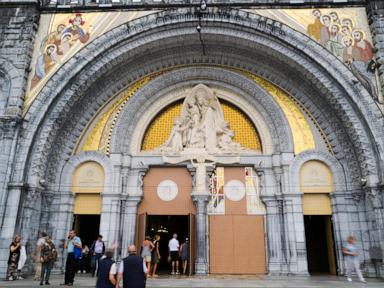
You step into the Sanctuary of Our Lady of Lourdes on a damp morning, and the first thing that hits you isn't the architecture or the statues. It's the sound. Thousands of people are whispering prayers in dozens of different languages, wheels of heavy metal stretchers are clicking against cobblestones, and water is rushing constantly from mountain springs.
Most people dismiss Lourdes as just another tourist trap packaged for the devout. They picture cheap plastic flasks shaped like statues, overcrowded souvenir shops, and endless lines of tired pilgrims. But if you strip away the commercial noise clinging to the edges of the town, you find a massive, complex operation that has run continuously since the mid-19th century. It operates on sheer human vulnerability, intense faith, and an astonishing amount of volunteer muscle.
Understanding why this corner of the French Pyrenees remains one of Catholicism's most magnetic pilgrimage sites requires looking past the glossy brochures. You have to look at how a simple peasant girl named Bernadette Soubirous triggered a global phenomenon that still baffles skeptics today.
The Story That Started It All in 1858
Back in February 1858, a fourteen-year-old girl named Bernadette went looking for firewood near the Gave de Pau river. She was poor, asthmatic, and barely educated. Near a dark cave called Massabielle, she claimed a beautiful lady appeared to her in a burst of light.
Local authorities thought she was hallucinating or just seeking attention. Her family panicked. The local clergy scoffed. Yet Bernadette stuck to her story with stubborn consistency. Over several months, she reported eighteen separate visions. The lady eventually identified herself by saying she was the Immaculate Conception, a theological term a local peasant girl had zero business knowing.
During one of these visions, the lady told Bernadette to scrape at the muddy ground. Water began to pool, then flow. That exact spring water still fills the famous baths and taps of the sanctuary today.
History is full of visionaries, but Bernadette’s experience caught fire because the local church and state tried so hard to crush it. Ban the grotto, lock the gates, threaten the girl—none of it stopped the crowds from showing up. Within a decade, the site transformed from a forgotten garbage dump into a sacred destination.
What Actually Happens Inside the Sanctuary Today
If you visit expecting a quiet monastery tucked away in the mountains, you'll be shocked. The sanctuary spans over fifty hectares right in the middle of town. It's built like a massive amphitheater designed to handle floods of human suffering and hope.
You have multiple basilicas stacked on top of each other. The Crypt sits at the bottom, dark and intimate. Above it rises the Basilica of the Immaculate Conception, glittering with votive offerings. Down below, hidden underground like a concrete bunker, sits the colossal Basilica of Saint Pius X. It can hold twenty-five thousand people at once, and it feels more like an airport terminal than a church.
The core of the pilgrimage experience revolves around three main rituals:
- The Grotto: Standing where Bernadette stood, touching the cold rock face, and watching thousands of candles burn down to nothing.
- The Baths: Submerging yourself in the ice-cold spring water with the help of international volunteers.
- The Torchlight Procession: Walking shoulder-to-shoulder after dark with thousands of strangers, holding flickering candles while singing the classic Lourdes hymn.
The logistics are staggering. The medical bureau at Lourdes employs doctors from all over the world to vet reported healings. Out of thousands of claims over the decades, the Catholic Church has officially recognized only seventy miraculous cures. They don't hand these out easily. The medical criteria are brutally strict, requiring proof that a disease was sudden, unexplainable by current science, and permanent.
The Volunteers Who Keep the Place Running
You can't talk about Lourdes without talking about the Order of Malta and various hospitalité associations. These aren't paid tour guides. They are lawyers, students, retirees, and nurses who pay out of their own pockets to spend a week pushing heavy wheelchairs, changing sheets, and scrubbing floors.
I spent a few days talking to volunteers who return year after year. They don't sugarcoat the experience. It's exhausting physical labor. You're up at dawn, lifting people with severe disabilities, managing family anxieties, and navigating rain-slicked paths.
Yet people keep coming back. The demographic makeup of Lourdes flips the script on modern tourism. Instead of wealthy travelers seeking luxury resorts, you see the sick, the elderly, and the marginalized taking center stage. Healthy visitors find themselves serving those who need help, creating a strange, temporary community where social status evaporates completely.
Navigating the Commercial Chaos
Let’s be completely honest. The town outside the sanctuary gates can feel soul-crushing. Streets are packed with neon signs flashing holy water bottles, glow-in-the-dark rosaries, and cheap trinkets made in factories thousands of miles away.
It's easy to grow cynical watching vendors hustle religious merch to desperate pilgrims. But you have to separate the town from the sanctuary. Once you cross the bridge into the church grounds, the commercial noise fades away. The guards at the gates enforce a strict code of quiet and respect.
If you plan to visit, stay within walking distance of the sanctuary so you can experience the grounds early in the morning before the massive tour buses roll in. That is when Lourdes feels real.
Why Lourdes Still Matters
In a hyper-rational world obsessed with data and efficiency, Lourdes makes zero sense on paper. People still travel thousands of miles to sit by a damp cave and touch wet stone. They aren't looking for historical artifacts. They are looking for a break from chronic pain, grief, or spiritual exhaustion.
Whether you view the spring water as miraculous or simply mountain runoff, the human impact is undeniable. Lourdes gives people permission to be vulnerable in public. It strips away the modern pressure to keep your chin up and pretend everything is fine. You go there, you face your heavy stuff, and you share space with millions of others doing the exact same thing.
Pack sensible walking shoes, bring a jacket for the mountain air, and leave your cynicism at the hotel door.


