Five years after the collapse of the Western-backed government in Kabul, exactly 2.4 million Afghan girls remain locked out of secondary and higher education by Taliban decree. UNESCO figures confirm the raw magnitude of the disaster. Yet statistics alone flatten a tragedy that is reshaping the geopolitical and social fabric of Central Asia. The prohibition is not a temporary administrative pause or a bureaucratic glitch in a newly formed ministry. It is a systematic, ideological erasure designed to institutionalize gender apartheid under the banner of religious compliance.
Years of reporting on the ground reveal a stark reality. The international community preferred to view the initial takeover through the lens of diplomatic negotiations and conditional aid packages. That approach failed. While diplomats drafted statements in air-conditioned conference rooms in Doha, the Taliban systematically dismantled a generation of progress brick by brick, classroom by classroom.
The Anatomy of Systematic Exclusion
To understand how 2.4 million children vanished from classrooms, one must examine the mechanisms of control implemented since August 2021. The strategy relied on incremental asphyxiation rather than a single, sweeping declaration on day one.
At first, authorities promised temporary closures pending curriculum reviews. Secondary schools for girls above sixth grade stayed shut while boys returned to their desks. University gates slammed shut for female students late in 2022. Professional institutes, midwifery courses, and medical training centers followed in rapid succession.
This was deliberate. By staggering the restrictions, the regime tested the boundaries of domestic resistance and international tolerance.
- Phase One: Indefinite suspension of secondary education for girls aged twelve and older.
- Phase Two: Purging female instructors from universities and imposing strict gender segregation in public spaces.
- Phase Three: Shuttered beauty salons and restricted employment sectors, cutting off the last remaining avenues of financial independence for women.
The economic cost of this exclusion is staggering. Independent economic models project a permanent contraction of the Afghan gross domestic product as an entire demographic is barred from the labor force. No modern economy can function while sidelining half its population.
The Underground Resistance
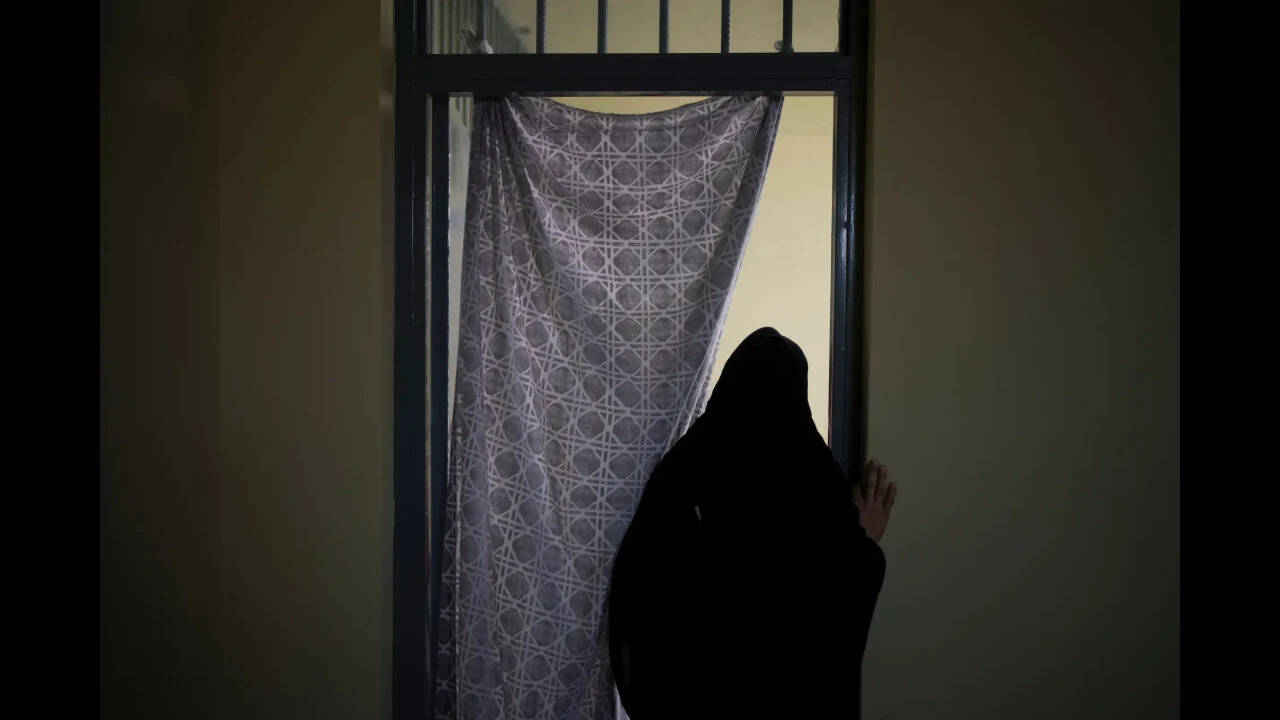
Official classrooms may be dark, but learning persists in the shadows. Across urban centers and rural provinces, an underground network of secret schools has emerged to defy the regime.
These operations run at immense personal risk. Teachers operate out of private living rooms, basements, and back rooms of local businesses. Textbooks are smuggled across borders or printed on local copiers at night. If discovered, the penalties are severe: arbitrary detention, public floggings, and severe retaliation against the families hosting the lessons.
Intelligence reports suggest that thousands of girls continue their studies through these covert channels. But home schooling cannot replace accredited institutions. Diplomatic recognition requires certification, standardized testing, and institutional oversight. Without these elements, underground students face a future devoid of formal credentials, trapping them in a parallel society with no legal recourse.
The Rural Divide
Urban centers like Kabul and Herat receive the bulk of international media attention. Out in the provinces, the situation is far more desperate.
In provinces like Helmand, Kandahar, and Uruzgan, conservative tribal dynamics often align with hardline clerical decrees. Even before the 2021 takeover, secondary education for girls was scarce in remote rural districts due to lack of infrastructure and traditional resistance. The national ban codified these local prejudices into federal law.
Local elders who once negotiated compromises with provincial education directors now find themselves sidelined by religious police squads enforcing decrees issued from Kandahar. The ideological core of the movement views modern female education as an existential threat to its interpretation of sovereignty.
The Failure of International Leverage
Western capitals made a critical miscalculation in the autumn of 2021. They assumed that economic isolation and humanitarian aid conditionality would force a pragmatic shift within the administration.
That assumption ignored the internal dynamics of the movement. For hardliners, ideological purity outweighs economic stability. Foreign currency reserves were frozen, central bank assets were sequestered, and sanctions were tightened. None of these measures moved the needle on human rights.
Instead, the population absorbed the shock of economic collapse while the leadership remained insulated from public pressure. Humanitarian aid programs kept millions from starvation, but feeding a population without securing its fundamental rights created a cycle of dependency.
Foreign ministries now face a profound dilemma. Continue funding basic humanitarian relief and risk normalizing a gender apartheid regime, or pull funding and watch millions face acute starvation. There is no clean diplomatic exit.
The Long-Term Geopolitical Fallout
The denial of education to 2.4 million girls carries consequences that will echo for decades.
A society with plummeting literacy rates among young women experiences immediate drops in maternal health, child nutrition, and early childhood education standards. Mothers are the primary educators of the next generation. When they are barred from literacy, the deficit compounds exponentially.
Radicalization thrives in environments devoid of economic opportunity and intellectual engagement. As alternative paths disappear, youth vulnerability to extremist messaging increases, regardless of gender. The regional spillover effects—spanning migration pressures toward Iran and Pakistan and the potential resurgence of transnational militant safe havens—threaten security far beyond Central Asia.
The international community must move past cyclical expressions of shock and design long-term strategies that support indigenous resistance without empowering the machinery of repression.
The silence echoing through empty school hallways across Afghanistan is not a local crisis. It is a slow-motion catastrophe playing out in real time, watched by a world that chose containment over confrontation.