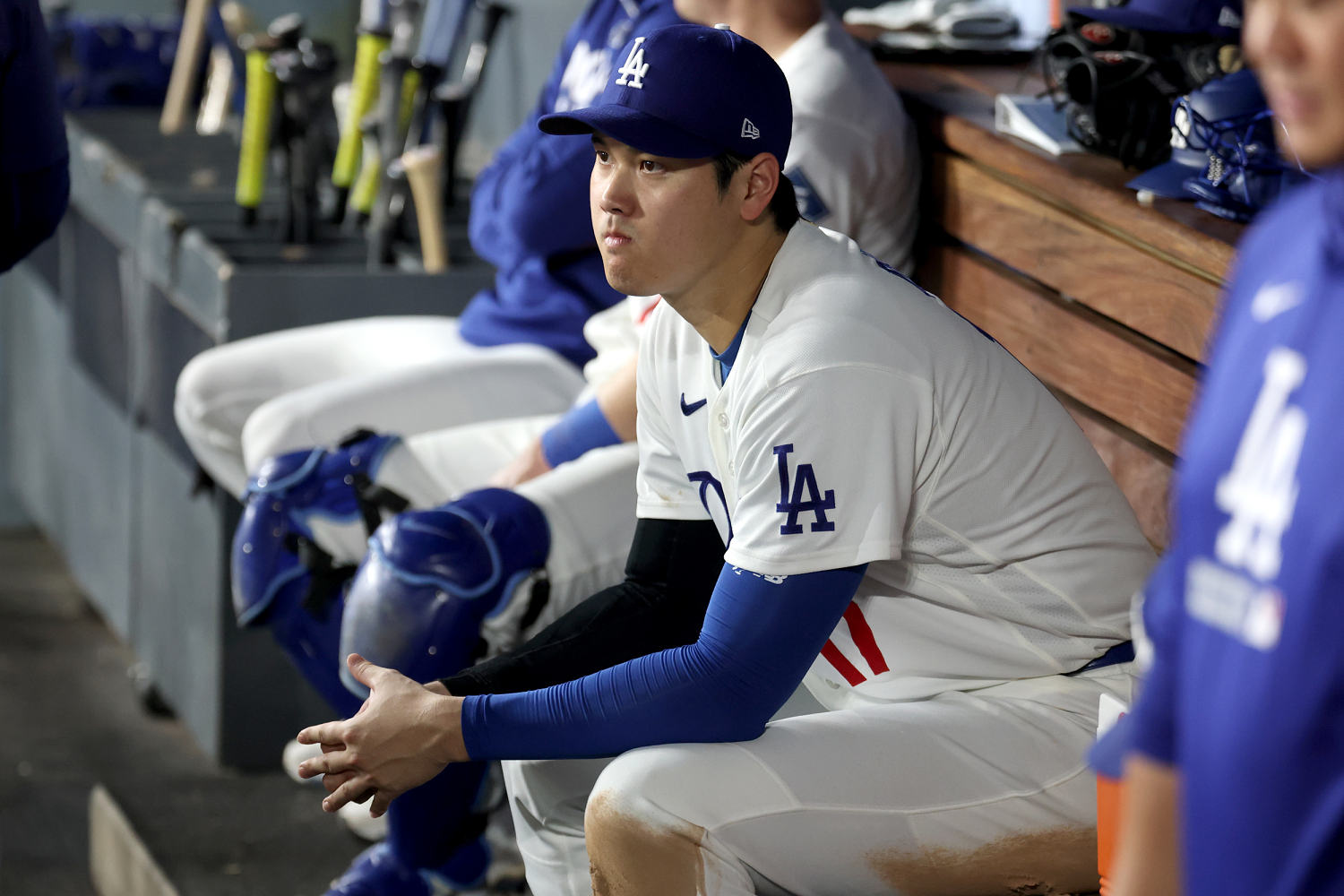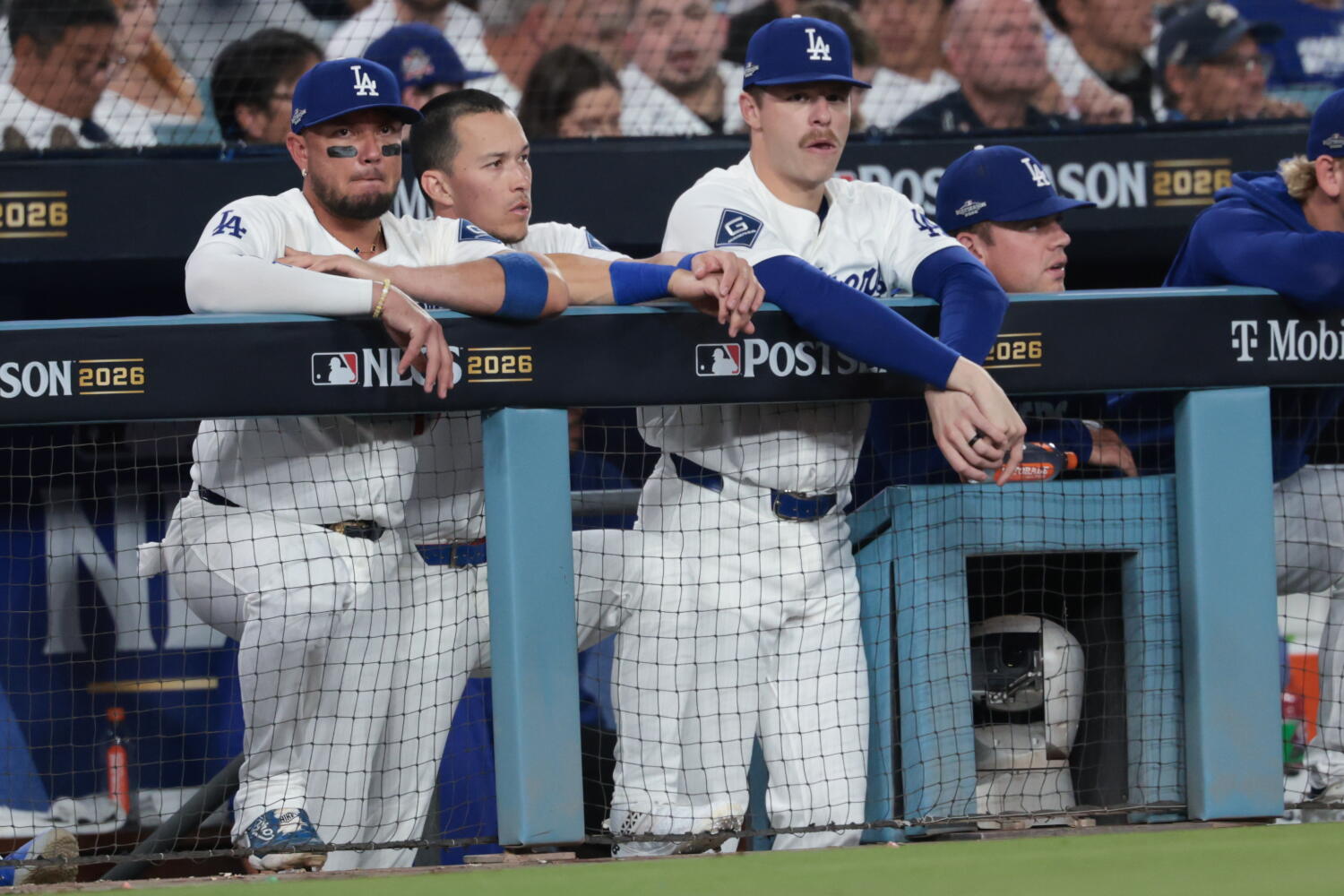
Everyone is writing the obituary for a dynasty that never actually existed in the way they think it did.
A Game 4 loss to the Milwaukee Brewers in the National League Championship Series ends a season. It ends a run at back-to-back-to-back titles. It does not bury a franchise's operational model, nor does it prove that star accumulation or modern baseball analytics are broken. Yet the moment a high-payroll juggernaut exits October early, the lazy consensus arrives on schedule: superteams fold under pressure, small-ball grit beats spreadsheets, and the three-peat window is slammed shut. Read more on a related subject: this related article.
That narrative is comforting. It is also lazy, emotionally driven, and fundamentally wrong about how baseball works across a seven-game series—or across a multi-year championship cycle.
I have spent years inside front offices, scouting rooms, and war rooms watching organizations burn tens of millions of dollars chasing headlines instead of solving structural bottlenecks. I have seen clubs panic-buy aging bats in July because a beat writer declared their offense "anemic" after a four-game skid. I have watched executives abandon disciplined pitching development because an opponent bunted twice and stole three bases in a single playoff night. When people watch a single elimination-style moment like a Game 4 NLCS defeat, they confuse variance with a verdict. More journalism by The Athletic explores similar views on this issue.
Baseball is a sport of high variance compressed into low-sample-size October series. Calling a Game 4 NLCS loss to Milwaukee a "three-peat dream dying" misdiagnoses both what happened on the field and what a sustainable contender is actually built to do.
The Lazy Consensus Around October Exits
Read the standard post-mortem after a favorite goes down in the NLCS and you will see the same three clichés recycled with different names swapped in.
First comes the dynasty myth. In modern Major League Baseball, a true three-peat is an anomaly on par with a no-hitter in a Game 7. Competitive balance mechanisms, arbitration escalations, luxury tax tiers, injury attrition, and the sheer randomness of single-game elimination rounds make consecutive championships extraordinarily rare—let alone three in a row. Treating the failure to three-peat as a collapse misreads the baseline difficulty of the sport. A franchise that consistently reaches the NLCS and contends for pennants is operating at the top of the league's structural ceiling, even when the October coin flip goes against them.
Second comes the grit-over-process fallacy. Whenever a disciplined, pitching- and contact-oriented club like Milwaukee takes a game—or a series—from a star-studded roster like Los Angeles, commentators love to declare that "heart" or "old-school baseball" conquered "numbers." That framing creates a false binary. Effective pitching sequencing, defensive positioning, baserunning pressure, and bullpen leverage are numbers-driven decisions. A team that executes situational baseball well in October isn't rejecting modern strategy; it is applying pressure right where thin bullpen depth or cold top-of-the-order bats are most vulnerable.
Third comes the single-game magnification trap. A Game 4 NLCS loss feels final when your season is on the line. Emotionally, it hurts just as much as losing the clincher. Analytically, however, one game in a tight playoff series often comes down to a hanging breaking ball with runners on, a line drive hit right at a shift-aligned outfielder, or a manager playing the matchup one inning too early or too late. Building a grand philosophy about organizational failure out of a single October game is like judging an entire engineering firm by one blown tire on a wet track.
A playoff exit doesn't erase a front office's process. It exposes where margins were razor-thin when the variance turned cold.
You Are Asking the Wrong Question About the Dodgers
When fans and pundits ask, "Why couldn't the Dodgers finish the three-peat after losing Game 4 to the Brewers?" they are asking the wrong question.
The real question isn't why a three-peat is hard. We already know why: health holds up unevenly over three grueling winters and summers, pitching arms wear down under playoff workloads, and short series reward whichever club catches the right cluster of hits at the right time.
The right question is this: Did this NLCS loss reveal a structural flaw in how Los Angeles builds rosters and manages October pitching, or did it simply reflect the brutal math of short-series baseball against a sharp opponent?
Let's test both possibilities without the melodrama.
If a contender loses in October because its starting rotation is held together by duct tape, its middle relief is overworked from September, or its lineup has zero answer for left-handed velocity and swing-and-miss secondary stuff, that is a structural problem. You fix that in the offseason by re-evaluating pitching durability, diversifying offensive profiles, and protecting depth.
If, on the other hand, a deep, well-constructed club loses Game 4 to a gritty Brewers squad because Milwaukee's arms executed at the top of the zone, Los Angeles's hitters squared up balls that found gloves, and a couple of high-leverage moments swung the other way, that is baseball. Calling that a "dead dream" is pure theater. Dreams don't die because a three-peat didn't materialize on schedule; fantasy does. Contenders reload, adapt, and try to win the next one.
Imagine a Different October Script
To see how flimsy the post-loss narrative really is, run a quick thought experiment.
Imagine a scenario where the exact same Dodgers lineup and pitching staff faced Milwaukee in Game 4 of the NLCS, threw the exact same pitches, and put the exact same balls in play—except two hard-hit liners with runners aboard dropped six inches inside the foul line instead of hooking foul, and a Brewers reliever clipped the bottom edge of the zone twice on 3-2 counts. Los Angeles wins Game 4, evens or takes control of the series, and advances.
Nothing about the roster's age, payroll, or long-term three-peat math changed between those two outcomes. The ball didn't suddenly get heavier or lighter. The players didn't become wiser or more reckless in five minutes. Only the outcome shifted—and with it, the entire tone of the coverage.
When outcomes dictate analysis this heavily, you aren't reading scouting or strategy. You are reading hindsight dressed up as insight.
Dismantling the "People Also Ask" Premise
Whenever a powerhouse stumbles in October, search feeds fill up with predictable questions. Most of them start from a shaky premise.
"Does losing Game 4 to the Brewers prove superteams can't win in October?"
No. That premise collapses under basic historical inspection. Heavyweight rosters with elite talent win championships regularly when health and execution align. What October proves is that no roster—no matter how talented or expensive—is immune to short-series variance. Even the greatest teams in baseball history lose playoff games and playoff series to opponents with lower payrolls and fewer household names. A single NLCS loss to Milwaukee doesn't invalidate talent; it confirms that talent still has to navigate October's narrow funnel.
"Did the Brewers expose a fatal weakness in the Dodgers' lineup?"
Usually, a four-game or seven-game playoff stretch exposes streaks and matchups, not a permanent "fatal weakness." Great hitters go quiet for four games all the time. Elite offenses run into hot arms, sharp defense, or pitching plans tailored specifically to chase tendencies. If a lineup consistently whiffs on elevated fastballs or struggles to put the ball in play with runners on third and less than two outs, that's worth addressing. If a star-studded offense simply got beaten on a given night by good execution and bad luck, overhauling its identity is a mistake.
"Should the front office blow things up after falling short of a three-peat?"
Only if you enjoy lighting money on fire. Tear-downs make sense when a roster is aging out without replenishment, payroll is locked into dead weight, and the farm system is barren. A team capable of reaching the NLCS and staying in the championship hunt year after year is not broken. Panicking after an October exit—trading controllable young pitching for short-term rentals or ditching proven process for reactionary moves—is one of the fastest ways to turn a perennial contender into an expensive mediocrity.
What Heavy Hitters Actually Focus On When October Ends
Ask leaders who have built lasting baseball operations—people like Theo Epstein, Billy Beane in his Moneyball era, or Andrew Friedman—what matters most when a season ends short of the trophy, and the conversation rarely sounds like talk radio.
Sharp executives look at process repeatability. They ask whether their run-prevention model holds up against top offenses, whether their hitters control the strike zone without selling out blindly for launch angle, and whether their pitching pipeline is replenishing arms before injuries hit. They look at marginal gains—how a team steals an extra half-win per month through baserunning discipline, defensive shifts, bullpen sequencing, or platoon optimization.
Great operators also respect sample size. A 162-game regular season measures sustainable quality fairly well; a division series or championship series compresses everything into a handful of games where one bullpen mistake or one umpire call can swing win probability by 15 or 20 percentage points. Front offices that stay grounded don't confuse October noise with organizational rot.
The Downsides of Taking the Long View
I'm not going to pretend that staying cool-headed after a Game 4 NLCS loss is easy, or that a long-term, process-first mindset comes with zero drawbacks. It has real costs.
First, patience is unpopular when expectations are sky-high. When a fanbase expects banners and watches a rival or an underdog like Milwaukee end the season, rational talk about sample sizes and variance sounds tone-deaf. Fans want accountability and urgency, not a seminar on binomial distributions.
Second, a disciplined approach can look passive in the short run. Standing pat at a deadline or refusing to overpay for a flashy free agent can backfire if the one missing piece actually would have pushed a team over the top. Sometimes the aggressive move works. Sometimes the conservative move looks timid in hindsight.
Third, ignoring real warning signs under the guise of "variance" is dangerous. Not every October loss is bad luck. Sometimes a bullpen really is gassed. Sometimes a lineup really is too strikeout-heavy against quality playoff pitching. Blindly blaming luck for a real structural flaw is just the flip side of blaming "heart" for bad luck.
Unconventional Moves That Actually Work After an October Exit
If you are running a contender that just watched a three-peat slip away with a Game 4 NLCS loss to the Brewers, don't spend the winter apologizing or chasing reactive narratives. Do the unglamorous work that actually moves the needle.
- Audit high-leverage fatigue, not just raw ERA. Look closely at how often your top relievers pitched in back-to-backs or high-stress late innings down the stretch. October exposes tired arms faster than almost anything else.
- Build contact resilience without sacrificing damage. You don't need to abandon power to compete in October, but line-drive ability, situational bat-to-ball skills, and two-strike discipline keep rallies alive when pitchers attack the zone.
- Stress-test your pitching depth for two seasons, not one. Assume someone on your rotation or bullpen will hit the injured list next summer. Build depth that survives attrition before opening day, not in August.
- Ignore the "dynasty or failure" binary. Measure success by sustained contention, roster adaptability, and real shots at a title—not by whether you checked off an improbable three-peat box.
A three-peat was never a birthright. Losing Game 4 to Milwaukee ended a run, not a blueprint.