Salt gets into everything. It crusts on the eyelashes, embeds itself under fingernails, and leaves a chalky film on leather boots that no amount of saddle soap ever fully eradicates. After months at sea, you stop tasting it. You stop smelling the gray exhaust mixing with the brine. You simply become part of the machinery—another gear turning in a floating city of five thousand souls that exists entirely detached from the earth.
Consider what happens when the horizon finally breaks.
For two hundred and ninety days, the USS Abraham Lincoln was not just a ship; it was a self-contained universe operating under perpetual orange illumination and the dull, rhythmic thrumming of a nuclear reactor. Mail arrives in batches that smell like mildew and home. News trickles down through filtered satellite feeds, old and unimportant by the time it reaches the mess decks. Down in the skin of the ship, three decks below the flight deck where F-35s slam down with enough force to rattle your teeth, sailors live by the hum of the ventilation system. You learn to sleep while steel screams against steel overhead. You learn to measure time not in dates, but in fuel logs and chow lines.
Then comes San Diego.
Dawn breaks over the bay with a cold, pale clarity that feels entirely foreign after months of endless blue horizons meeting indifferent gray skies. Point Loma emerges from the morning haze like a sleeping beast. To the casual observer standing on the cliffs of Coronado with a cup of lukewarm coffee, the arrival of a Nimitz-class aircraft carrier is a spectacle of naval might. Gray hull. Towering superstructure. Thousands of yards of steel cutting through the Pacific swell with terrifying grace.
They see the power. They do not see the laundry bags.
Behind every gray bulkhead on that floating fortress lies a quiet, desperate countdown. Months of missed birthdays. First steps witnessed through grainy FaceTime calls dropped halfway across the Atlantic. Funerals attended via text message. When a carrier deployment stretches past the standard six-month mark—as modern operational tempos increasingly demand—the psychological erosion is invisible to the radar operators back at Coronado.
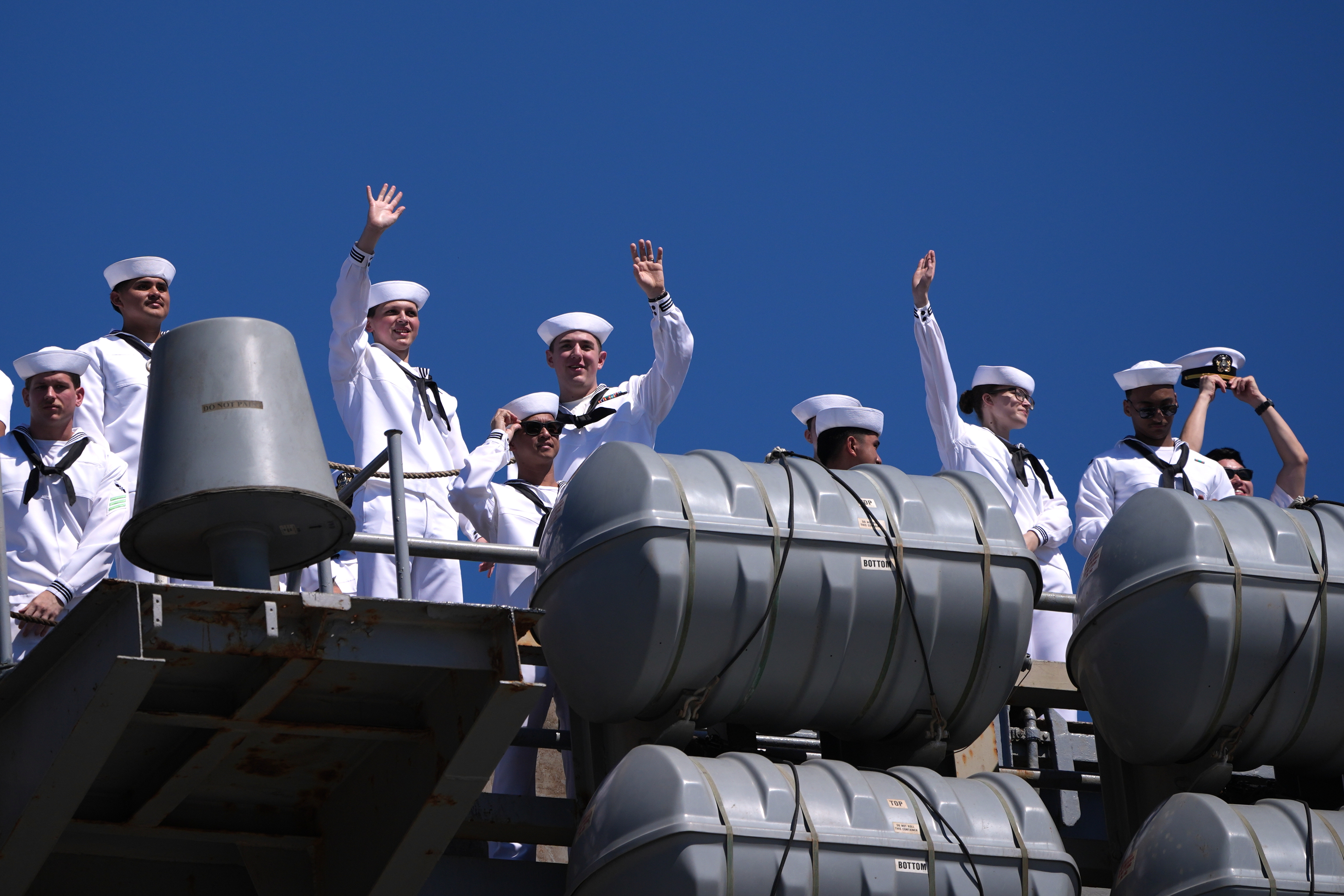
Ask any sailor standing on the flight deck as the tugboats edge the massive vessel toward the pier. The adrenaline is real, thick enough to choke on. But beneath it lies a peculiar kind of terror.
Reentry is brutal.
Society does not pause because you spent nine months patrolling contested waters thousands of miles away. Grocery store aisles become overwhelming after months of fluorescent-lit mess halls. The sheer volume of choices—thirty kinds of cereal, traffic laws, the quiet hum of a suburban refrigerator—feels deafeningly loud. On the ship, every sound had a purpose: a bell meant a threat, a horn meant flight quarters, a voice over the 1M circuit meant your division was up. Back home, silence is an unfamiliar country.
The Lincoln’s homecoming was heralded by the usual choreography of brass bands, homecoming banner contests, and television cameras capturing the first embrace on the pier. The sailor lifts his toddler into the air, the child clutching a homemade sign decorated with glitter that will inevitably end up tracked across the kitchen floor. The cameras flash. The anchor drops.
And then the real work begins.
We romanticize the return. We love the photograph of the kiss at the pier. It plays well on the evening news, neatly wrapping up months of geopolitical anxiety in a thirty-second human interest package. But the brass band plays for twenty minutes. The deployment’s echo lingers for years.
The true weight of a modern naval deployment is carried in the quiet spaces between the milestones. It lives in the mechanic who spent his twenty-second birthday troubleshooting an arresting gear motor in the dead of night, staring at a polaroid taped inside his toolbox. It lives in the spouse who learned how to replace a broken water heater alone while managing a household on a base four hundred miles from anyone who remembers her maiden name.
When the Lincoln slipped back into San Diego Bay, it brought home more than four thousand five hundred sailors and air wing personnel. It brought back a mountain of unspoken stress, fractured sleep schedules, and the quiet, heavy relief of people who survived an environment where a single mistake could turn an entire flight deck into a furnace.
The gray giant now sits silent against the pier, its nuclear heart winding down to a low idle, its massive elevators locked in place. The sailors are scattering across Southern California—some driving straight to all-night diners, others standing in their childhood bedrooms staring at walls they haven't touched in nearly a year.
Out on the bay, the water settles into its usual rhythm, untroubled by the steel mountain that just passed through it. But the wake remains, rippling outward until it hits the shore and disappears into the sand.