A single sheet of paper does not weigh much. But when it sits on a mahogany desk in Washington, stamped with the bureaucratic finality of 1979, it can flatten a nation half a world away for nearly half a century.
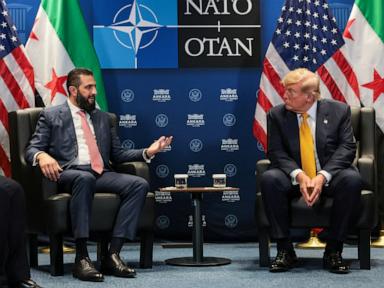
For forty-five years, Syria existed in a specific, frozen category of the American mind. It was a word shorthand for state-sponsored terror, a designation that outlived presidencies, structural shifts, and the turn of a millennium. Then, with a sudden declaration, the friction of decades began to smoke. Donald Trump announced his intention to strike Syria from the state sponsors of terrorism list.
To understand what this means, you have to look past the podiums. You have to look at the dust.
The Weight of a 1979 Stamp
Imagine a child born in Damascus in the autumn of 1979. Let us call him Omar. He is a hypothetical composite of a generation, but his realities are entirely concrete. When Omar drew his first breath, Jimmy Carter was in the White House, the Cold War was a simmering reality, and the United States government crossed Syria’s name onto a black list.
Omar grew up under the shadow of that ink.
To the average onlooker, a "state sponsor of terrorism" designation sounds like a purely political reprimand. It feels abstract. It sounds like diplomats arguing in carpeted rooms in Geneva or New York. But in the streets of Syria, that designation was a invisible wall. It meant that if Omar grew up to be an engineer, he could not buy the software he needed to design a safe bridge. It meant that if his daughter fell ill, the local hospital struggled to import the advanced diagnostic machinery that relied on American patents.
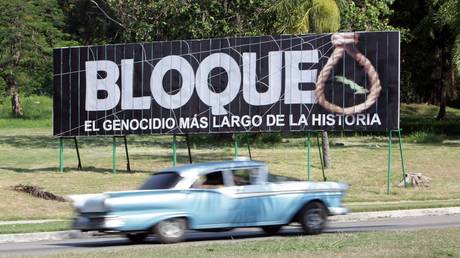
Sanctions do not just target leaders. They sediment. They settle into the soil, the factories, and the pharmacy shelves. They dictate the quality of the bread, the reliability of the electrical grid, and the speed of the internet. For forty-five years, an entire population grew up inside a cage built of legal clauses and economic isolation.
Then the world tilted.
The collapse of the Assad regime altered the calculus entirely. The old structure, which had held the country in a grim grip for decades, dissolved. Washington was suddenly forced to look at a map that no longer matched its paperwork.
The Machinery of Isolation
When the state apparatus in Washington decides to isolate a country, it uses a mechanism that is incredibly difficult to reverse. It is an economic flywheel. Once it starts spinning, it gains momentum from fear.
Consider the psychology of a compliance officer at a mid-sized European bank. They see a transaction destined for a small business in Aleppo. Even if the transaction is entirely legal, even if it is meant for agricultural supplies or schoolbooks, the risk is too high. The ghost of 1979 hovers over the keyboard. The fear of American fines, which can run into the billions, causes the finger to hover over the delete key.
The transaction is denied.
This is the secondary chilling effect. It is the true engine of isolation. It turns the entire global financial system into an unwitting enforcement arm of Washington’s foreign policy. The designation did not just stop weapons from flowing; it stopped the normal blood flow of a society. It prevented the simple, everyday acts of commerce that allow a family to build a future.
But the real problem lies elsewhere. The designation became a permanent fixture, an assumption rather than a tool. Foreign policy shifted from a dynamic strategy to a frozen posture. Generations of policymakers in Washington grew up knowing nothing else. Syria was a pariah. That was the baseline. To suggest otherwise was to invite political ruin.
It took an unprecedented internal collapse within Syria to crack that consensus.
Shifting Safeties and Uncertain Horizons
The declaration to remove the designation is not an act of charity. It is a calculated move in a theater where the old script has been ripped to shreds. By signaling an end to the 1979 designation, the administration is attempting to use the ultimate carrot after decades of using the heaviest stick.
But how does a nation rebuild when its entire modern history has been defined by exclusion?
The process is not as simple as flipping a switch. The ink may dry on a new executive order, but the scars on the ground remain deep. The infrastructure of a country cannot be repaired by a press release. Bridges remain broken. Power stations remain dark. The human capital—the doctors, the engineers, the teachers who fled over the decades—cannot simply be imported back overnight.
There is a profound vulnerability in this transition. For decades, the Syrian people had a clear, albeit brutal, understanding of their reality. They knew the rules of the siege. Now, the walls are being dismantled, but the ground beneath their feet is unstable.
The uncertainty is palpable. Will the removal of the designation actually bring capital, or will the ghost of the past continue to scare away investment? Will the new authorities be able to govern, or will the vacuum left by the old regime invite new forms of chaos? These are not academic questions. They are whispered over tea in markets that are trying to remember how to trade with the outside world.
The Anatomy of the Decision
To look at the decision clearly, one must strip away the political theater. The move is designed to create leverage. It is a message to the new actors on the ground in Damascus: there is a path back to the global community, but it requires compliance with a new set of expectations.
The historical irony is thick. The designation was put in place during an era of global bipolarity, a time when Damascus looked to Moscow and Washington looked away. Today, the geopolitical landscape is fragmented, multi-polar, and intensely volatile. A static policy from 1979 is an anachronism in a world moving at the speed of digital information.
Consider what happens next. The removal of the designation triggers a complex legal review. It requires notifications to Congress. It requires assessments from intelligence agencies. The bureaucracy that took decades to build will take months, perhaps years, to untangle.
Yet, the psychological impact is immediate.
The announcement itself sends a shockwave through the financial sectors of the Middle East and Europe. It signals that the risk calculus is changing. It gives permission to those who have wanted to engage, to help, or to profit, to begin looking at Syria not as a closed vault, but as an open question.
The Silent Witness
Ultimately, the true measure of this policy shift will not be found in the ledger books of the State Department. It will be found in the daily lives of those who survived the long isolation.
It will be found in whether Omar, now an older man with graying hair, can finally see his grandchildren grow up in a city where the electricity stays on through the night. It will be found in whether a small business owner in Homs can order spare parts from an international supplier without fearing a frozen bank account.
The political actors will claim credit. The critics will predict disaster. The commentators will parse every word spoken from the White House.
But out in the Syrian desert, where the ruins of ancient empires sit beside the concrete shells of modern towns, the people know that policy is a slow rain. It takes a long time to saturate the soil. The cloud that formed in 1979 may finally be breaking, but the ground is still parched, waiting to see if what follows is a healing spring or another storm.
The ink is drying on the announcement. The mahogany desk in Washington remains quiet. And half a world away, a nation holds its breath, watching the sky.