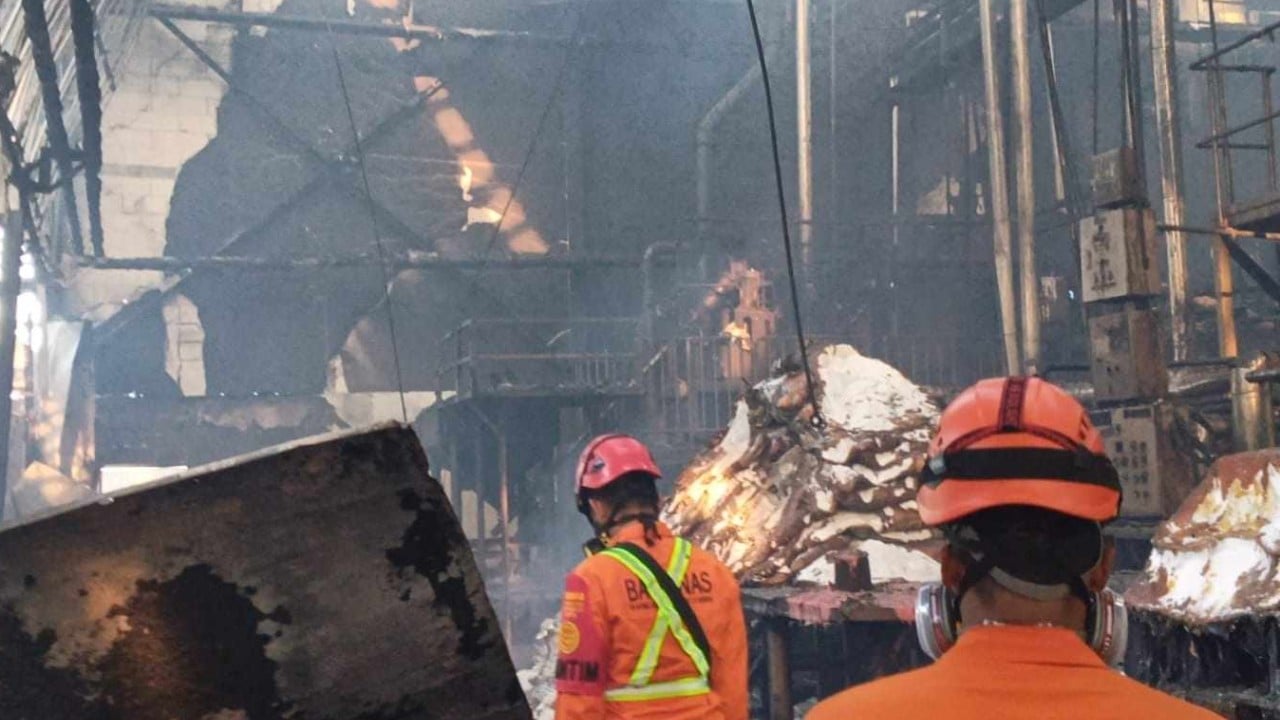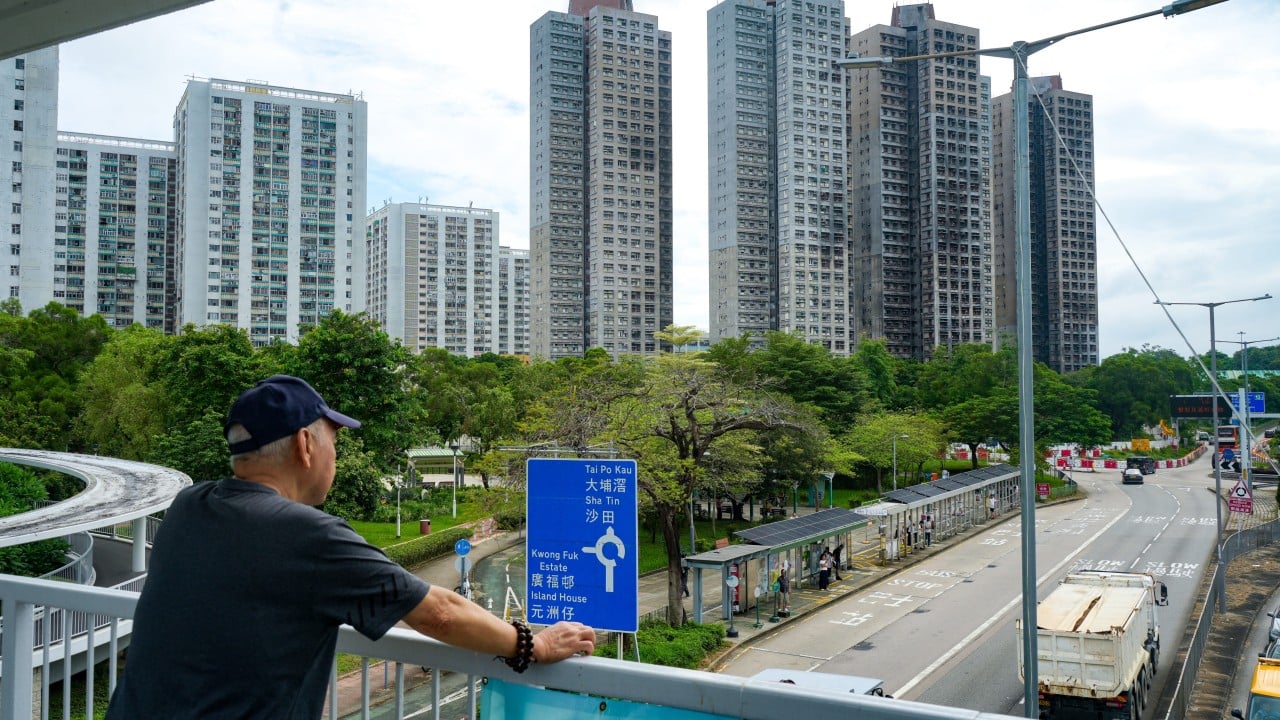
The press releases always sound heroic. A devastating blaze rips through a residential block in Tai Po, lives are upended in minutes, and before the smoke even clears from the stairwell, government officials step up to the microphones to promise "long-term social worker support."
Everyone nods. The headlines write themselves. The public feels a warm rush of civic pride, convinced that compassionate bureaucracy has once again stepped into the breach to heal the broken.
It is a complete illusion.
In disaster recovery, open-ended pledges of emotional and administrative hand-holding do not accelerate healing. More often than not, they trap survivors in an endless loop of bureaucratic dependency while ignoring the brutal, unglamorous realities of post-fire survival.
If you have spent any real time observing the aftermath of urban residential fires in dense cities like Hong Kong, you know the script by heart. In the first seventy-two hours, emergency relief centers overflow with bottled water, donated blankets, and earnest caseworkers holding clipboards. Two months later, the cameras are gone. Six months later, the victims are still stuck in temporary transit housing, drowning in paperwork, and their assigned social workers are burned out, under-resourced, and rotating off the caseload.
The lazy consensus in social policy treats every crisis as a counseling problem. It assumes that if you assign enough trained professionals to talk to victims over an indefinite timeline, recovery naturally follows. That assumption is fundamentally broken.
The Myth of the Indefinite Safety Net
When a welfare chief promises "long-term" support without defining the exact mechanics, metrics, or exit ramps of that support, they are offering a blank check written on an empty account.
Let's look at the actual mechanics of municipal social work in high-density urban environments. Social workers are trained in crisis intervention, family mediation, and navigating welfare eligibility. They are not structural engineers. They are not insurance adjusters. They are not property lawyers, and they cannot conjure affordable replacement housing out of thin air in one of the tightest real estate markets on earth.
Yet, when a fire guts an apartment building in Tai Po, the immediate aftermath is not primarily a psychological crisis—it is a logistical and financial catastrophe.
Survivors have lost their deeds, their identification cards, their cash reserves, their medications, and their roofs. What they need in the first thirty days is immediate liquidity, rapid document replacement, and binding guarantees on housing restoration. What they get instead is a "one-family-one-social-worker" model that turns a caseworker into an underpaid middleman between a traumatized citizen and five different uncoordinated government departments.
I have watched municipal recovery task forces burn through millions in administrative overhead while displaced residents waited months just to get basic structural clearance to re-enter their damaged units. The social workers weren't the villains in those rooms; they were the human shields deployed by leadership to absorb the public's frustration while the real bottlenecks—building department inspections, insurance disputes, and housing authority allocations—sat untouched.
Why Endless Case Management Backfires
To understand why the standard welfare response fails, you have to understand the difference between acute stabilization and chronic case management.
Acute stabilization is fast, surgical, and material. It focuses on restoring a person's baseline autonomy so they can make their own decisions again. Chronic case management, by contrast, stretches out over months or years, requiring survivors to repeatedly prove their vulnerability to access incremental aid.
Psychologists and disaster researchers have documented this phenomenon for decades. Richard Bryant, a leading trauma researcher who has studied post-disaster recovery extensively, has repeatedly highlighted that early, overly intrusive psychological intervention—often called critical incident stress debriefing—can actually interfere with natural resilience. When the state rushes in to medicalize or pathologize normal grief and anger, it inadvertently sends a subtle message to survivors: You are broken, and you cannot fix this without professional supervision.
Consider what happens when you stretch that dynamic out over two or three years:
- The Documentation Trap: To maintain "long-term" welfare support, victims must continually submit to assessments, home visits, and means testing. Every check-in forces them to relive the trauma to justify continued assistance.
- Agency Erosion: When an external caseworker makes every phone call to the utility company, the housing bureau, and the school district, the survivor's own problem-solving muscles atrophy. When the program inevitably winds down, the resident is less equipped to navigate the city than they were before the fire.
- Resource Dilution: Social welfare departments operate with finite human capital. Every veteran social worker tied up for eighteen months managing routine administrative follow-ups for a single fire incident is a social worker pulled away from acute domestic violence cases, elder abuse investigations, and youth mental health emergencies elsewhere in the district.
The political class loves the phrase "long-term support" because it sounds compassionate and buys them immunity from criticism during the news cycle. Nobody wants to be the cynic questioning a pledge to help fire victims. But good intentions do not pay rent, and empathy does not clear a fire-damaged corridor.
What Fire Victims Actually Need (And Why Officials Avoid It)
If you ask fire survivors six months after the blaze what actually saved them, they rarely mention their monthly check-in with a welfare officer. They talk about the neighbor who lent them a spare room. They talk about the local mutual aid group that handed them cash with zero paperwork. They talk about the specific, concrete day they finally got the keys to a permanent flat.
Real disaster recovery requires three things that bureaucracies hate providing: unconditional cash, radical deregulation, and hard deadlines.
1. Direct Cash Over Managed Services
The single most efficient tool in modern disaster relief is direct, unconditional cash transfers. Organizations like GiveDirectly and researchers across the humanitarian sector have demonstrated repeatedly that when you give disaster-affected families direct financial liquidity without strings attached, they spend it on their exact, immediate priorities—whether that is replacing a child's school uniform, paying a security deposit on a new rental, or replacing tools needed for work.
Governments hate unconditional cash because they cannot control how it is spent, and they cannot easily put a press release on it showing armies of smiling staffers distributing care packages. Instead, officials prefer to funnel money into institutional budgets, staffing overhead, and voucher systems that restrict what victims can buy and where they can buy it.
2. Automatic Regulatory Waivers
After a residential fire, survivors face a mountain of red tape. Replacing lost identity cards, birth certificates, property deeds, and bank records usually requires showing existing proof of identity—which just burned up in the living room.
Instead of assigning a social worker to help a victim fill out twenty forms across six weeks, a competent administration suspends the forms entirely. Establish a single temporary registry at the disaster site, verify identity once using biometric or municipal records, and auto-issue every replacement document within seventy-two hours. Eliminate the need for an advocate by eliminating the bureaucracy itself.
3. Binding Timelines on Housing and Remediation
In Hong Kong, residential fires in older buildings—especially subdivided flats or aging walk-ups—often trigger endless legal limbo. Who owns the common area where the fire started? Whose insurance covers the water damage from the firefighters' hoses? How long will the Buildings Department freeze access while investigating structural integrity?
While those questions drag on for a year, victims languish in transit centers. No amount of emotional support fixes the sheer existential dread of not knowing where you will live next winter. A genuinely bold welfare policy would force the Housing Authority and Buildings Department to commit to legally binding turnaround times for structural clearance and permanent rehousing, backed by automatic financial penalties paid directly to the displaced tenants if the government misses its own deadlines.
Dismantling the "People Also Ask" Fallacies
Whenever a major urban fire hits the headlines, public discussion inevitably circles around the same predictable questions. Almost all of them are framed around the wrong assumptions.
How long do fire victims need psychological counseling?
Most do not need formal counseling at all. Decades of epidemiological data on mass trauma show that roughly 70% to 80% of people exposed to an acute disaster recover naturally over time without clinical intervention, provided their basic physical, financial, and social environments are stabilized. Pathologizing the majority wastes clinical resources needed for the 20% who genuinely develop post-traumatic stress disorder or complicated grief.
Why do governments rely so heavily on social workers after disasters?
Because social workers are already on the payroll, they are trained to be compliant with institutional protocols, and deploying them requires zero structural reform. It is infinitely easier for a bureau chief to reassign fifty caseworkers to a crisis center than it is to rewrite housing allocation rules, force insurance companies to pay out claims within fourteen days, or overhaul fire safety enforcement in neglected tenement buildings.
Isn't long-term support better than abandoning victims after a week?
That is a false binary. The choice is not between "abandonment" and "indefinite bureaucracy." The real choice is between front-loaded, high-impact material restoration and slow-drip administrative management. Abandonment happens when the state substitutes cheap talk and drawn-out casework for rapid, decisive material restitution.
The Uncomfortable Truth About The Contrarian Approach
Let's be brutally honest about the downsides of tearing up the traditional welfare playbook. Moving away from long-term case management toward rapid cash, automatic waivers, and strict exit ramps is not a silver bullet, and it carries real political and operational risks.
First, some people will fall through the cracks. When you design a system built for speed and autonomy, individuals with pre-existing cognitive impairments, severe untreated mental illness, or extreme social isolation will struggle without dedicated human advocacy. A streamlined, self-directed recovery model works brilliantly for 85% of the population, but it can leave the most vulnerable 15% behind if there is no targeted safety net specifically reserved for them.
Second, unconditional cash invites public scrutiny and occasional misuse. If a government hands out substantial lump sums directly to fire victims without receipts or oversight, someone will inevitably spend that money on something the tabloids deem irresponsible. The moment a single recipient makes a bad financial choice, opposition politicians and media commentators will scream about wasted taxpayer funds, forcing bureaucrats right back into the safety of restrictive vouchers and micromanagement.
Third, front-loading recovery is expensive upfront. Paying for immediate hotel accommodations, rapid cash grants, and emergency structural repairs hits the municipal budget in a single fiscal quarter. Spreading "social worker support" over three years allows the government to bury the cost inside existing departmental payrolls, making the disaster look cheaper on a spreadsheet even when the human cost is far higher.
Even with those risks, the trade-off is worth making. A system optimized to prevent every possible abuse or edge-case failure ends up paralyzing everyone it was designed to help.
Imagine a Different Response in Tai Po
Imagine a scenario where the next time a fire tears through a residential block in Tai Po, the welfare chief steps up to the podium and refuses to make a single vague promise about long-term support.
Instead, imagine the announcement goes like this:
Within forty-eight hours, every verified household from the damaged building receives a direct bank transfer equivalent to six months of median local rent, no receipts required. Within seventy-two hours, a mobile unit on-site issues replacement ID cards, travel documents, and medical prescriptions on the spot. Within fourteen days, the Buildings Department publishes a binding, public schedule for structural repairs, and any landlord who fails to meet remediation deadlines forfeits rental income directly to a tenant compensation fund.
And what about the social workers? Instead of turning a hundred caseworkers into full-time form-fillers and emotional babysitters for the entire building, you deploy a small, elite team of ten specialists exclusively to the handful of residents who actually need intensive support—the elderly resident living alone with dementia, the single parent with a disabled child, the survivor struggling with severe acute trauma.
Everyone else gets their money, gets their documents, gets their autonomy back, and moves on with their lives without ever having to ask a caseworker for permission to buy a new mattress.
Stop Confusing Compassion With Control
The fundamental flaw in modern disaster response is that our institutions confuse caring for people with managing them.
When a fire destroys a family's home, the trauma is not just the loss of property—it is the sudden, violent loss of control over their own lives. Every minute they spend waiting in line for a voucher, explaining their tragedy to a new caseworker, or begging a housing officer for an update reinforces that helplessness.
True solidarity does not look like a government official promising to hold your hand for the next three years. True solidarity looks like handing you the resources you need on Tuesday so you never have to speak to a bureaucrat again by Friday.
Until welfare chiefs measure their success by how quickly they can make themselves obsolete, every "long-term support" pledge is just another monument to institutional self-preservation. Put the cash in the victims' hands, clear the red tape out of their way, and get out of the door.