The gravel road doesn’t care about democracy. It doesn’t care about the constitutional right to vote, or the shifting winds of judicial philosophy in Washington, D.C. When the spring thaw hits Rosebud County, Montana, the mud simply swallows tires whole.
For someone living on the Northern Cheyenne Reservation, voting isn't a matter of walking down the block to a neighborhood school. It is an expedition. It requires a reliable vehicle, gas money that might be earmarked for groceries, and a half-day chunk of time just to reach a county clerk’s office.
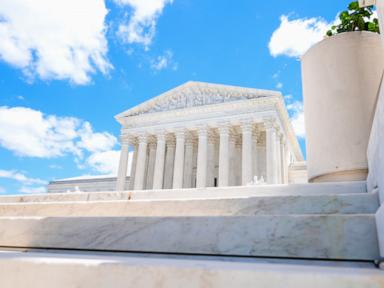
When the United States Supreme Court quietly sent a major Native American voting rights case back to a lower court, the legal blogs analyzed the procedural nuances. The talking heads debated the doctrine of standing. But on the ground, away from the marble pillars of the nation’s highest court, the decision meant something much simpler.
It meant the waiting continues. The friction remains.
To understand why a seemingly dry legal dispute over ballot collection and voter registration deadlines matters, you have to look past the legal briefs and stand on the dusty roadside of Route 447.
The Geography of Exclusion
Distance can be a wall just as formidable as concrete.
Consider a hypothetical voter named Clara. She is a grandmother living in a small community on the reservation. She doesn’t drive. The nearest post office is twenty miles away, and mail delivery to her home is nonexistent; instead, she relies on a post office box that she can only check when a relative offers a ride.
When the state passes a law banning the collection of ballots by third parties, Clara’s ballot becomes an impossible object. She cannot mail it herself without a ride. She cannot hand it to a trusted community organizer who is driving to the county seat. Under the strictest interpretation of the law, the very act of trying to participate makes her a statistic of disenfranchisement.
This isn’t a theoretical exercise. It is the practical reality driving the legal battle over Montana’s voting restrictions.
The laws in question targeted two specific areas: the elimination of election-day voter registration and severe restrictions on ballot collection. Proponents argued these measures were necessary to ensure election security and prevent fraud. They painted a picture of a system vulnerable to manipulation.
But the data tells a different story.
Study after study has shown that voter fraud in these communities is vanishingly rare. What is not rare is the immense difficulty of voting while poor, rural, and indigenous. For decades, community organizations have bridged the geographic gap by gathering ballots from remote homes and delivering them to election offices. It was a lifeline.
When that lifeline is cut, the impact isn't felt equally across the state. It falls squarely on those who already live on the margins of the system.
The Legal Pendulum
The journey of this case through the court system reveals a deeper truth about how power operates. A state court initially blocked the restrictive laws, finding that they unconstitutionally burdened Native voters. The state appealed. The legal machinery ground on, eventually reaching the steps of the U.S. Supreme Court.
Instead of issuing a sweeping, definitive ruling that would set a national precedent, the justices chose a different path. They vacated the previous judgment and sent the case back down the ladder, instructing the lower courts to re-examine the issues in light of recent legal precedents.
It was a classic judicial maneuver. Safe. Procedural.
To the lawyers involved, it represents a new tactical phase in a long war. To the people whose daily lives are shaped by these laws, it feels like a cruel game of bureaucratic hesitation. The rules remain unstable. The uncertainty deters participation. When a person isn't sure if their registration is valid or if their ballot will be rejected, the easiest choice is often to stay home.
That silence is the real danger.
The Weight of History
We often treat voting rights as a modern partisan battle, a chess match between red and blue. That view is profoundly short-sighted. The struggle for the franchise in Indian Country is tied to a historical legacy that predates the current political alignment by generations.
Native Americans were not granted citizenship until 1924. Even then, states used a variety of mechanisms—poll taxes, literacy tests, and claims that residents of reservations were not true residents of the state—to keep them away from the ballot box. Montana itself didn't fully integrate its voting systems until forced to by successive waves of litigation under the Voting Rights Act.
The modern restrictions are simply quieter. They don't use the overt language of the Jim Crow era, but they achieve a similar result by leveraging existing poverty and geographic isolation.
Think about the simple act of registering to vote on election day. For a worker juggling two jobs under hourly wages, missing work to register weeks in advance is a luxury. Election-day registration allowed people to handle everything at once, maximizing their limited time. Removing that option pulls a brick out of the foundation of accessibility.
The defense of these laws often relies on the idea of uniformity—that the rules should be exactly the same for everyone, regardless of where they live. It sounds fair on the surface. It appeals to a basic sense of equality.
But true fairness requires acknowledging that a rule applied to a suburban subdivision behaves differently when applied to a vast, underfunded rural reservation. A two-week deadline is an inconvenience for someone with a smartphone and high-speed internet. It is a barrier for someone who has to drive an hour to find a reliable connection.
The Cost of the Gap
When we look at the maps of voter turnout, the gaps are stark. The areas encompassing reservations consistently show lower participation rates than the rest of the state.
Some dismiss this as apathy. They suggest that if people truly cared, they would find a way to surmount the obstacles.
That argument ignores the psychological toll of systemic friction. When every interaction with a government system requires an extraordinary effort, the system sends a clear, unspoken message: You do not belong here.
The fight over ballot collection isn't about laziness. It is about mutual aid. In communities where resources are scarce, sharing rides, sharing mail trips, and relying on neighbors is how survival happens. Criminalizing that cooperation doesn't protect the vote; it punishes the culture of survival that has kept these communities alive.
The legal battle will resume in the lower courts. There will be more hearings, more dense legal briefs filled with Latin phrases, and eventually, another ruling. The lawyers will argue about intent and state interest.
Meanwhile, the seasons will change in Rosebud County. The mud will dry into hard-packed dirt, and then the winter snows will come again, blocking the roads once more.
The true measure of a democracy is not found in the elegance of its constitutional theories, but in the reach of its ballot boxes. As long as the distance between a citizen and their vote is measured in hours of dirt roads and tankfuls of unaffordable gas, the promise remains unfulfilled.
The Supreme Court sent the paperwork back to a lower court. But the question remains on the prairie, waiting for an answer that may still be a long way off.