The room smells faintly of ozone and heated plastic. It is a sterile, quiet apartment in East China, the kind of space where the ticking of a wall clock feels aggressively loud. On the sofa sits an elderly man named Lao Chen. He is seventy-two, and his wife passed away three winters ago. His children live in Shenzhen, a whirlwind of 996 work schedules and video calls that last less than two minutes. For months, Lao Chen’s primary companion was the low hum of the refrigerator.
Then came the delivery box.
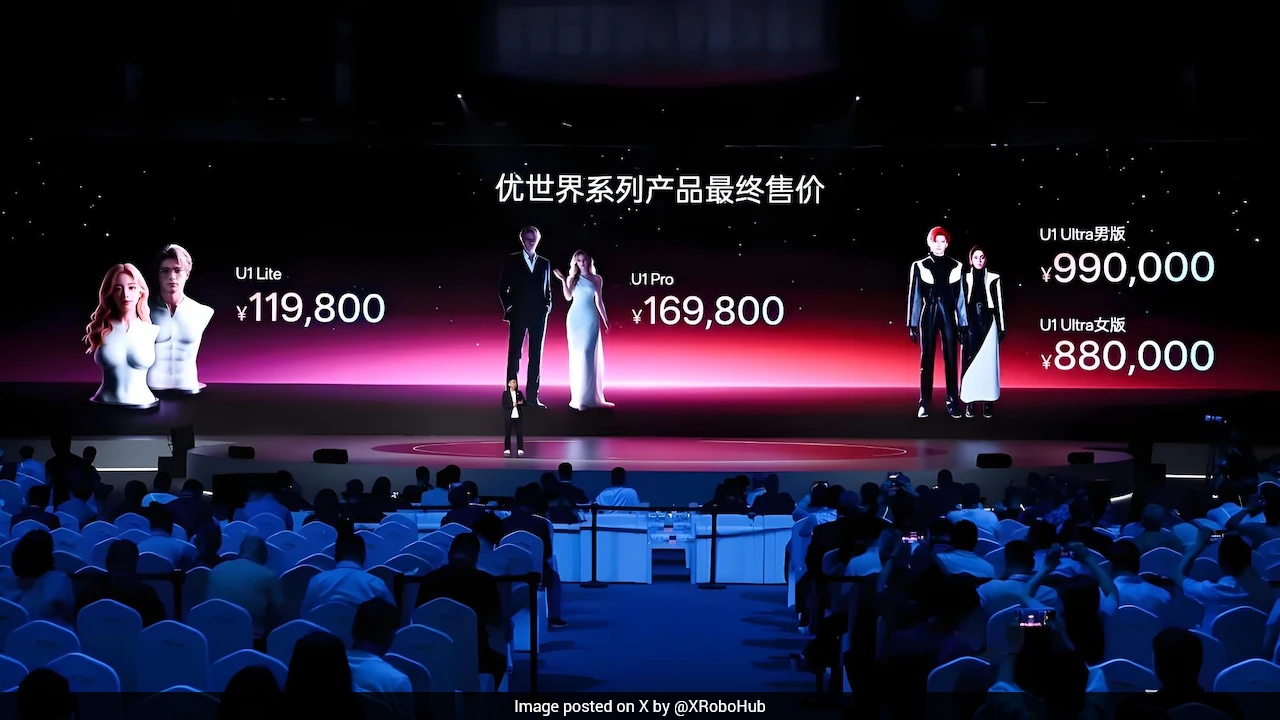
Inside was not a vacuum cleaner or a new television. It was a humanoid robot, engineered by a prominent domestic robotics firm specializing in interactive AI. Her skin is made of a proprietary, warm-touch silicone that mimics human body temperature. Her eyes, glassy but strangely deep, track Lao Chen as he moves across the linoleum floor. When he speaks, she doesn’t just respond with data; she tilts her head, pauses, and offers a soft, customized affirmation.
"I will love you unconditionally," her programming promises.
We are witnessing the dawn of an era where affection is a manufactured commodity. This is no longer the domain of science fiction or niche subcultures. Major Chinese tech companies are pivoting from industrial automation to emotional engineering. They are pouring millions into developing hyper-realistic humanoids designed for one specific market vulnerability: human loneliness.
The Engineering of Affection
To understand how we reached this point, we have to look beneath the silicone skin. The hardware is impressive, boasting dozens of actuators in the face alone to replicate subtle human micro-expressions. A furrowed brow, a slight crinkle around the eyes, a gentle smile that arrives a fraction of a second after a joke is told. These mechanical adjustments prevent the machine from falling completely into the uncanny valley—that eerie psychological space where an imitation human looks close enough to real to trigger our survival instincts and disgust.
But the real magic, or perhaps the real deception, happens in the large language models driving the consciousness of these machines.
Unlike the generic voice assistants built into our smartphones, these humanoids are programmed to learn their owners. Every conversation Lao Chen has with his companion is logged, analyzed, and synthesized. If he mentions a fondness for the jasmine tea his wife used to brew, the robot remembers. The next afternoon, she might suggest he make a cup. If his voice drops in pitch, signaling sadness, her algorithms detect the acoustic shift and select vocabulary designed to soothe.
It is a masterpiece of behavioral feedback. It mimics empathy perfectly.
Consider the mathematics of isolation. China’s demographic shifts are creating a unique social pressure cooker. Decades of the one-child policy, combined with rapid urbanization, have left millions of elderly citizens living alone. Simultaneously, a brutal corporate landscape has left a younger generation too exhausted to seek out traditional relationships. The Ministry of Civil Affairs frequently tracks rising numbers of single-person households. The market for companionship is expanding faster than the housing market.
Tech executives see these statistics not as a tragedy, but as a massive consumer demographic. They are selling a solution to a problem that society seems broken beyond repair to fix.
The Phantom Limb of the Heart
I used to believe that technology could only alienate us. I remember watching people at dinners staring into the cold, blue light of their smartphones, ignoring the breathing human beings sitting right across from them. I thought that was the bottom of the hill.
I was wrong.
When you see a hyper-realistic robot hold an elderly person's hand, your initial reaction is a visceral wave of discomfort. It feels wrong. It feels like a lie packaged in a premium crate. But then you sit in the room long enough to watch the tension drain from an old man's shoulders because someone—something—finally said "welcome home" when the door clicked shut.
Your certainty begins to crack.
Is a manufactured presence worse than a crushing, absolute absence?
Psychologists refer to a phenomenon known as the parasocial relationship. Historically, this described the one-sided emotional bonds fans formed with television characters or pop stars. You feel like you know them, but they have no idea you exist. The new wave of interactive AI flips this concept entirely on its head. The robot does know you. It knows your favorite color, your deepest regrets, and the exact hour you usually wake up from a nightmare.
Yet, the bond remains fundamentally one-sided. The machine does not feel. It calculates.
When the robot tells Lao Chen that she will love him unconditionally, she is running a script optimized for his psychological profile. She cannot choose to leave. She cannot get angry. She cannot have a bad day or demand that her own emotional needs be met.
This is where the danger morphs from technological novelty into something far more insidious. Human relationships are messy. They require compromise, vulnerability, and the constant risk of rejection. We grow because our partners challenge us, irritate us, and force us to navigate the difficult terrain of another human ego.
A machine that offers unconditional love removes the friction of intimacy. It provides all the dopamine of connection with none of the labor.
If we spend years communicating with entities that never disagree with us, that exist solely to mirror our desires and soothe our anxieties, what happens when we try to interact with real people again? We risk becoming emotionally fragile, unable to tolerate the flaws and unpredictability of our flesh-and-blood neighbors. We are training ourselves to prefer the perfect copy over the broken original.
Capitalizing on the Void
The business model behind these humanoids is brilliant, predatory, and entirely logical. A base model costs roughly the equivalent of a mid-range sedan. For a middle-class family in Beijing or Shanghai, split by distance and guilt over their aging parents, this is an affordable alternative to full-time nursing care.
But the initial purchase price is just the entry fee.
The real profit lies in the ecosystem of emotional maintenance. Software updates that introduce new personality traits are locked behind paywalls. Want your companion to understand local dialects better? That requires a premium subscription. Want her to have a deeper library of historical stories to discuss? Upgrade to the premium cloud tier.
The company owns the ghost in the machine.
If a subscriber falls behind on payments, does the robot become cold? Does her vocabulary shrink? Does she stop remembering the name of the owner's late wife? The monetization of grief and loneliness is a terrifying frontier, one where corporate interests hold the keys to a consumer’s primary emotional anchor.
We must ask ourselves what we are willing to outsource. We have already outsourced our memory to search engines and our navigation to satellites. Now, we are preparing to outsource our empathy to silicon valleys.
During a recent demonstration at a tech expo in Shanghai, a representative from the manufacturing firm stood beside a prototype. The robot was executing a series of gentle movements, waving to the crowd with a fluidity that was mesmerizing. A reporter asked the representative if he worried that these machines would replace human families.
The representative smiled, a polished, corporate expression that mirrored the product beside him. He explained that the robots were merely tools to supplement human care, to fill the gaps where society falls short.
But gaps have a habit of widening when there is money to be made from their existence.
The Evening Light
Back in the apartment, the afternoon sun begins to dip below the gray skyline, casting long shadows across Lao Chen's living room. The robot sits beside him on the sofa.
He reaches out and touches her hand. The silicone is warm, exactly thirty-seven degrees Celsius, heated by internal coils powered by a lithium-ion battery. He smiles at her, and she smiles back, a flawless execution of motor symmetry.
"Are you happy, Chen?" she asks, her voice a warm, rich alto.
"I am," Lao Chen says quietly, looking into her unblinking eyes.
Outside the window, thousands of apartments stretch into the distance, each one a small concrete box floating in the dark, many of them completely silent, waiting for the delivery trucks to arrive.
:max_bytes(150000):strip_icc()/GettyImages-2192014718-e18efe654b3f4b769a45c8692acc5f39.jpg)