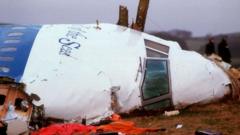
Decades of lazy journalism have turned the Lockerbie bombing into a comfortable whodunit. The narrative runs on rails. A rogue Libyan intelligence officer, a suitcase bomb, a mechanical clock timer, a conviction at Camp Zeist, and a closed file. It is neat. It is digestible. It satisfies the geopolitical need for a villain with a state address.
It is also an insult to basic investigative mechanics.
Every time a podcaster or a nostalgic investigative columnist dusts off the Pan Am Flight 103 files to announce they are "asking questions," they replay the exact same tired hits. They chase conspiracy theories about rogue Palestinian factions, or they obsess over microscopic chain-of-custody gaps for a tiny piece of circuit board. They treat the official prosecution case as a pristine puzzle missing one or two pieces, rather than a structure built on quicksand to satisfy a diplomatic necessity.
The mainstream consensus misses the foundational flaw of the entire prosecution. The authorities did not follow the evidence to a suspect; they found a suspect and forced the evidence to fit.
The Anatomy of a Forced Narrative
Let us look at how complex state-sponsored terrorism investigations actually function. When an aircraft disintegrates over a Scottish border town, killing two hundred and seventy people, the pressure on intelligence agencies and law enforcement is absolute. Governments do not want an open-ended search that implicates multiple volatile allies or exposes catastrophic systemic failures in civil aviation security. They want closure. They want a courtroom drama with a predictable script.
The prosecution of Abdelbaset al-Megrahi relied heavily on the testimony of a Maltese shopkeeper named Tony Gauci. If you remove Gauci from the equation, the entire conviction collapses under its own weight. Let that sink in. A massive international conspiracy involving sophisticated high-altitude explosive devices ultimately rested on an aging shopkeeper identifying a man he briefly saw buying clothing years earlier under deeply suggestive police procedures.
In any standard criminal defense context, eyewitness identification under those conditions gets laughed out of a magistrate's court. Yet, in a high-stakes diplomatic tribunal operating under anomalous legal arrangements, it became the bedrock of modern aviation disaster history.
Investigators love a smoking gun because a smoking gun saves them from doing the dirty work of structural analysis. The real story of Pan Am 103 was never about a single suitcase transferred through Malta by a lone operative wearing a specific brand of shirt. That is the Hollywood version. The operational reality of global intelligence operations is far messier, far more bureaucratic, and far more protective of institutional blind spots.
What the Sleuths Keep Missing
If you read the self-styled deep dives published in mainstream outlets, you notice a recurring intellectual laziness. They treat the trial transcript as scripture. They debate whether the timer fragment could have traveled from Point A to Point B, or whether the baggage routing system at Luqa Airport was airtight.
This is forensic micro-management designed to avoid macro-level truths.
Ask yourself a basic operational question. If a state actor wants to destroy a wide-body commercial airliner over Western airspace, do they rely on a fragile chain of custody spanning multiple international baggage handlers, trusting that a random mechanical timer purchased in bulk will function perfectly after enduring cargo hold pressures and sub-zero temperatures? Or do they exploit well-documented, systemic security vulnerabilities at primary hub airports where operational access is routinely compromised by commercial expediency?
The investigators who pat themselves on the back for "re-examining the case" never look at the airport security culture of the late nineteen eighties. They ignore the commercial pressures that forced baggage screening protocols to take a back seat to tight turnaround times. Pan Am 103 was flying out of Heathrow. The initial loading happened at a major international gateway, yet the entire investigative spotlight was dragged away from the vulnerabilities of the departure airport and fixed laser-like onto a convoluted transit route through Frankfurt and Malta.
Why? Because admitting that Heathrow security was a sieve in December nineteen eighty-eight exposes the British government and aviation authorities to staggering liability. Pinning it on a foreign intelligence asset operating through a secondary Mediterranean transit point protects domestic institutions while delivering a scalp to the families of the victims.
It is a masterpiece of jurisdictional deflection.
The Cost of Convenient Closure
When we accept the standard Lockerbie narrative, we do more than misremember a historical event. We handicap our ability to understand modern terror networks.
Real terrorism is rarely executed by solitary masterminds executing flawless, cinematic plots. It is opportunistic, chaotic, and heavily dependent on institutional incompetence and political cowardice. When investigators invent a pristine narrative to mask systemic vulnerabilities, they ensure those vulnerabilities remain unaddressed.
The legal appeals and ongoing efforts by Megrahi’s family to clear his name are often framed as a quixotic quest for abstract justice. That is a mistake. It is a stress test for our willingness to look past official convenience. Every time a journalist writes a retrospective piece that treats the original verdict as basically sound with a few minor loose ends, they reinforce the exact bureaucratic complacency that allowed the tragedy to happen in the first place.
Stop looking at the Malta connection. Stop analyzing the shirt fibers and the circuit boards. Look at the structural failures of airport security management, the political imperatives of the post-Cold War realignment, and the desperate need of Western governments to wrap up a horrific disaster in a neat package before the public realized how little control they actually had.
The case was never closed. It was merely filed under the name that caused the least political damage.


/i.s3.glbimg.com/v1/AUTH_1f551ea7087a47f39ead75f64041559a/internal_photos/bs/2025/P/p/LLF10DRp2WoUISXryrUQ/whatsapp-image-2025-12-02-at-20.06.57.jpeg)