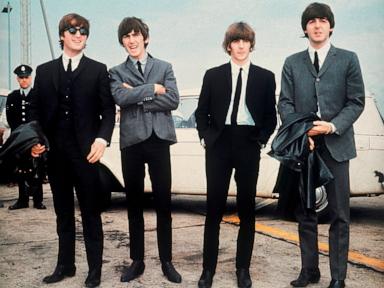
Rain hits Liverpool differently. It comes sideways off the Mersey, carrying salt from the Irish Sea and the sharp, mineral tang of wet sandstone and coal smoke that lingered in the city's bones long after the shipyards went quiet.
I remember standing under the awning outside a cramped record shop on Mathew Street a few autumns ago, nursing a lukewarm cup of tea while a street busker wrestled a battered acoustic guitar through "Across the Universe." Around me, teenagers in oversized hoodies stood shoulder to shoulder with gray-haired visitors from Ohio, Buenos Aires, and Osaka. None of them had been alive when four kids from working-class Merseyside turned three chords and a defiant haircut into a global earthquake. Yet there they were, damp coat sleeves brushing together, singing every word like muscle memory.
That scene is the quiet engine behind a fresh wave of investment in Liverpool. As curiosity around the Fab Four swells again—pushed along by archival restorations, fresh studio outtakes, and new generations discovering vinyl and streaming playlists alike—a new Beatles attraction is coming to Liverpool. On paper, a press release about a new venue or exhibition sounds neat and predictable: a city capitalizing on an evergreen icon.
Nostalgia.
It is an easy word to toss at a place like this, and almost always the wrong one. When you walk the streets between Penny Lane, Mendips, and the waterfront docks, you start to realize that Liverpool is not trying to trap 1963 behind velvet ropes. It is trying to answer a much trickier question: how do you keep a living artistic spirit breathing inside brick-and-mortar walls without turning it into a wax museum?
The Weight of Four Shadows on Cobblestones
To understand why another Beatles experience matters right now, you have to feel the tension that has shadowed Liverpool's cultural economy for decades. A city that once moved half the world's trade on its tides knows what it feels like when the ships stop coming. When industrial decline hit hard in the 1970s and 1980s, music was not a side note in Liverpool; it was oxygen. Basements, pubs, and community halls became pressure valves for humor, grief, and rebellion.
When success finally arrived—loud, technicolor, and impossibly fast—it changed the city forever. Thousands of travelers began arriving every year chasing a feeling they could barely name. Walking past the Cavern Club, touching the bronze statues near Pier Head, standing at the gates of Strawberry Field: people come looking for proximity. They want to stand where John, Paul, George, and Ringo stood before the screaming drowned out the snare drum.
Yet proximity can turn thin if it relies only on repetition. Anyone who has spent a rainy Tuesday watching tour groups file past souvenir racks knows the risk. A glossy gift shop can sell a yellow submarine key ring in thirty seconds flat, yet leave the visitor feeling strangely hollow—as if they bought a souvenir of a memory that belonged to someone else.
Note: The following character and scene are hypothetical, constructed to illustrate a real dilemma faced by cultural planners and local musicians in Merseyside.
Picture Hannah, a fictional sound archivist and part-time session bassist in her late twenties who grew up ten miles inland from the river. On a damp Thursday afternoon, she walks past a newly announced site for the upcoming Beatles attraction, her bass case slung across her shoulder. Her phone buzzes with a clip from a teenager in Seoul who just stumbled onto "Helter Skelter" through a short-form video edit and wants to know what a Rickenbacker guitar actually sounds like in a small room.
Hannah stops by the edge of the pavement, listening to the gulls wheeling overhead. She loves the history, down to the exact drum riser height and the damp brick walls of early club dates, yet she worries about flatness. If a new attraction only replays greatest hits on a loop and shows glass cases of vintage suits, it treats one of the most restless, experimental bands in popular music like a finished monument. The Beatles were never static. Between 1962 and 1969, they tore up their own playbook every single year.
That is the real hurdle for any newcomer on the Liverpool map. How do you honor six decades of devotion while leaving room for surprise, craft, and the grit of real people making noise?
Why Interest in the Fab Four Keeps Surging
People sometimes ask why a band that broke up more than half a century ago still pulls fresh crowds through turnstiles. There is no single trick behind it. Part of it is sheer songwriting durability—melodies that slip into your head on a bus ride and refuse to leave for forty years. Part of it is how modern technology has peeled back studio curtains, letting listeners hear isolated vocal harmonies, studio banter, and rough takes that feel startlingly human.
There is also something simpler at work. In an era where so much culture feels algorithmically smoothed, polished until every edge is sanded off, four distinct personalities arguing, laughing, and pushing each other in a room feels electric. You can hear the friction in their records. You can hear four distinct minds—wry, romantic, mystical, propulsive—colliding in real time.
Think of Liverpool's Beatles heritage less like a finished painting hanging in a quiet gallery and more like a tuning fork left humming on a table. Strike the right note nearby, and the whole room starts to vibrate.
This comparison is a metaphor meant to show how cultural memory reacts when new creative work enters the space.
When interest surges again, it does not arrive evenly. One visitor comes because their grandfather played Abbey Road every Sunday morning while cooking bacon. Another comes because a film score or documentary made them wonder how four kids from terraced houses reshaped studio recording from a four-track afterthought into an instrument of its own. A third comes simply because Liverpool itself has become one of Britain's liveliest music and arts hubs, where new bands play cramped back rooms every night of the week.
A new attraction stepping into that current has a rare opening. Visitors today are often sharper, more curious about process, and less impressed by passive spectacle. They want to understand how a song shifted from a skiffle tune in a church hall to a studio puzzle layered with tape loops, brass, and sitar. They want context—not just dates on a plaque, but the social texture of post-war Britain, the docks, the radio stations beaming signals across borders, and the restless hunger of teenagers trying to make something bigger than their streets.
What Happens When a City Builds for the Future Without Erasing the Past
I admit I used to be skeptical whenever a new heritage project was announced in a famous music city. Too often, big promises turn into crowded hallways, overpriced coffee, and a rush toward the exit. Seeing authentic local character squeezed out by chain-store polish is enough to make anyone cynical.
Over time, though, watching how Liverpool has handled its cultural reinvention has tempered that skepticism. Look at how the waterfront transformed from derelict warehouses into bustling public squares, or how community spaces like Strawberry Field blended quiet reflection with training and music outreach for young people. When projects root themselves in real craftsmanship and genuine local participation, they do something vital: they connect the past tense to the present tense.
Consider what happens when a new Beatles attraction is planned with that mindset:
- It treats curiosity as a doorway rather than a quiz. Instead of testing visitors on trivia, it invites them to listen closely—to hear how arrangement choices change emotion, or how a simple lyric lands differently when stripped back to acoustic guitar and voice.
- It respects the city beyond the postcard. Liverpool's story isn't confined to one street or one decade. Connecting the attraction's narrative to broader neighborhood life, working musicians, and evolving arts spaces keeps the energy circulating through the city rather than bottling it in one corner.
- It leaves space for awe. Sometimes the smartest move in a room full of history is to step back, lower the volume, and let a single melody or a photograph of four young men grinning in a rain-slicked courtyard do the heavy lifting.
There is a real sense of momentum in that approach. When a city invests in telling a great story well, the payoff reaches beyond tourism numbers. It gives local storytellers, technicians, educators, and performers a stage. It tells the next kid picking up a cheap electric guitar in a bedroom that extraordinary things can start in ordinary rooms.
Listening for the Next Note
Late at night in Liverpool, when the day-trippers have caught their trains and the rain comes back across the river, the city feels stripped down to essentials. Neon reflects on wet paving stones. Somewhere down a side street, a drum kit thuds faintly behind a heavy door.
If you stand there long enough, the story stops feeling like history at all. It feels like a conversation still mid-sentence—loud, imperfect, stubbornly alive, waiting for whoever walks around the corner next to pick up the rhythm.