The wind in Balochistan does not blow; it scrapes. It carries a fine, yellow dust from the Chagai hills, coating the windshields of diesel-smelling trucks and the cracked lips of border guards who watch the horizon. Here, at the desolate edge where Pakistan meets Iran, peace is not a treaty written on parchment. It is a daily shrug of the shoulders. It is the absence of gunfire.
For decades, this border was a quiet backwater of the global consciousness. Smugglers traded Iranian oil for Pakistani sacks of basmati rice. Soldiers on both sides shared tea under the scorching sun, complaining about the heat and the isolation. But diplomacy, much like the weather in these badlands, can turn violent in an instant.
Recently, the air has grown cold.
When word reached the border outposts that Pakistan had issued an open, direct warning to Iran, the tea went cold. The message from Islamabad was devoid of the usual diplomatic fluff. It was sharp, sudden, and heavy with the scent of gunpowder. The cause did not originate in the dusty plains of Balochistan, nor in the crowded alleys of Tehran.
The trigger pulled thousands of miles away, in the heart of the Arabian Peninsula.
The Shadow of the Kaaba and the Ledger of Debt
To understand why a country struggling with rolling blackouts and historic inflation would threaten its energy-rich neighbor, you have to look at a map of the heart, and then at a ledger of bank accounts.
Consider Tariq, a fictional but representative composite of the millions of Pakistani laborers working in Riyadh. Every month, he stands in line at a dusty exchange booth in Saudi Arabia to send home a few hundred riyals. Those riyals keep the lights on in a small house in Multan. They pay for his daughter’s typhoid medicine and his son’s schoolbooks.
Multiply Tariq by over two million.
Saudi Arabia is not merely a foreign country to Pakistan; it is an economic lung. When Pakistan’s foreign exchange reserves dry up—which happens with alarming frequency—it is to Riyadh that Pakistani prime ministers fly, hat in hand, seeking billions in deposits to keep the International Monetary Fund from the door.
But the bond goes deeper than survival. It is spiritual. For the average Pakistani soldier and citizen, the defense of the Holy Cities of Mecca and Medina is an absolute, non-negotiable article of faith.
When reports emerged of attacks targeting Saudi infrastructure, claimed by or attributed to Iranian-backed regional proxies, a red line was crossed. It was a line drawn in the sand of the Nejd desert, but its tremors were felt instantly in the military headquarters of Rawalpindi.
The message from Pakistan’s generals to Tehran was stripped of nuance: an attack on Saudi sovereignty is an attack on Pakistan.
The Fragile Geometry of a Three-Way Standoff
Geopolitics is often taught as a chess match, but chess is too simple. Chess has two players. This is a knife fight in a dark room where everyone is whispering.
Pakistan has spent decades trying to perform a delicate, agonizing balancing act. On its western flank lies Iran, a Shia-majority neighbor with whom it shares a highly volatile 900-kilometer border. On its southern maritime flank lies Saudi Arabia, a Sunni powerhouse and benefactor. For years, Islamabad tried to be the mediator, the peacemaker, the cooler head in the historic sectarian rivalry between Riyadh and Tehran.
But neutrality is a luxury of the rich.
When the Middle East began to slide into a wider, uncontrolled conflict, the luxury evaporated. Pakistan’s debt-ridden economy could no longer support the weight of its own indecision. Tehran’s growing assertiveness, paired with its direct military strikes on targets inside Pakistan earlier under the pretext of fighting Baloch separatists, had already frayed the nerves of the Pakistani military.
Then came the escalation against Saudi interests.
For Islamabad, the calculation became brutally simple. Iran offers potential pipeline gas that Pakistan cannot afford to build due to American sanctions. Saudi Arabia offers cold, hard cash, oil on deferred payments, and the religious legitimacy that holds a fractured Pakistani society together.
When the scale tipped, it tipped with a loud, metallic clang.
The Quiet Terror of the Nuclear Equation
There is an unspoken element to this warning that makes diplomats in Washington, Beijing, and Moscow hold their breath.
Pakistan is a nuclear-armed state.
It is the only Muslim-majority nation with the bomb, a weapon developed at immense cost and guarded with fierce, paranoid pride. Iran, on the other hand, stands at the very threshold of nuclear capability, its centrifuges spinning behind mountain concrete, its relationship with the West permanently broken.
What happens when a nuclear power warns a near-nuclear power over the safety of a third nation?
The danger is not that Islamabad will launch a missile toward Tehran. The danger is the unpredictability of the proxy networks that operate in the gaps between these states. In the Balochi mountains, various insurgent groups operate with impunity, occasionally slipping across the border to strike Pakistani forces before retreating into Iranian territory.
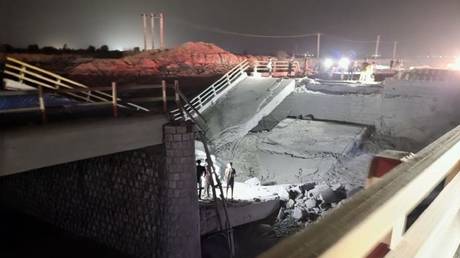
If Pakistan feels that Iran is actively destabilizing its Arab benefactors while ignoring the militants on its own soil, the temptation to launch cross-border retaliatory strikes grows. We saw a preview of this dangerous dance when both nations traded airstrikes.
It was a terrifying moment of brinkmanship that showed how quickly a minor spark can ignite a regional conflagration.
The View from the Tea Stall
Back on the border, away from the wood-paneled offices of Islamabad and the grand palaces of Riyadh, the reality of this geopolitical pivot is measured in smaller, more human terms.
At a small roadside tea stall near the Taftan border crossing, men sit on rope beds, listening to the crackle of a battery-powered radio. The news reader speaks of troop movements, strategic defense pacts, and sternly worded demarches.
An old driver, his hands stained with engine grease, looks toward the horizon where the sun is setting behind the Iranian hills. He knows that if this warning turns into something more tangible—if the border closes, if the trade stops, if the skirmishes begin—his livelihood vanishes overnight.
He does not care about the grand chessboards of the Middle East. He cares about the price of flour.
Yet, he also understands the unwritten law of the region. In this part of the world, weakness is an invitation. If Pakistan did not speak loudly now, it would find itself squeezed between a hostile India on its east, an unstable Afghanistan to its north, and an aggressive Iran to its west.
The warning to Iran was not just about defending Saudi Arabia. It was a desperate, loud assertion of Pakistan’s own survival. It was a declaration that despite its broken economy, its political chaos, and its internal strife, it still possesses teeth.
The sun dips below the Chagai hills, casting long, needle-like shadows across the sand. The border remains open, for now. The trucks still rumble through, their diesel engines roaring against the silence of the desert. But everyone is watching the sky, waiting to see if the next wind from the west brings dust, or the smell of fire.