The air at fourteen thousand feet does not just chill the skin; it scrapes the lungs clean of illusion. Up here, where the peaks of the Karakoram pierce a mercilessly blue sky, the geopolitical maps drawn in distant capitals dissolve into something much simpler and much more brutal. Stone. Ice. Breath.
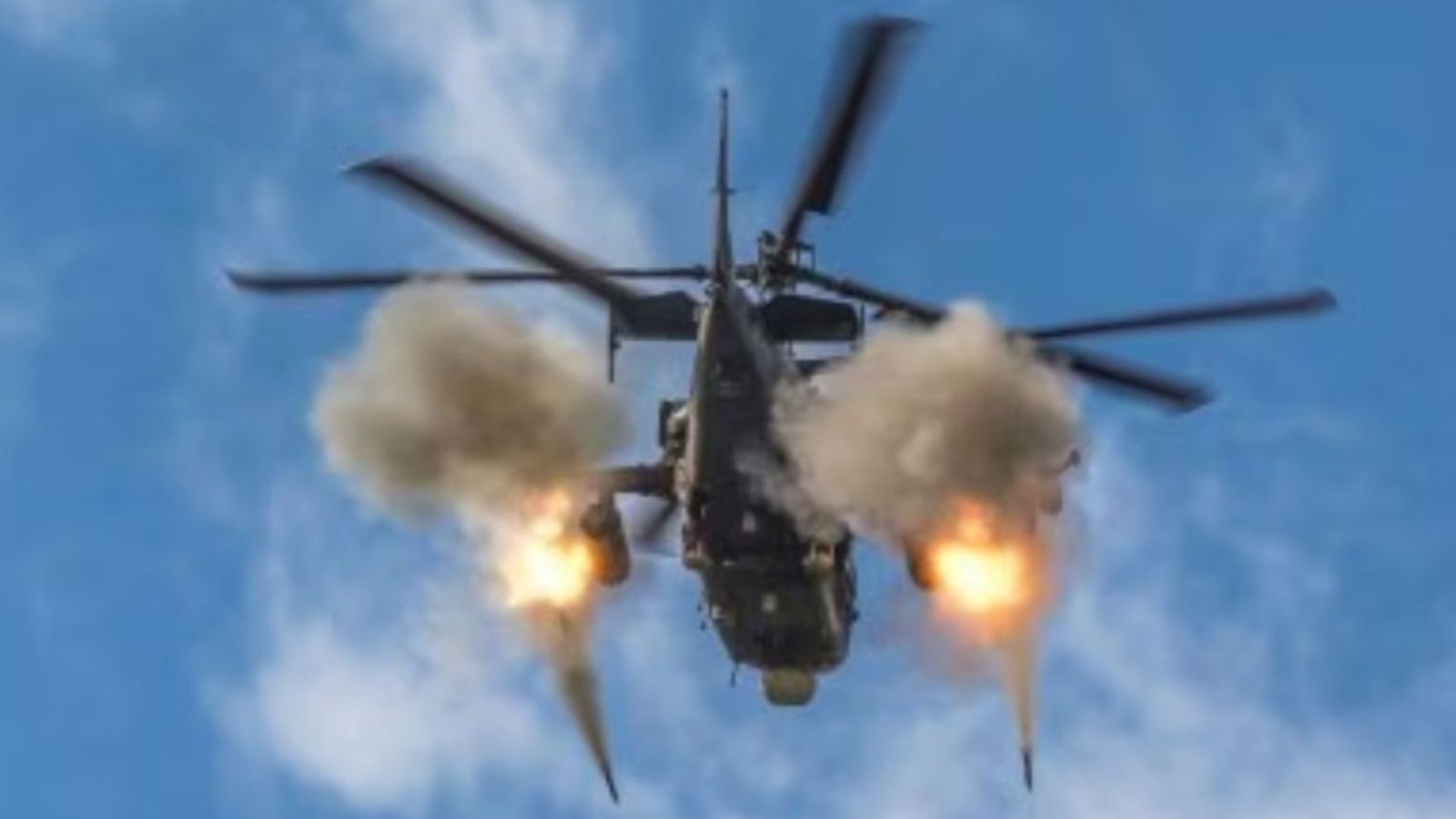
Listen closely. You can hear it. The heavy, rhythmic thrum of an army helicopter cutting through the thin air over the Siachen Glacier. It has been doing this for decades. A mechanical heartbeat over a frozen wasteland where more soldiers die from the sheer malice of the weather than from any bullet.
To understand Pakistan's relationship with Kashmir, you have to abandon the sterile vocabulary of foreign policy briefings. Forget the dry percentages of GDP, the endless UN resolutions gathering dust in oak-paneled rooms, and the dry legalisms of international law. Those things matter, yes. But they do not capture the weight of a rifle carried by a nineteen-year-old conscript shivering in a bunker carved into glacial blue ice. They do not capture the smell of woodsmoke rising from a valley where children sleep under the constant, low-frequency hum of uncertainty.
Consider what happens when a border is not just a line on paper, but a jagged tear through a living culture.
The Anatomy of a Fractured Valley
Partition was a surgeon’s knife wielded in a blinding hurry. In 1947, as the British empire packed its trunks and retreated from the subcontinent, it left behind a bleeding puzzle. Princely states were given a choice to join India or Pakistan, based notionally on geography and religious demographics. Kashmir, ruled by a Hindu Maharaja with a predominantly Muslim population, became the ultimate anomaly.
A dash of tribal militias from the west, a hurried accession to India by the monarch, and the first war erupted before the ink on independence agreements had even dried.
That war never truly ended. It merely froze, cracking occasionally into open artillery duels across the Line of Control, a military-controlled frontier that splits families, languages, and mountain ranges.
Imagine standing in a village in the Neelum Valley. Across a rushing, emerald-green river, so close you could throw a stone and hit the opposite bank, stands another village. Your cousin lives there. You grew up playing cricket in the same dusty square. Your grandfather is buried in the graveyard that spans both sides of what is now a militarized zone. Yet, to see him, or to speak to your cousin, you would have to embark on a bureaucratic odyssey involving multiple visas, intelligence checks, and thousands of miles of travel—if permission is granted at all.
This is the human cost of the Kashmir problem. It is not an abstract chess match between Islamabad and New Delhi. It is an ache that has persisted for three generations.
The Economic Bleed
Nations are living organisms. When a vital organ is trapped in a permanent state of inflammation, the whole body suffers.
Pakistan’s foreign policy and domestic priorities have been profoundly shaped, and in many ways distorted, by the magnetic pull of the Kashmir dispute. Defense budgets swell year after year. Tanks roll down asphalt roads during parades while hospitals in rural Sindh or Balochistan lack basic oxygen supplies. The logic is defensive, rooted in a deep-seated historical trauma and a genuine fear of encirclement. But the opportunity cost is staggering.
Money spent on maintaining artillery divisions at high-altitude posts cannot be spent on schools, clean drinking water, or climate resilience in a country that sits on the frontline of global environmental collapse.
(Note: When economists look at South Asia's trade deficit and missed regional integration, they point directly to the closed borders between India and Pakistan. It is the elephant in every regional economic summit.)
Trade across the Wagah border trickles when it should flood. South Asia remains one of the least economically integrated regions on earth, largely because the Kashmir dispute acts as a permanent circuit breaker on normal diplomatic and commercial relations.
Pakistan’s position has remained remarkably consistent across civilian governments and military regimes: self-determination for the Kashmiri people through a UN-mandated plebiscite. It is a stance grounded in moral clarity from Islamabad's perspective. Yet, the diplomatic toolkit has often felt limited to a binary choice between internationalizing the dispute and complete deadlock.
The Changing Terrain
Time does not heal all wounds. Sometimes, it merely hardens them into scar tissue.
In recent years, the landscape shifted dramatically. The revocation of Article 370 by New Delhi in 2019 altered the constitutional status of the portion of Kashmir administered by India, integrating it more fully into the Indian union. For Islamabad, this was not just a policy change; it was an existential provocation, a unilateral redrawing of a disputed map.
Diplomatic ties were downgraded. Ambassadors were sent home. The ice in the mountains grew colder, and the diplomatic deep freeze matched it.
Yet, away from the headlines of broken treaties and fiery speeches at the United Nations General Assembly, a different kind of reality persists on the ground. People are simply trying to live. Farmers in Azad Kashmir tend to walnut orchards beneath skies that can turn angry in minutes. Young people in Muzaffarabad scroll through TikTok, dreaming of coding careers in Lahore or London, caught in the eternal push-and-pull between patriotic duty and the desperate desire for a normal, peaceful future.
They do not hate their neighbors with the unyielding fury that cable news pundits project. Often, they just want the noise to stop. They want the guns to go silent.
The Unspoken Burden
Why does this matter to someone sitting thousands of miles away, reading this on a glowing screen in London, New York, or Sydney?
Because a nuclear-armed state distracted by a perpetual security crisis is a dangerous variable in a volatile world. Because the humanitarian plight of millions of people trapped in a geopolitical no-man's-land is a stain on our collective global conscience. Because borders that divide humanity rather than connect it are a relic of an era we should have outgrown by now.
The snows on the Siachen Glacier will eventually melt, driven by the relentless march of a warming planet. The geopolitical ice will have to melt too, eventually. It has to. The alternative is too heavy a toll for any mountain to bear.
The helicopter returns to its base, its blades kicking up a blinding cloud of white powder. Silence reclaims the peak. Below, in the valleys of green and stone, life goes on—fragile, resilient, and waiting for a dawn that hasn't yet arrived.