Cold air smells different when it carries the weight of a shifting border.
Stand on the northern bank of the river on an October morning, and you can feel the geography of politics. Down south, the rhetoric rises like smoke from a distant bonfire, crackling across the airwaves with tariffs, threats, and the heavy machinery of economic pressure. Up here, in the sprawling expanse of Alberta, the frost bites early. People pull their wool collars tighter, watch the horizon, and wait to see how the next decree from Washington will alter the price of their grain, the security of their pipelines, and the rhythm of their daily lives.
Trade is rarely just an abstract spreadsheet of exports and imports. It is the hum of a combine harvester tearing through golden canola under a bruised twilight sky. It is the quiet hum of a refinery pump outside Edmonton, pushing millions of barrels of crude toward hungry markets down the Pacific coast and across the Midwest. When the political machinery in the United States rattles its saber, threatening sweeping tariffs that could choke Canadian energy and manufacturing, the immediate human impulse is to hit back.
Retaliation feels clean. It feels fair.
Consider the classic instinct of economic defense. If someone strikes your commerce, you strike theirs. For decades, jurisdictions under pressure have reached for the most visible levers at hand. Shelves emptied of specific imports. State-sanctioned bans on beloved regional goods. A symbolic slamming of the door.
Yet, when the latest wave of threats crashed northward, promising a steep tariff wall against Canadian goods unless domestic policies shifted, the response from Edmonton was startlingly quiet.
No bans. No sweeping boycotts of American spirits. No dramatic public theater of emptied liquor store shelves.
Instead, there was a steady breath and a calculated refusal to take the bait.
To understand why, you have to look past the political posturing and examine the plumbing of North American commerce. The supply chains binding Canada and the United States are not loose ropes; they are fused steel. A barrel of Western Canadian crude does not simply arrive in a foreign port; it is refined in American midwestern plants, blended with domestic product, turned into jet fuel, and piped back into cross-border flights. Parts for vehicles cross the Detroit River multiple times before a single truck rolls off a showroom floor.
When you start tossing wrenches into a machine this interconnected, you rarely hit the intended target. More often, you crush your own fingers.
Picture a small-business owner in Calgary who imports specialized manufacturing components from Ohio. She employs a dozen people. Her margins are razor-thin, dictated by global commodity prices and the relentless creep of inflation. If the provincial government had decided to slap retaliatory bans on American goods, the blowback would have landed squarely on her loading dock. Costs would spike. Contracts would shatter. Her employees would bear the human cost of a political shouting match.
Pragmatism often wears a dull coat. It lacks the cinematic flash of a fiery retaliation speech. But survival in a harsh climate—whether meteorological or economic—demands calculation over emotion.
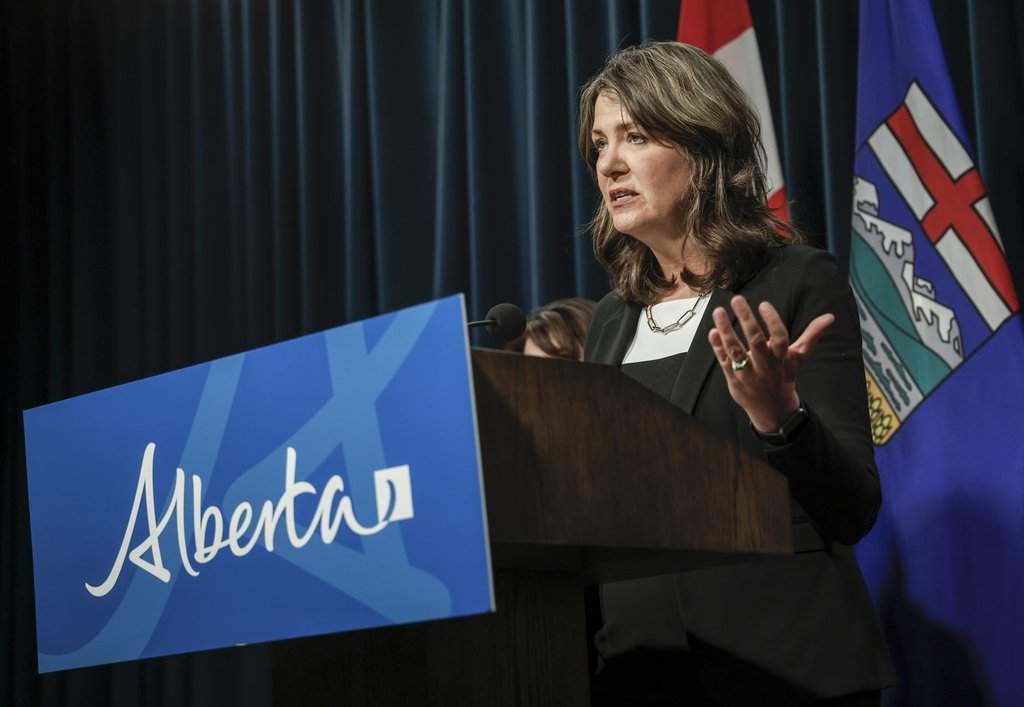
The Premier’s calculus was stark, grounded in the realities of asymmetric vulnerability. Alberta ships the vast majority of its energy products southward. Cutting off access to American markets, even symbolically through targeted retail bans, would inflict self-inflicted wounds while barely registering in Washington. It would be shouting into a hurricane.
Restraint is difficult. It requires swallowing pride. It forces leaders to look constituents in the eye and explain that sometimes, the bravest thing you can do is hold your ground rather than swing wildly into the dark.
History is littered with the wreckage of trade wars that spiraled out of control because leaders could not bear the appearance of weakness. Every escalation demands a counter-escalation. Tariffs breed counter-tariffs. Bans breed bans. Before long, ordinary citizens find themselves paying more for groceries, fuel, and heating oil, all to satisfy a brief moment of political theater.
By stepping back from the ledge of retaliation, Alberta chose a different path. It signaled a desire to keep communication channels open, to separate the erratic volatility of electoral politics from the foundational necessity of long-term economic partnership.
That choice does not mean submission. It means recognizing that leverage is not always about who can yell the loudest. Sometimes, leverage is the quiet confidence of a jurisdiction that knows it produces what the world—and its southern neighbor—fundamentally needs. Oil, gas, agriculture, timber. These are not political talking points; they are the physical building blocks of modern civilization.
The frost continues to creep down the eastern slopes of the Rockies. Down in the capital, the legislative offices hum with quiet strategy sessions, legal briefings, and long-range economic forecasts. The threats from the south may return with the next news cycle, sharp and demanding.
Out on the highway, a transport truck loaded with steel pipes rolls steadily toward the border, its headlights cutting through the gathering dusk, carrying the weight of an uneasy alliance into tomorrow.


/i.s3.glbimg.com/v1/AUTH_1f551ea7087a47f39ead75f64041559a/internal_photos/bs/2025/P/p/LLF10DRp2WoUISXryrUQ/whatsapp-image-2025-12-02-at-20.06.57.jpeg)