Jack Thornell, the Associated Press photographer who transformed the American consciousness with a single shutter click in 1966, has died at 86. While his obituary marks the end of a long, decorated career, it also serves as a stark reminder of a time when the camera was the only weapon capable of piercing the veil of Southern segregation. Thornell didn't just take a picture; he captured the exact moment the civil rights movement collided with the raw, violent resistance of the Mississippi Delta.
The Hunt for the Truth on Highway 51
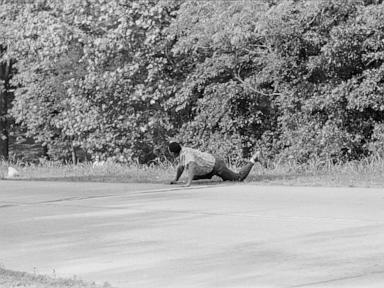
The image is etched into the historical record. James Meredith, the man who had integrated the University of Mississippi four years prior, lies crumpled on the asphalt of U.S. Highway 51. His face is twisted in agony, his hand reaching out as if to grasp a reality that had suddenly turned lethal. Behind him, the blurred greenery of the roadside stands in indifferent contrast to the carnage.
Thornell was there because he understood the stakes. In June 1966, Meredith began his "March Against Fear," a solo walk from Memphis, Tennessee, to Jackson, Mississippi. The goal was simple yet radical: to prove that a Black man could walk through his home state without being killed. It took only two days for that premise to be shattered.
When Aubrey Norvell, a local white man, stepped out from the brush with a shotgun, the world was watching—or at least, Thornell was. The Pulitzer Prize-winning photograph that followed did more than document a crime. It stripped away the polite euphemisms of the era. This wasn't "racial tension." It was an attempted execution on a public road in broad daylight.
The Mechanics of a Pulitzer Moment
To understand the weight of Thornell’s work, one must look past the subject matter and into the technical desperation of 1960s photojournalism. There were no digital sensors, no instant previews, and no high-speed bursts.
Thornell was shooting on film, likely a Leica or a Nikon F, tools that required a tactile intimacy with light and distance. When the shots rang out, he didn't run for cover. He moved toward the sound. The composure required to focus a manual lens while a gunman is still active is a brand of courage that has largely vanished in the age of drone footage and stabilized smartphone video.
The resulting image was raw. It was slightly grainy, framed with a sense of urgent chaos, and utterly undeniable. The Associated Press moved the photo over the wires immediately. By the next morning, it was on the front page of nearly every major newspaper in the world. The impact was instantaneous. Dr. Martin Luther King Jr., Stokely Carmichael, and other leaders rushed to Mississippi to finish what Meredith had started. Thornell’s photo had acted as a catalyst, turning a solitary walk into a mass mobilization.
Beyond the Meredith Frame
While the Meredith shooting defined his legacy, Thornell’s career was a marathon of witnessing the American South in transition. He spent decades in the New Orleans bureau of the AP, covering everything from the devastation of Hurricane Camille to the mundane, everyday friction of a region trying to outrun its past.
He belonged to a vanishing breed of "wire men." These were journalists who didn't have the luxury of artistic pretension. They worked on tight deadlines, often in hostile environments where a camera was viewed as an enemy instrument. Thornell knew that his job wasn't to make things look beautiful; it was to make them look real.
His work in the late 60s and 70s captured the shifting power dynamics of the Gulf Coast. He photographed the arrival of integration in schools where the tension was so thick it seemed to distort the air. He captured the faces of politicians who preached "massive resistance" even as the ground crumbled beneath their feet. In every frame, there is a sense of patient observation. Thornell was a hunter of moments, waiting for the split second when a subject’s guard dropped and the truth peered out.
The Cost of the Witness
We often talk about the subjects of famous photographs, but we rarely discuss the psychological toll on the person behind the lens. To capture the Meredith shooting, Thornell had to remain a detached observer during a moment of profound human suffering.
This detachment is the journalist’s burden. You see the blood, you hear the screams, and your first instinct must be to check your exposure settings. It is a cold, necessary trade-off. Thornell lived with those images for sixty years. He saw the shift from film to digital, the rise of the 24-hour news cycle, and the eventual dilution of the "iconic image" in a sea of social media noise.
Yet, he remained a staunch defender of the still photograph. He understood that while video captures the flow of history, a still image freezes it, allowing the viewer to stare into the eyes of the past until they can no longer look away.
The Myth of the Post-Racial Lens
Thornell’s passing comes at a time when the very act of documenting reality is under fire. In the 1960s, the "camera as witness" was a revolutionary concept. Today, images are frequently dismissed as manipulated or "fake news" when they challenge a specific narrative.
The Meredith photo worked because it was an objective fact that couldn't be argued away. There was the man. There was the wound. There was the road. It provided a common baseline for a national conversation. If Thornell were starting his career today, he would find a fractured audience, one that often chooses which "facts" to believe based on political alignment.
His death marks the closing of a chapter on a specific type of American courage. It was the courage of the man who stands in the middle of the road while everyone else is running, holding a small metal box to his eye, betting his life that the truth is worth the risk.
Legacy in the Digital Static
The Pulitzer Prize awarded to Thornell in 1967 wasn't just for a great photo; it was for the courage to be present. In our current era of curated feeds and algorithmically driven content, we are losing the "uncomfortable truth" that Thornell specialized in.
We prefer images that validate us. Thornell’s images challenged us. They forced a complacent nation to look at the blood on its own hands. He didn't use his platform to "start a conversation" or "foster a dialogue." He used it to provide evidence.
The gear has changed. The speeds have increased. But the fundamental requirement of the journalist—to be there, to stay there, and to tell the truth regardless of the consequences—remains as rare as it was on that dusty stretch of Mississippi highway in 1966. Jack Thornell didn't just record history; he made it impossible to ignore.
He died in Metairie, Louisiana, far from the gunfire of his youth, but the echoes of his shutter click continue to resonate. They remind us that the most powerful thing a human can do is see clearly.
Stop looking for the easy angle.