A handful of gray dust. That is what we are fighting over. If you hold a pinch of it between your thumb and forefinger, it feels like flour but acts like ground glass. It is jagged, abrasive, and smells faintly of spent gunpowder. For four billion years, this dust sat undisturbed in the silence of the lunar vacuum. Now, it has become the most contested real estate in human history.
The problem isn't that we don't know who owns the Moon. The problem is that everyone thinks they do, provided they get there first.
The Ghost of 1967
Walk into the office of a space lawyer—yes, they exist, and they are currently the busiest people in the room—and you will see a copy of the Outer Space Treaty of 1967. It was written in a fit of Cold War panic, a desperate attempt to ensure that the moon didn't become a nuclear silo orbiting our heads. It states, quite clearly, that no nation can claim "sovereignty" over the Moon by means of use, occupation, or any other way.
It worked. For a while.
But the treaty has a hole big enough to fly a Falcon Heavy through. It says nations can’t own the Moon. It says nothing about a guy named Elon, or a guy named Jeff, or a startup backed by venture capital from Singapore.
Imagine a hypothetical explorer named Sarah. She isn't an astronaut for NASA; she’s a contract geologist for a private mining firm. When Sarah lands her rover at the lunar south pole, she isn't looking for a place to plant a flag and take a selfie. She is looking for ice. Deep, dark craters like Shackleton hold frozen water that hasn't seen sunlight in eons.
To Sarah’s bosses, that ice isn't for drinking. It’s for breathing and moving. Split the hydrogen from the oxygen, and you have rocket fuel. If you control the ice, you control the gas station for the entire solar system. Sarah’s company doesn't need to "own" the Moon. They just need to own the 100 square meters around that ice.
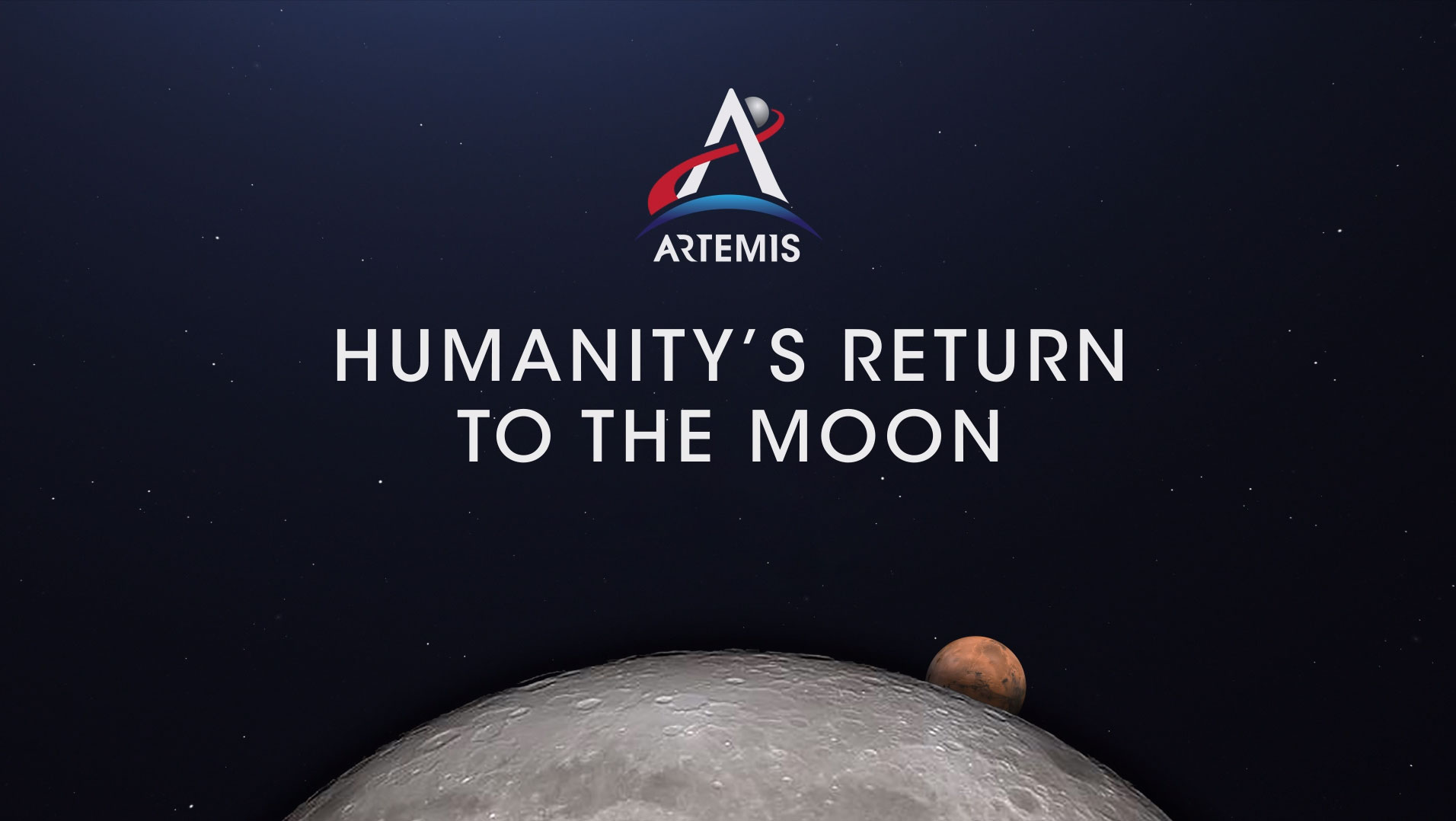
This is where the law breaks. Under the Artemis Accords—a new set of rules pushed by the United States and signed by dozens of allies—companies can create "safety zones." It sounds reasonable. You don’t want a competitor landing their rocket twenty feet from your sensitive drill and sandblasting your equipment with high-velocity lunar grit. But if your safety zone covers the only accessible water in a thousand-mile radius, haven't you effectively claimed the land?
The Gold Rush Without the Gold
We have seen this play out before. In the 1840s, the American West was a fever dream of opportunity. People died for patches of dirt because of what sat beneath it. But the Moon is different. There is no gold there, at least not in the way we think of it. There is Helium-3, which could theoretically power fusion reactors, and there are rare earth metals.
The real value, however, is simpler. It’s position.
Think of the Moon as the world’s most expensive parking lot. The "peaks of eternal light" are narrow ridges at the poles where the sun almost never sets. If you put a solar panel there, you have infinite power. If you move ten feet into the shadows, you have nothing but two weeks of freezing night. There are only a few of these spots.
When a Chinese lander and an American lander both eye the same ridge, who has the right of way? There is no space police. There is no lunar court. There is only the "first in time, first in right" principle, a relic of old maritime law that favors the fast and the rich.
The stakes are invisible until they aren't. We treat the Moon as a backdrop for our evening walks, a poetic light in the sky. We forget it is a physical place with finite resources. If we turn the lunar surface into a patchwork of corporate mining claims, we aren't just exploring. We are colonizing. And we are doing it with the same messy, greedy instincts that led to every terrestrial war in our history.
The Tragedy of the Lunar Commons
There is a concept in economics called the "Tragedy of the Commons." If everyone has access to a shared pasture, everyone brings as many cows as possible until the grass is gone and the cows starve.
The Moon is our ultimate commons.
The 1967 treaty says the Moon is the "province of all mankind." It’s a beautiful phrase. It’s also completely unenforceable. Russia and China are currently planning a joint International Lunar Research Station. They haven't signed the Artemis Accords. They see the U.S.-led "safety zones" as a land grab disguised as safety regulation.
Consider the "Heritage Sites." NASA wants to protect the Apollo 11 landing site. They want to ensure that Neil Armstrong’s footprints aren't erased by some billionaire’s tourist rover. It’s a noble sentiment. We want to protect our history. But by declaring that patch of dirt off-limits to others, we are, for the first time, asserting a permanent presence.
If Sarah, our hypothetical geologist, happens to find a rich vein of titanium right under the Sea of Tranquility, she can't touch it. But who decided that? Why does the U.S. get to cordone off 500 acres of the Moon based on a walk that happened sixty years ago?
The tension is quiet, but it is vibrating. It’s the sound of a drill bit hitting permafrost.
The Cost of the Silence
We are rushing back to the Moon not because we have solved the problems of Earth, but because we are bringing them with us. The space economy is projected to be worth $1 trillion by 2040. That money isn't coming from science. It’s coming from telecommunications, resource extraction, and tourism.
When you look up tonight, the Moon looks the same as it did to your ancestors. It is cold, distant, and seemingly indestructible. But it is fragile. The Moon has no atmosphere to sweep away our messes. Every piece of junk we leave there stays there. Every chemical we leak into the regolith stays there.
We are currently in the "Wild West" phase, where the fast and the bold set the rules. History tells us this phase usually ends in a crash, a conflict, or a monopoly. We are building a future where the night sky might eventually be dotted with the glowing logos of private corporations, and the "province of all mankind" becomes the private property of the highest bidder.
The law is trying to catch up, but it is running on foot while the rockets are already in the air. We are debating who owns the dust while the boots are already hitting the ground.
Maybe the question isn't "Who owns the Moon?"
Maybe the question is whether we are capable of visiting something without breaking it, or whether our need to possess is so ingrained that we cannot see a frontier without seeing a fence. Sarah sits in her rover, looking out at the vast, undulating gray of the lunar plains. She sees a landscape of profit and loss, of hydrogen percentages and solar angles. She has forgotten to look up at the blue marble hanging in the blackness above her—the only place where the air is free, and the dirt doesn't belong to a board of directors.
The silence of the Moon is about to get very loud.