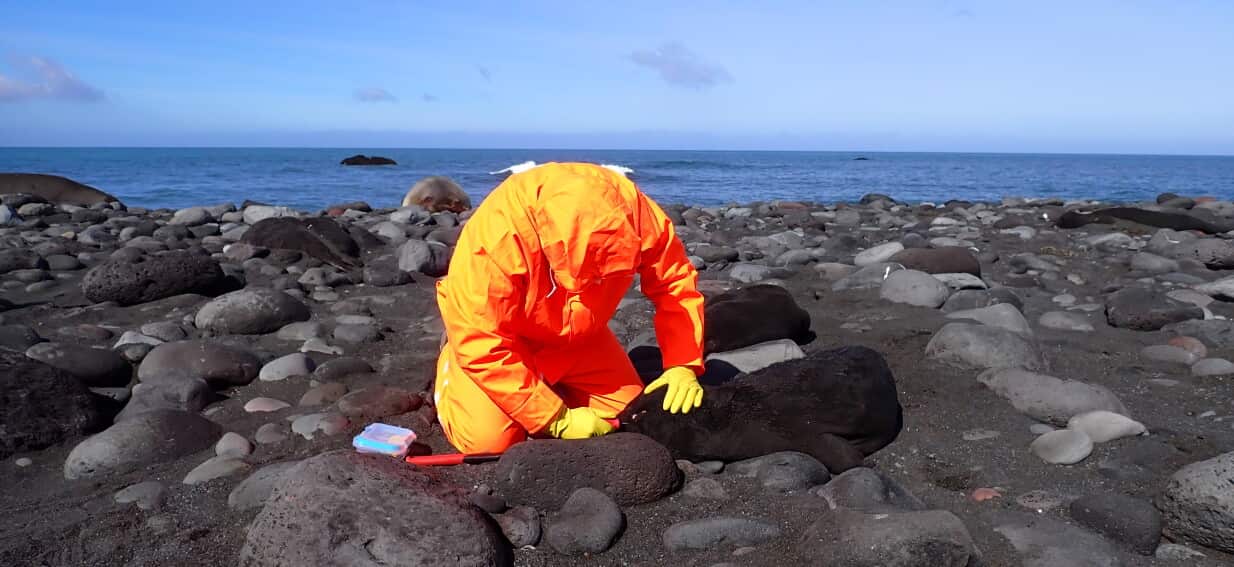
The wind off Cape Le Grand National Park does not care about borders. It sweeps across the freezing sub-Antarctic waters, carrying the scent of salt, damp granite, and the sharp chill of the southern winter. It was here, on a remote stretch of beach 700 kilometers southeast of Perth, that a solitary brown skua came ashore.
To an untrained eye, it was just a bird resting on the sand. But to anyone who knows the fierce, predatory nature of a skua, its stillness was wrong. It was sluggish. Defeated. By the time the wildlife rangers isolated it, the bird was dying. Within hours, it was gone.
The death of a single wild seabird rarely alters the course of history. This one did.
On June 20, 2026, laboratory tests confirmed what scientists had dreaded for years. The skua had died from the highly pathogenic H5 strain of avian influenza. Australia—the final geographic sanctuary, the only continent on Earth that had successfully locked its gates against the devastating global wave of H5N1—was no longer free. The last fortress had fallen.
Federal Agriculture Minister Julie Collins stepped up to a microphone in Canberra to break the news. Her words carried a weight that went far beyond standard bureaucratic updates. "We all knew that we couldn't be bird flu-free forever," she admitted. It was a sober, quiet acknowledgment of a reality that had shifted beneath our feet. For years, we watched the rest of the world burn from afar. We read about the millions of culled poultry in Europe, the eerie silence in South American seabird colonies, and the thousands of elephant seal pups dying on sub-Antarctic islands. We felt safe behind our vast oceans.
Now, the threat is no longer a theoretical headline on a screen. It is in our dirt, our water, and our skies.
To understand why a sick bird on an isolated beach matters to a parent making school lunches in Sydney or a farmer checking his sheds in Victoria, you have to look past the clinical terminology. The phrase "high pathogenicity" sounds like a problem for lab coats. In reality, it means speed and devastation. In dense wild-bird colonies, the virus spreads like wildfire through respiratory secretions and feces, contaminating everything it touches. It attacks the nervous system. Birds experience neurological defects, losing their coordination before dying suddenly.
Consider a hypothetical cattle farmer in the local districts, let us call him David. For decades, David has worried about droughts, floods, and the price of grain. Now, he faces an invisible hitchhiker. If the virus jumps from wild birds to domestic poultry, or worse, into livestock, the economic fallout is immediate. Entire flocks must be culled to stop the spread. Supply chains snap. Prices at the grocery checkout soar. The invisible stakes of biosecurity suddenly become very visible on the family budget.
But the ecological heartbreak is what keeps wildlife carers awake at night. Australia is home to species found nowhere else on earth, many already balancing on the razor's edge of survival. The virus does not discriminate. It is an existential threat to the iconic black swan, the critically endangered orange-bellied parrot, and the unique little penguin colonies that draw tourists from across the globe.
Think of the Australian sea lion. They are already wrestling with a fragile population, fighting a slow battle against extinction. Because the H5 strain thrives where animals crowd together to breed, a single outbreak in a sea lion colony could wipe out generations in a matter of weeks. We have already seen the blueprint for this tragedy. On Heard Island, a remote external Australian territory, the virus is believed to have wiped out 13,000 out of 17,000 elephant seal pups in less than a year. It is a grim preview of what happens when global ecological currents wash up on our mainland.
But panic is a poor survival strategy.
Chief Veterinary Officer Beth Cookson and health authorities have emphasized that the risk to the general public remains low. This is a crisis of conservation and agriculture, not a sudden human pandemic. The government has already injected over $100 million into preparedness, mapping out more than 100 response plans for significant natural sites. Our laboratories, like the CSIRO's Australian Centre for Disease Preparedness, are world-class. We are not defenseless.
Yet, the defense of a continent cannot be left entirely to politicians and scientists. The frontline has moved to our backyards, our local parks, and our walking tracks.
The strategy now relies on thousands of ordinary citizens keeping their eyes open. It is the dog walker who notices an unusual cluster of dead wild birds near a lake. It is the backyard chicken keeper who takes five minutes to ensure wild ducks cannot access her flock’s water supply. The instructions from authorities are clear: if you see something unusual, do not touch the animal. Do not move it. Take a photo, note your exact location, and dial the national Emergency Animal Disease Hotline on 1800 675 888.
As the sun sets over Cape Le Grand, the tests continue on a second bird—a giant petrel found sick in the exact same region. The tide is coming in, erasing the footprints of the rangers who found the skua. The ocean looks exactly as it did last week, vast and beautiful. But the air is different now. The world has caught up to us, and the long, quiet fight to protect our wild spaces has officially begun.