If you told anyone five years ago that Los Angeles would host massive international sporting events without relying on private cars, they would have laughed you out of the room. This is the city of the 405 freeway. It is the birthplace of the modern American traffic jam. Yet, the 2026 FIFA World Cup matches in Southern California just proved that the city's wildest transit experiment might actually succeed.
Mayor Karen Bass set a massive goal for the 2028 Summer Olympics: a completely car-free Games with zero spectator parking at the venues. Everyone scoffed. But the eight World Cup matches hosted at SoFi Stadium in Inglewood served as the ultimate stress test. Surprisingly, the city did not collapse into total gridlock. Instead, thousands of fans who usually avoid the LA Metro like the plague actually hopped on trains and buses.
It is not flawless, but the narrative that LA cannot survive without cars is officially dead.
The Bus Fleet Illusion
The biggest misconception about LA's transit strategy is that the city is suddenly going to build enough rail lines to connect every stadium by 2028. It is not happening. Rail projects take decades. Instead, the real workhorse of this operation is the humble bus.
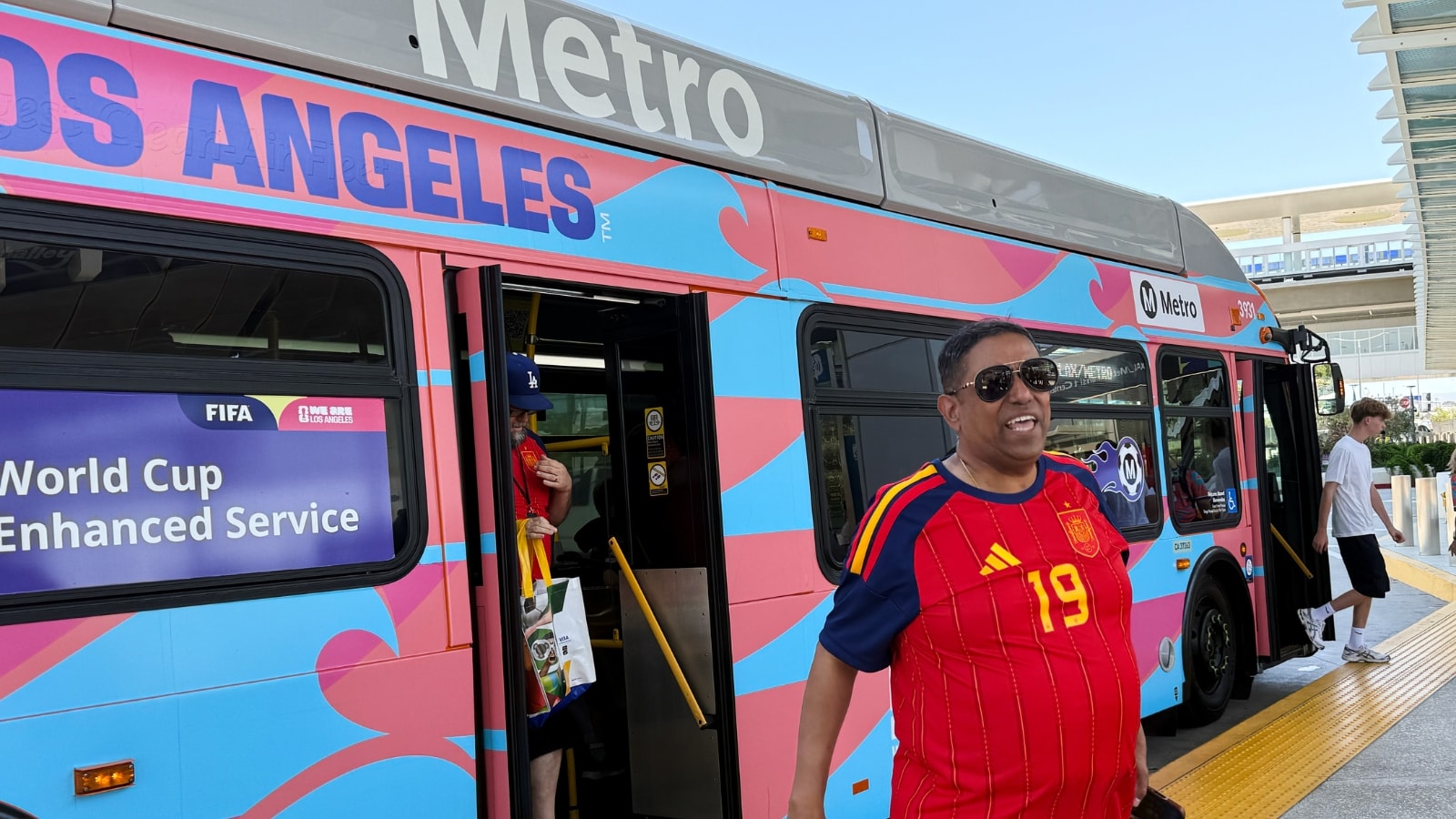
SoFi Stadium does not have a direct subway link. To solve this for the World Cup, LA Metro deployed a massive network of 15 distinct shuttle lines pulling fans from major rail hubs and transit centers across the basin. For a single match between Spain and Austria, rail lines saw nearly 50,000 rides, while the dedicated stadium shuttles handled over 30,000 trips alone. Some of those shuttle routes took over an hour to reach the stadium from distant transit hubs, yet people chose them over driving.
To pull this off for the World Cup, Metro had to borrow about 200 buses from regional partners. For the 2028 Olympics, they will need to scale that up to 3,000 borrowed buses.
This is the secret strategy. It is not about pretending the train network is perfect. It is about creating exclusive bus-only lanes by stripping space away from private vehicles, making public transit the only fast way to get to the game. If you try to drive to a venue in 2028, you will find no parking and absolute gridlock. The city is purposefully making driving miserable to force people onto buses.
Overcoming the Safety Stigma
You can build all the transit lanes you want, but if locals think the trains are unsafe, they will stay in their SUVs. LA Metro has struggled with a brutal reputation for years. High-profile violent incidents, including a tragic fatal stabbing on a train in 2024, deeply damaged public trust. For a long time, the system felt dirty, unpredictable, and neglected.
To change that perception before the international spotlight hit, Metro shifted its strategy. They launched an internal transit police force to phase out reliance on the LAPD, aiming for full deployment by 2029. Combined with increased homeless outreach teams and crisis clinicians, the ground game changed.
The data shows it is making an impact. Overall crime dropped 13.6% in March 2026 compared to the previous year. More importantly, the vibe on the ground shifted during the World Cup. Metro transformed transit hubs like Union Station and the LA Memorial Coliseum into official FIFA Fan Festivals with live DJs, watch parties, and limited-edition country-themed TAP cards.
Suddenly, riding the train felt like part of the pre-game ritual rather than a sketchy chore. Casual riders who used to skip the transit system are realizing it is cleaner and more reliable than they remembered. Plus, with current gas prices, a train ticket looks a lot better than a $60 stadium parking spot.
The Infrastructure Wins That Last Past 2028
While the temporary bus bridge is doing the heavy lifting, LA is quietly securing some permanent infrastructure upgrades. The long-awaited D Line subway extension finally opened its first phase, pushing heavy rail from downtown through Koreatown and further west toward the Miracle Mile. This represents the first major heavy rail expansion project in the United States since 2020.
Construction is still pushing forward on the next phases to extend the D Line all the way to the UCLA campus, which will serve as the official Olympic Athlete Village.
On top of that, the new LAX/Metro Transit Center Station on the C and K lines finally links the rail system to Los Angeles International Airport. The automated people mover is finishing up its final testing to seamlessly connect those platforms to the airport terminals. For decades, tourists arriving at LAX had to fight through a chaotic horseshoe of traffic just to grab an Uber. Now, the bones of a real airport-to-stadium transit connection actually exist.
Your Playbook for Navigating Major Events in LA
If you are planning to attend any massive events in Southern California over the next few years, you need to abandon your old habits. Driving to the venue is a losing strategy. Here is how to actually get around without losing your mind.
- Ditch the Rideshare Apps: Uber and Lyft prices skyrocket to triple-digit surges during major stadium events, and you still get stuck in the exact same traffic as everyone else.
- Locate the Park-and-Ride Hubs: You do not have to take the bus the whole way. Drive to a suburban Metro station with a large parking lot, leave your car there for cheap, and take the express shuttle directly past the traffic lanes.
- Upgrade Your Wallet: Metro finally updated its fare gates to accept direct contactless credit cards and phone payments. You do not need to stand in line to buy a physical transit card anymore. Just tap your phone and walk through.
- Expect the Wait: Public transit during a massive tournament is efficient, but it is crowded. Wear comfortable walking shoes and expect lines at the shuttle bays immediately after the final whistle.
The World Cup matches proved that when Los Angeles coordinates its regional transit agencies and forces the issue with dedicated lanes, mass transit can handle world-class crowds. The car-free vision for the Olympics is no longer a pipe dream. It is actively being built.