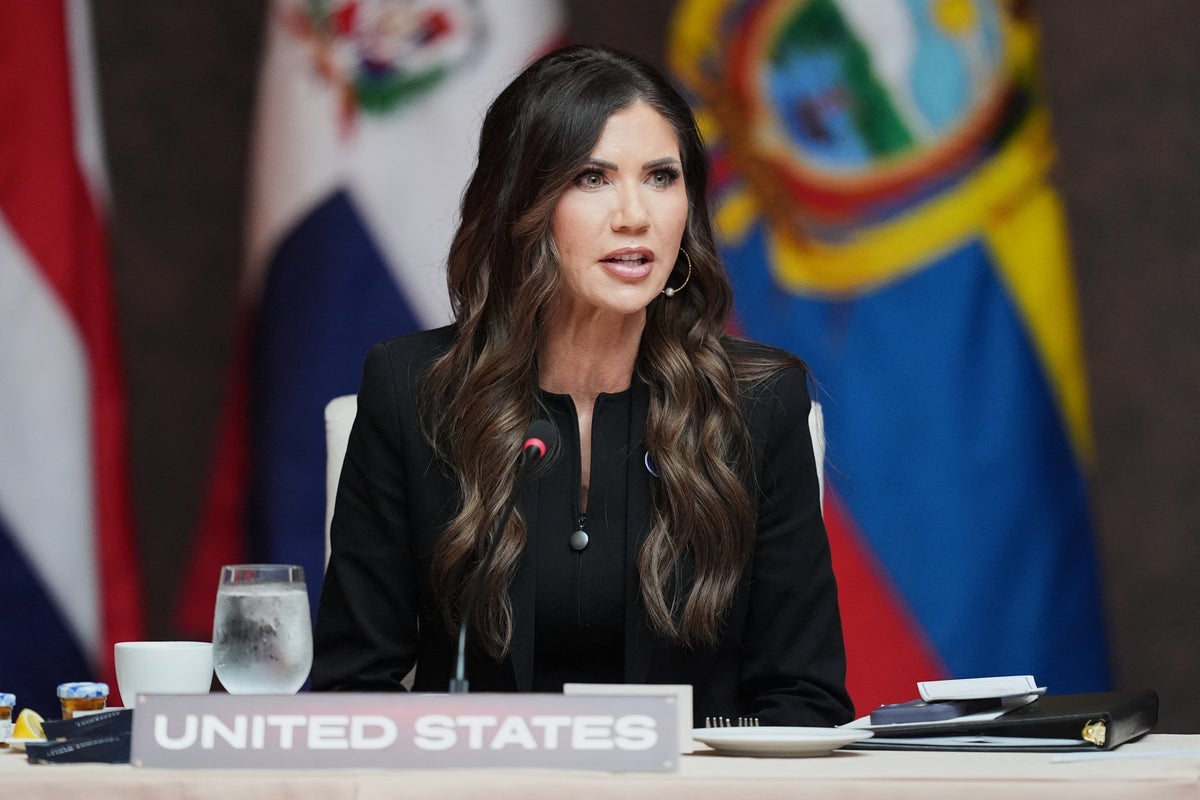
Kristi Noem is out as the Secretary of Homeland Security. Her sudden exit from the Trump administration marks a dramatic turn for one of the most visible figures in the modern conservative movement. For years, Noem built her entire political brand on a singular, loud message: the United States is under an existential, coordinated assault from the Chinese Communist Party.
During her brief, chaotic tenure at DHS, and her previous years as South Dakota’s governor, Noem repeatedly sounded the alarm. She famously claimed that China operates on a "thousand-year plan to destroy the United States," pointing to everything from intellectual property theft to the purchasing of American agricultural land.
Yet, when her own political survival was on the line, the aggressive anti-China rhetoric wasn't enough to save her job. Her ousting reveals a harsh reality about Washington politics. Hyperbolic warnings about foreign adversaries don't matter much if you fail to manage the basic operational realities of the executive branch.
Breaking Down the Threat Behind the Rhetoric
Noem's warnings about China weren't entirely baseless, but they were often wrapped in dramatic exaggeration. Her core argument was that the Chinese Communist Party isn't just trying to compete economically; they are trying to systematically take over the American food supply chain and infrastructure.
During a House Agriculture Committee hearing, Noem testified that foreign adversaries have been quietly infiltrating the homeland for decades. She highlighted a massive surge in Chinese ownership of US agricultural land, which increased by over 5,000% between 2010 and 2020. According to USDA data, Chinese entities hold roughly 384,000 acres of American farmland, valued at around $2 billion.
She pointed to specific, worrying incidents during her time as governor. Her administration rejected meetings with Chinese nationals who wanted to tour agricultural facilities in South Dakota. Days later, the State Department flagged those exact individuals as spies targeting American crop genetics. There is also the high-profile case in North Dakota, where a Chinese company attempted to buy land near a military base under the guise of setting up a corn processing plant.
Noem used these very real security concerns to push a much larger narrative. She argued that China is actively working to ensure America can't feed itself. In her view, when a nation relies on an adversary for food, fertilizer, and basic chemical inputs, traditional military defense becomes irrelevant.
The Operational Failures That Led to the Ousting
If Noem was so aligned with the administration's aggressive posture toward foreign adversaries, why was she fired? The answer lies in the massive gap between talking about a threat on television and actually managing the largest federal law enforcement agency in the country.
DHS is a massive, bureaucratic machine with over 260,000 employees. It demands ruthless administrative competence. Congressional critics, led by lawmakers like Senator Peter Welch, openly hammered Noem for what they called incompetent and chaotic leadership.
Her downfall wasn't sparked by her foreign policy views, but by her domestic management failures. Noem focused heavily on high-profile, televised immigration raids in major cities like New York, turning complex law enforcement operations into political media events. Meanwhile, the core mechanics of the agency were reportedly fraying. Critics pointed to the severe mismanagement of federal disaster recovery funds and her public clashes over the utility of FEMA.
The administration ultimately decided that Noem was becoming a political liability. There were growing bipartisan concerns about her fiscal management and allegations that taxpayer dollars were being misdirected toward political allies and consultants. When the Senate began breathing down the administration's neck with demands for investigations into DHS mismanagement, the decision was made to cut her loose and replace her with Markwayne Mullin.
What the Data Actually Shows About the China Threat
To understand what Noem got wrong, you have to separate her sweeping historical rhetoric from the actual numbers. Her claim of a "thousand-year plan" or a "two-thousand-year plan" to destroy America is a historical absurdity. The United States didn't exist two centuries ago, let alone a millennium ago.
However, China does operate on long-term strategic cycles, typically structured around 50-year and 100-year national goals. The most significant of these is the "Made in China 2025" initiative and the centenary goals aimed at achieving global economic and technological dominance by 2049.
When you look at the data on land ownership, the situation is nuanced. While a 5,000% increase sounds terrifying, Chinese entities actually own less than one percent of all foreign-owned agricultural land in the United States. Countries like Canada, the Netherlands, and Germany own vastly more American soil than China does.
The real danger isn't the total volume of land China owns; it's the strategic location of that land. Security officials are genuinely worried when foreign adversaries buy property near sensitive military installations, communication hubs, or major energy grids. Noem was right to sound the alarm on those specific transactions, but by turning the issue into a hyperbolic talking point about total national destruction, she diluted the actionable intelligence.
Moving Past the Political Theater
The ousting of Kristi Noem proves that aggressive rhetoric cannot substitute for solid governance. Security strategy requires precision, not sensationalism. Moving forward, the focus on securing the homeland needs to shift away from cable news soundbites and toward concrete policy changes.
If you are tracking how the US actually plans to counter foreign infiltration without the political drama, keep your eyes on these specific areas:
- Enhanced CFIUS Scrutiny: The Committee on Foreign Investment in the United States needs to tighten its vetting process for real estate transactions within a 100-mile radius of any military asset or critical infrastructure hub.
- Strict Agricultural Tracking: Congress must mandate that the USDA actively monitors and tracks all foreign interests in large-scale agricultural transactions, closing the reporting loopholes that allowed anonymous shell companies to buy land.
- Supply Chain Decoupling: Federal state departments must incentivize domestic production of vital agricultural inputs, specifically fertilizer and crop care chemicals, to reduce reliance on supply chains controlled by adversaries.
The lesson from Noem’s short-lived tenure at DHS is clear. Pointing out an adversary’s long-term plan doesn't matter if you don't have a functional plan of your own to manage the store.
For a deeper look at the specific legislative fights surrounding foreign land ownership, you can watch this detailed briefing on Chinese ownership of American agricultural land. This video covers the specific testimony from agricultural committee hearings regarding security threats to the food supply chain.