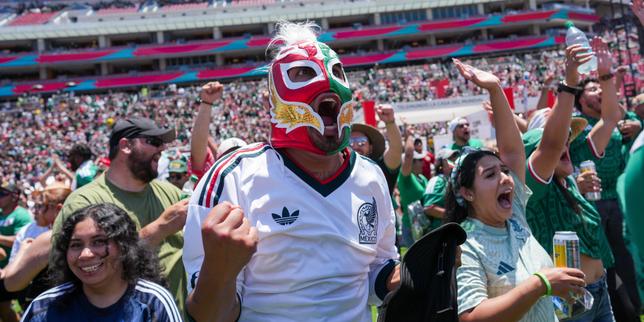
The emotional volatility of the New York Knicks fan base is not merely a cultural phenomenon; it is a highly concentrated economic asset and a case study in high-stress consumer psychology. When a metropolitan market of nearly twenty million people experiences a sustained championship drought, the relationship between the consumer and the sports franchise undergoes a structural shift. The standard utility function of entertainment consumption is replaced by a high-stakes emotional economy where the asset—a potential championship—is aggressively priced in, despite decades of non-delivery.
To analyze the underlying drivers of this environment, one must look past the superficial narratives of "passion" and "grit." The behavior of the Madison Square Garden ecosystem operates on predictable economic and psychological frameworks: the scarcity value of sports success in the nation's largest media market, the sunk cost fallacy of multi-generational fan investment, and the physical manifestation of group polarization in confined, high-density urban spaces. Understanding these mechanics reveals why the pursuit of a Knicks championship generates an unprecedented level of social friction and economic premium.
The Scarcity Value of New York Basketball Capital
The baseline economic valuation of the New York Knicks consistently outpaces franchises with far superior modern championship resumes. This structural anomaly is driven by the economics of hyper-localized scarcity. Unlike markets with a surplus of competing cultural anchors, the Knicks possess a near-monopoly on a specific sub-segment of New York’s cultural identity: authentic, indoor, winter-season premium entertainment that bridges demographic divides.
This creates a highly inelastic demand curve. The scarcity model operates across three primary vectors:
- Inventory Constriction: Madison Square Garden offers a fixed capacity of roughly 19,500 seats for basketball operations. In a metropolitan statistical area (MSA) with a population density surpassing 28,000 people per square mile in its core, the ratio of available inventory to potential affluent consumers is one of the tightest in global sports.
- Temporal Deprivation: A championship drought exceeding five decades creates a compounding interest effect on emotional equity. Every year of failure increases the speculative value of the eventual success. The market behaves similarly to a compressed spring; the energy stored within the fan base is disproportionate to the actual year-over-year performance of the roster.
- The Basketball Monopoly: While the New York market splits its allegiances across baseball (Yankees vs. Mets) and football (Giants vs. Jets), the historical and cultural center of gravity for basketball remains decisively monolithic. The Brooklyn Nets operate as a geographic and cultural alternative but lack the decades of localized lineage required to dilute the Knicks' market share.
This scarcity dictates that ticket pricing, media rights, and secondary market valuations are decoupled from standard performance metrics. A marginal improvement in team performance (e.g., advancing from the first round to the second round of the playoffs) yields an exponential increase in consumer spending and media engagement, a variance far steeper than that observed in smaller, less dense markets.
The Emotional Cost Function and Group Polarization
The aggressive, borderline volatile behavior observed within the New York fan base during high-stakes games—ranging from public altercations to collective states of euphoria—is the direct output of a localized group polarization framework. When thousands of individuals with high sunk costs are placed into a high-density environment, their initial behavioral tendencies do not average out; instead, they migrate toward extreme margins.
[High Sunk Cost Investment] + [High Density Urban Proximity]
               │
               ▼
   [Group Polarization Vector]
               │
               ▼
[Behavioral Volatility / Extreme Consumption Patterns]
This polarization is accelerated by the unique urban architecture of New York City. Fans do not disperse into isolated suburban automobiles after a game; they are immediately funneled into high-density transit hubs, bars, and street grids. The physical proximity sustains the emotional feedback loop long after the final buzzer, converting individual psychological investment into a collective social force.
The individual fan’s psychological investment can be modeled as an emotional cost function where the inputs are financial capital (premium ticket pricing, merchandise, media subscriptions) and temporal capital (hours invested over decades of losing seasons). The return on this investment is historically negative, creating a profound psychological imbalance. To correct this, the consumer over-indexes on the utility of short-term victories, treating a mid-round playoff win with the emotional weight typically reserved for a title. This explains the rapid transition from "brawls" to "bliss"—the margin between frustration and catharsis is incredibly thin because the emotional stakes are permanently elevated.
Roster Construction under the New York Premium
The operational environment of the Knicks front office faces a unique constraint: the New York Premium. This premium affects personnel acquisition, asset management, and tactical execution in ways that standard small-market franchises rarely encounter.
The Amplification Paradox
Every roster move, internal conflict, or tactical adjustment is magnified by a hyper-dense media apparatus. A player operating in this environment faces a dual-task load: executing the strategic game plan while managing the psychological weight of intense public scrutiny. This creates a filtering mechanism. Players with high emotional resilience thrive and see their market value inflated by the fan base’s adoration, while players susceptible to psychological fatigue experience rapid performance degradation, leading to a swift destruction of their asset value on the trade market.
The Urgency Bottleneck
The sheer volume of capital flowing through the franchise creates immense pressure for immediate returns. This structural reality makes long-term, systemic rebuilding projects (the traditional "tanking" model) highly inefficient from a business standpoint. The franchise cannot easily tolerate multiple seasons of hollowed-out ticket demand and diminished media ratings without severe financial penalties. Consequently, front offices are structurally incentivized to pursue high-risk, high-reward acquisitions, often overpaying for veteran talent to maintain a baseline level of competitiveness, even if it caps the team's ultimate ceiling.
The Economic Impact of the Ultimate Hedonic Treadmill
If the Knicks were to secure a championship, the macroeconomic impact on the New York sports landscape would be unprecedented, yet it would introduce a distinct set of structural challenges. The current business model thrives on the pursuit of the championship—the ultimate hedonic treadmill where the desire is never satisfied, ensuring continuous engagement.
A championship victory would immediately transition the franchise from a speculative growth asset to a defensive value asset. The immediate financial windfall would be quantifiable across several sectors:
- Merchandising Super-Cycle: Licensing revenue would experience a multi-year surge, driven by global demand from a displaced New York diaspora that leverages the team's brand as a proxy for cultural identity.
- Corporate Sponsorship Escalation: The valuation of courtside signage, corporate suites, and digital partnerships would scale linearly with the team's elevated global profile.
- The Tourism Multiplier: Madison Square Garden would transform from a localized entertainment hub into a primary global sports tourism destination, altering the foot-traffic dynamics of the Midtown Manhattan commercial district.
However, the long-term operational risk is the deflation of the emotional premium. Once the fifty-year drought is broken, the scarcity value of the title evaporates. The fan base's tolerance for subsequent mediocrity would drop sharply, and the unique psychological bond forged through collective suffering would begin to normalize toward standard consumer-brand relationships observed in markets like Los Angeles or Boston.
Strategic Execution Framework for High-Density Franchises
To sustain long-term enterprise value without succumbing to the volatile swings of the New York market, sports organizations operating in high-density, high-scarcity environments must execute a specific operational playbook.
First, roster construction must prioritize physical and psychological durability over pure athletic ceiling. The optimization metric should be "minutes played under duress," favoring players whose performance metrics remain stable or improve in high-leverage situations. Building a core of high-floor, high-effort players resonates with the working-class historical identity of the fan base, creating a buffer of goodwill that mitigates the fallout during inevitable competitive downturns.
Second, the business apparatus must diversify its revenue streams away from pure on-court performance. The franchise should position the arena experience as a cultural monument rather than just a basketball venue. By decoupling the real estate and historical asset value from the win-loss column, the organization ensures a baseline revenue floor that remains insulated from the team's shooting percentages or injury reports.
The ultimate strategic play is to leverage the fan base’s emotional volatility as an active home-court advantage. By designing stadium operations, audio-visual feedback loops, and ticketing strategies to maximize the concentration of passionate, multi-generational season ticket holders in the lower bowls, the franchise can create an intimidating physical environment for opposing teams. This directly converts cultural passion into a tangible competitive edge, shortening the path to the championship that the market so aggressively demands.