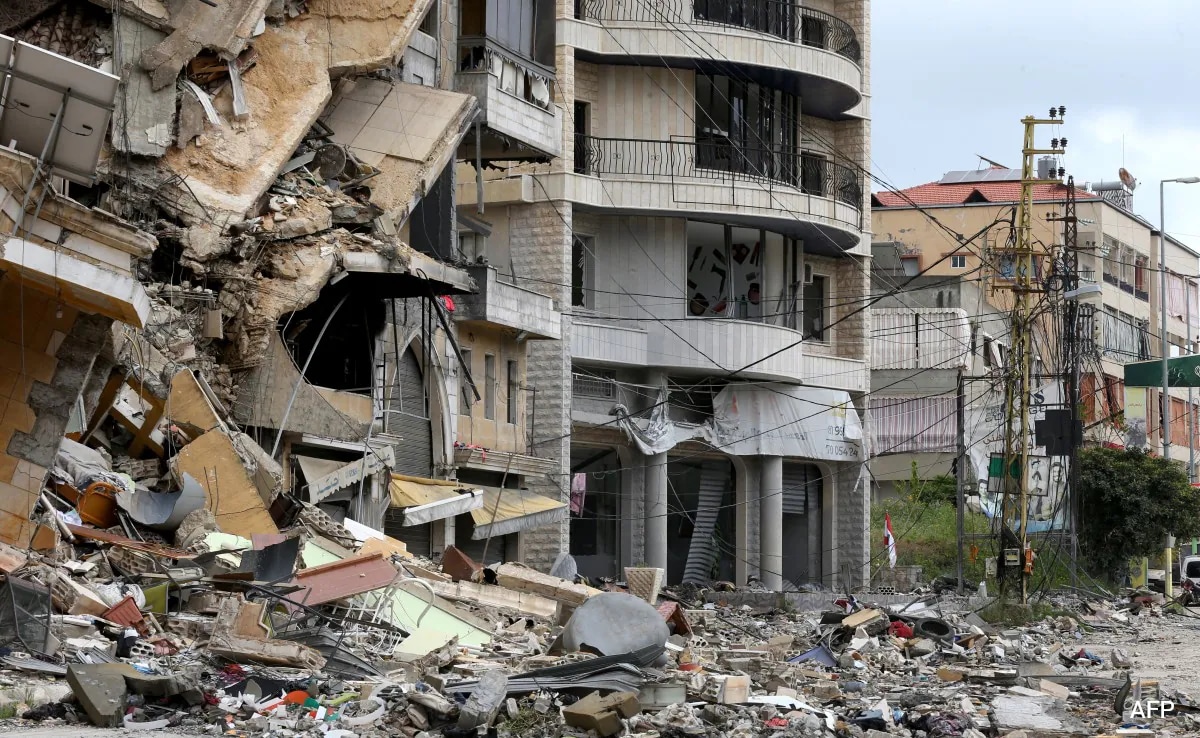
The current intensification of Israeli kinetic operations within Lebanon, resulting in five confirmed fatalities, functions as a high-stakes stress test for the fragile diplomatic architectures seeking a truce extension. This surge in violence operates on a logic of coercive bargaining: military pressure is applied to dictate the terms of a ceasefire rather than to prevent one. The survival of any cessation of hostilities depends on whether the belligerents can resolve the fundamental misalignment between tactical attrition on the ground and the strategic requirements of a durable buffer zone.
The Triad of Kinetic Escalation
The recent strikes represent a breakdown in the informal "rules of engagement" that have historically governed cross-border friction. To analyze why these five deaths signal a deeper shift in the conflict's geometry, we must examine the three variables currently driving the Israeli Defense Forces (IDF) targeting logic:
- Target Profiling and High-Value Attrition: Military operations are shifting from broad area denial to precision strikes against command-and-control nodes. Each strike is a calculated move to degrade the operational capacity of non-state actors before a potential freeze in movement.
- The Proximity-Risk Calculus: As the Lebanese government seeks a truce, the IDF is expanding its depth of operations. This creates a paradox: the closer a diplomatic breakthrough appears, the higher the incentive for the IDF to "cleanse" the immediate border regions to establish a fait accompli security zone.
- Collateral Asymmetry: In an asymmetric theater, civilian fatalities often stem from the integration of military assets within civilian infrastructure. The death of five individuals serves as a quantitative indicator of the increasing density of engagement in populated sectors, which complicates the political cost for the Lebanese state when negotiating a stand-down.
The Diplomatic Friction Point: UNSCR 1701 and Modern Realities
The Lebanese government’s pursuit of a truce extension is anchored in United Nations Security Council Resolution 1701. However, the resolution's original framework is buckling under the weight of current military capabilities. The primary bottleneck in negotiations is the "Verification Gap."
Lebanon seeks a return to the status quo, yet the status quo failed to prevent the buildup of long-range precision-guided munitions (PGMs). Israel’s strategic objective is no longer just the absence of fire, but the "Active Verification" of demilitarization south of the Litani River. This creates a structural impasse: Lebanon views active Israeli surveillance or intervention as a violation of sovereignty, while Israel views Lebanese sovereignty as a cover for continued rearmament.
The mechanism of the truce extension is currently stalled by the "Credibility of Enforcement" problem. For a truce to hold, a third-party guarantor must possess both the mandate and the kinetic capability to disarm non-state actors—a capability that UNIFIL currently lacks and the Lebanese Armed Forces (LAF) is politically hesitant to deploy.
The Cost Function of Continued Hostilities
From a purely analytical perspective, the decision to continue strikes or accept a truce is governed by a cost-benefit function. Both parties are weighing the Marginal Utility of the Next Strike against the Systemic Risk of Total War.
- Israeli Utility: The IDF derives utility from neutralizing immediate threats and creating a psychological deterrent. The cost is international diplomatic isolation and the domestic economic drain of sustained mobilization.
- Lebanese/Hezbollah Utility: The non-state actors derive utility from maintaining a "presence of resistance," which bolsters political leverage within the Lebanese domestic landscape. The cost is the physical destruction of the Lebanese state's remaining functional infrastructure and the potential for a total collapse of the banking and energy sectors.
The current casualty count of five represents a "tolerable" level of escalation for the belligerents—a grim reality of calibrated violence. Once the death toll or the target profile crosses into "Systemic Threat" territory (such as hitting critical energy grids in Beirut or civilian centers in Haifa), the cost function shifts toward an uncontrollable escalatory spiral.
Structural Hurdles to the Truce Extension
The request for a truce extension is not a sign of peace, but a tactical pause necessitated by resource exhaustion. Three specific hurdles prevent this pause from becoming a permanent settlement:
1. The Asymmetry of Information
Israel operates with superior signals intelligence (SIGINT) and geospatial intelligence (GEOINT). It knows the location of the assets it wishes to destroy. Conversely, the Lebanese state often lacks visibility into the operations of the non-state actors within its own borders. This information asymmetry means that any "monitoring" mechanism proposed in a truce extension is fundamentally flawed; the Lebanese government cannot monitor what it cannot see or control.
2. The Multi-Front Synchronization
Lebanon's conflict is no longer a localized event. It is a subsystem of a regional architecture involving Gaza, Yemen, and Tehran. The "Linkage Policy" pursued by Hezbollah—whereby the Lebanese front only closes when the Gaza front closes—removes the agency of the Lebanese state. Even if the Lebanese government secures a deal, they cannot guarantee its implementation if the regional triggers remain active.
3. The Buffer Zone Displacement
A truce requires a physical separation of forces. The IDF’s demand for a 5-to-10-kilometer "clean zone" necessitates the displacement of thousands of Lebanese civilians. The political cost for the Lebanese government to enforce such a displacement is high, potentially triggering internal civil unrest.
The Mechanics of the Proxy Stalemate
The five deaths in Lebanon are symptoms of a "Proxy Stalemate." In this state, the primary backers of the conflict (regional powers) provide enough support to prevent a total defeat of their proxies but not enough to ensure a total victory. This keeps the conflict in a "Simmering Zone" where casualties are frequent enough to maintain tension but infrequent enough to avoid a full-scale regional conflagration.
The Lebanese government is attempting to navigate this zone by leveraging its relationship with Western powers to pressure Israel. However, this strategy ignores the internal "Veto Power" held by armed groups within Lebanon. A truce extension granted by Israel to the Lebanese government is irrelevant if the government cannot exert a monopoly on the use of force within its own territory.
Strategic Forecast: The Shift from Truce to Managed Attrition
The probability of a long-term, stable truce extension remains low without a fundamental shift in the regional security architecture. The most likely outcome is a transition into a period of Managed Attrition.
In this scenario, formal truce declarations are replaced by "De Facto Ceasefires" that are periodically punctured by precision strikes. The death toll will fluctuate, and the Lebanese government will continue to issue formal protests to the UN, but the underlying military realities will remain unchanged. The border will not return to pre-2023 conditions. Instead, it will be redefined by a "Grey Zone" of constant surveillance and intermittent kinetic engagement.
For the Lebanese state to regain control, it must decouple its security policy from regional proxy objectives. This requires the immediate deployment of the Lebanese Armed Forces (LAF) to the border with a mandate that includes the seizure of unauthorized weapons. Without this domestic enforcement, the request for a truce extension is merely a request for time—time that the IDF is currently using to systematically dismantle the infrastructure it views as an existential threat.
The strategic play for Lebanon is not a simple extension of a failed 1701 framework, but the negotiation of a "Security for Sovereignty" swap. This would involve the international community funding a massive expansion of the LAF in exchange for the total withdrawal of non-state actors from the border region. Failure to execute this move will ensure that the current casualty rate is not a temporary spike, but the baseline for a new, permanent state of high-intensity friction.


