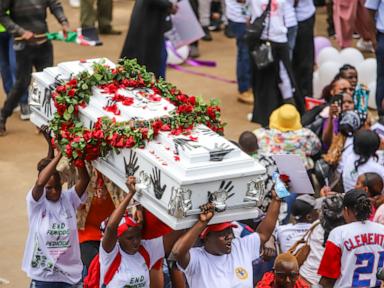
You can't ignore the white shirts, the red roses, or the symbolic coffins blocking the streets of Nairobi. On Monday, thousands of Kenyan women took over the central business district, furious, grieving, and completely done with government silence. They aren't just marching for abstract statistics anymore. They're marching because staying home feels like waiting to be next.
The immediate catalyst for this massive turnout was horrific. A local singer was recently doused with petrol and burned alive, eventually dying from her injuries. It's a stomach-turning reality that highlights a massive spike in gender-based violence (GBV) and femicide across Kenya. Now, a coalition of activists, citizens, and even high-profile figures like former Chief Justice David Maraga are demanding that President William Ruto declare a national crisis.
This isn't a sudden, isolated burst of anger. It's the boiling over of a long-festering emergency.
The Grim Reality Behind the Red Roses
Let's look at what's actually happening on the ground. The Federation of Women Lawyers in Kenya (FIDA) reveals a terrifying trend. Their three offices in Nairobi, Mombasa, and Kisumu collectively field around 70 new GBV cases every single week. That's not a slow trend; it's an avalanche.
Worse, data from organizations like Africa Uncensored and Odipo Dev showed that Kenya hit a record high of at least 170 femicide cases recently, marking a near 80% jump from the previous year. Law enforcement data tracked consecutive months where more than one woman was killed every single day. If that doesn't fit the definition of a national crisis, it's hard to imagine what does.
But the anger on Monday expanded beyond femicide. The protest, led by the End Femicide movement, intentionally wore white to mourn both the women lost to intimate partner violence and the children vanishing from local neighborhoods. The placards reading "End Femicide" were held right alongside those reading "End Pedicide."
A Parallel Crisis of Missing Children
If you spend ten minutes on Kenyan social media, your feed will likely feature a digital wall of missing children posters. Families are desperate. The latest official government data from the Child Protection Information Management System underscores this terror. Between January 2025 and March 2026, Kenya recorded an astonishing 10,581 child protection cases.
Break those numbers down and the picture gets uglier:
- 1,952 abductions
- 1,636 reports of missing children
- 173 human trafficking incidents
- 6,820 cases of child abandonment
While the government states that roughly 78% of these cases end in rescue or family reunification, simple math reveals a dark reality. More than 2,300 children remain entirely unaccounted for. Protesters on the streets of Nairobi pointed directly at the authorities, accusing them of treating these disappearances with casual indifference. When thousands of kids vanish and a culture of domestic violence escalates to public executions by fire, public patience vanishes too.
Why Bureaucracy Isn't Saving Lives
The Kenyan government hasn't been completely silent, but their actions look like bureaucratic paper-pushing to a public that's burying its daughters. Recently, the national police announced a specialized investigative unit. They've pooled homicide investigators, forensic experts, and criminal intelligence analysts to focus on GBV.
The police openly admit that the majority of these violent cases stem from domestic disputes, intimate partner clashes, and unresolved family conflicts. Yet, the systemic response remains broken. Activists note that previous government interventions, including a 42-member task force created by President Ruto, haven't translated to safety on the ground.
Grassroots organizations like Vocal Africa are demanding more than just specialized police teams. They want structural teeth. Here's what the frontline organizations say needs to happen immediately to actually protect Kenyan women and children:
- An Official Emergency Declaration: Formally declaring femicide and GBV a national disaster to unlock emergency funding and resources.
- A Multi-Agency Emergency Framework: Forcing local law enforcement, healthcare providers, and judicial systems to coordinate under one fast-moving directive.
- Dedicated Prosecution Units: Establishing specialized courts to handle sexual offences and domestic violence swiftly, cutting through years of judicial backlog.
- Direct Investment in Survival: Funding state-run safe houses and comprehensive survivor support services so women don't have to choose between a violent home and homelessness.
- Police Accountability: Investigating and penalizing officers who dismiss domestic violence reports as "private family matters" until it's too late.
Lobby groups originally gave the state a 40-day ultimatum to act. They didn't even wait for the clock to run out before hitting the pavements. The sheer scale of Monday's march proves that Kenyan civil society will no longer accept empty political promises while the body count rises.
Activists demand national disaster declaration over rising femicide cases in Kenya - This broadcast outlines the specific, actionable demands Kenyan human rights organizations are making to restructure the country's legal and emergency response to gender-based violence.