Four thousand students didn't just plant trees on that muddy Kenyan coastline. They rewrote how youth-led climate action actually works.
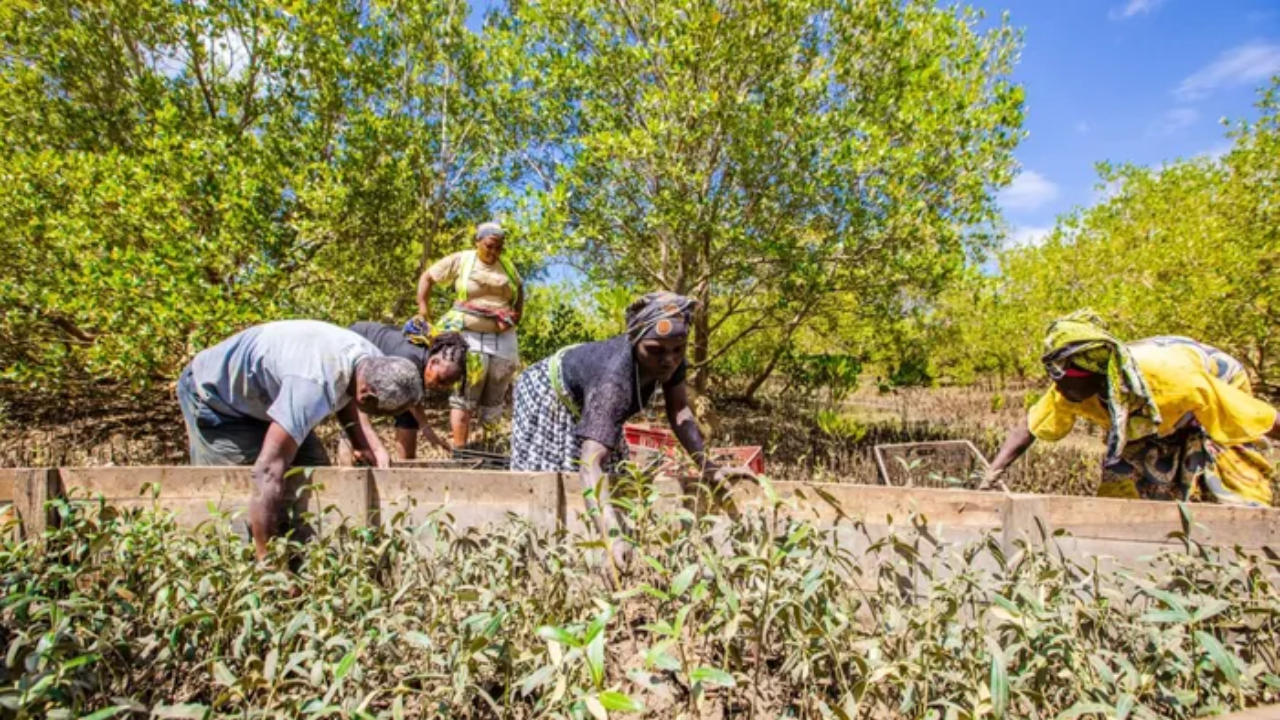
If you think environmental activism is just adults shouting at podiums while teenagers hold cardboard signs, look closer at Kenya. Over four thousand students gathered in Kwale County to plant thousands of mangrove saplings in a single push for a Guinness World Record. This wasn't a photo op. It was a massive ecological intervention driven entirely by young people who live with the direct impacts of coastal erosion and disappearing fish stocks every single day.
Let's talk about why this matters right now.
The Mangrove Advantage
Most people assume rainforests do the heavy lifting when it comes to carbon storage. They are wrong. Mangroves trap carbon at rates up to four times higher than terrestrial forests. They lock that carbon away in deep, oxygen-poor underwater soils for centuries.
When a coastal community loses its mangroves, things fall apart fast.
- Storm surges hit villages directly without natural barriers.
- Fish populations crash because juvenile marine life loses its nursery.
- Shorelines wash away during high tides.
That is why thousands of Kenyan students descended into the tidal mudflats. They weren't chasing a social media trend. They were defending their homes.
Beyond the Record Attempt
Guinness World Records get attention. Headlines love numbers. But the real story here is the scale of grassroots organization required to coordinate four thousand kids in a tidal ecosystem.
Planting mangroves isn't like dropping pine tree seeds in dry dirt. You have to harvest mature propagules—the elongated seeds hanging from parent trees—at the exact right moment. You have to push them into the soft mud at the precise depth, keeping the upper leaves exposed so they don't drown when the tide rolls back in.
Doing that with thousands of participants requires military-style coordination. Local environmental groups, school administrators, and community leaders mapped out planting grids weeks ahead. The students learned marine biology by doing it, not by reading a stale textbook chapter.
What Traditional Conservation Gets Wrong
For decades, big conservation organizations dropped millions of dollars into top-down projects in East Africa. They hired consultants from overseas, drew up blueprints in air-conditioned offices, and wondered why local communities ripped up the saplings a year later for firewood or cleared them for aquaculture.
It failed because it ignored human needs.
The Kenyan student model works because it reverses the equation. When kids plant the trees alongside their neighbors and local elders, ownership shifts. You don't chop down a mangrove forest you spent your Saturday knee-deep in mud planting with your classmates.
Conservation only survives when the people living next to the resource have a stake in its survival.
Replicating the Spark
You cannot manufacture this kind of energy from corporate headquarters. If you want to support youth climate action in your own region, stop funding abstract pledges. Find local groups working on tangible restoration projects and get your hands dirty. Plant something that stays rooted. Protect a local wetland. Push your school to trade indoor fundraisers for outdoor ecological work.
The students in Kwale didn't wait for permission to protect their coastline. Neither should you. Get outside, find a degraded ecosystem near you, and start digging.