Seconds. That’s all the time that stood between a routine departure and a catastrophic headline at John F. Kennedy International Airport. When you hear the audio of a JFK air traffic controller shouting "Canceled!" at a departing jet, you aren't just hearing a professional doing their job. You're hearing the sound of a thin blue line holding back total chaos.
A near miss at one of the world's busiest hubs isn't just a "scary moment" for the passengers involved. It’s a systemic warning light. We've seen an uptick in these runway incursions lately, and frankly, it’s getting harder to ignore the strain on the people behind the radar screens. The recent incident involving a Delta Air Lines Boeing 737 and an American Airlines Boeing 777 wasn't a fluke. It was a high-stakes save that highlights exactly how close we're playing with fire in the current aviation climate.
The Raw Reality of the JFK Close Call
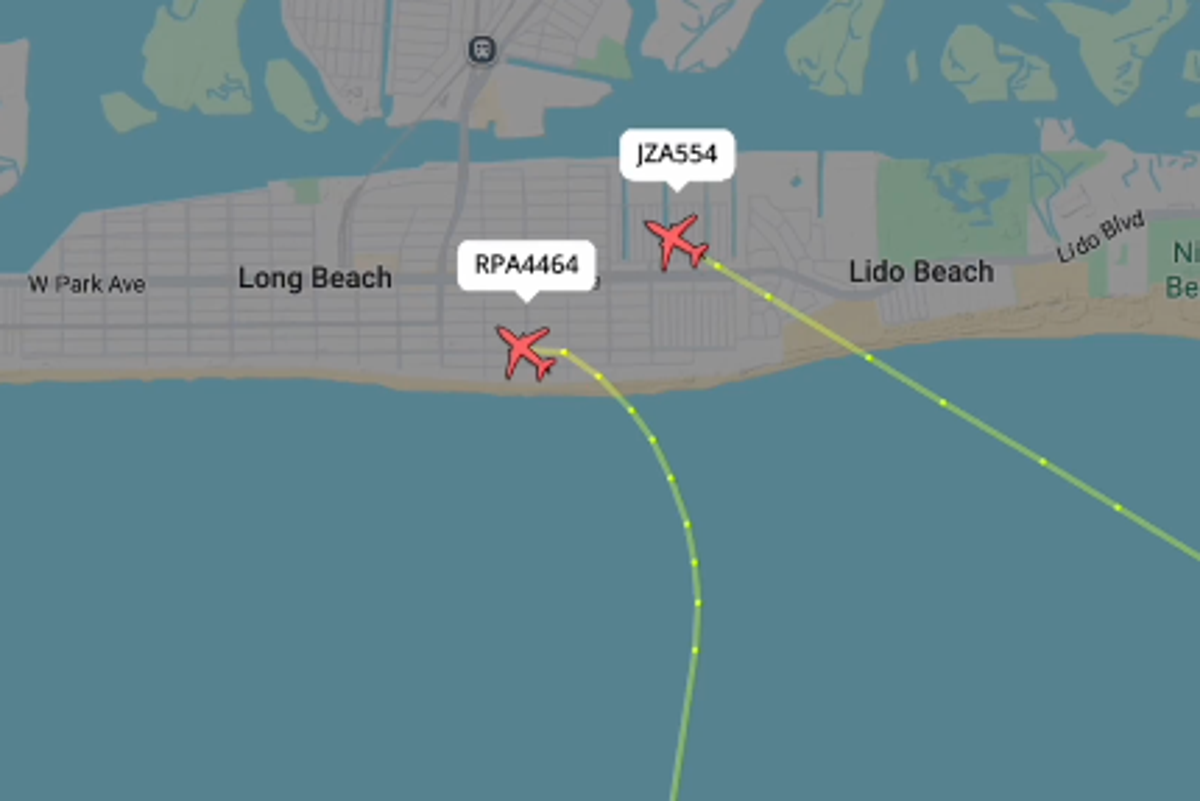
Let’s look at what actually happened on that tarmac. Delta Flight 1943 was barreling down the runway, hitting speeds of over 100 miles per hour, preparing for takeoff. At that exact moment, American Airlines Flight 106 crossed the very same runway right in front of them.
The controller's voice didn't shake, but the urgency was unmistakable. "Delta 1943, cancel takeoff clearance!" That command stopped the Delta jet roughly 1,000 feet from the American Airlines plane. In aviation terms, 1,000 feet is a heartbeat. If that controller had blinked, or if the Delta pilot had hesitated for even three seconds to question the order, we’d be talking about a tragedy on the scale of Tenerife.
People think flying is all about the pilots. Don't get me wrong, those pilots did a hell of a job standing on the brakes. But the hero here is the person in the tower who caught a mistake that shouldn't have happened in the first place. The American Airlines crew reportedly took a wrong turn, crossing a runway they weren't supposed to be on. That’s a human error. We’re humans. We make them. But in a system this complex, one wrong turn should never be enough to put 500-plus lives at risk.
Why Runway Incursions are Spiking Now
You might feel like you’re hearing about these "near misses" more often. You aren't imagining it. The Federal Aviation Administration (FAA) has been under the microscope for a while now because the frequency of these events has climbed.
There are a few reasons for this that most news outlets won't touch. First, the experience gap is real. During the pandemic, a lot of senior controllers and veteran pilots took early retirement. We lost decades of "gut feeling" and institutional knowledge overnight. Now, we have a younger workforce handling record-breaking flight volumes.
Second, the tech is aging. While we’re all using 2026-level smartphones, some of the ground surveillance systems at major airports are decades old. JFK has some of the best equipment in the world, like the Airport Surface Detection Equipment (ASDE-X), which is exactly what helped the controller spot the conflict. But not every airport has that safety net.
The Mental Toll on the Tower
Imagine sitting in a dark room or a high tower, knowing that a single syllable out of your mouth could be the difference between a normal Friday and a national day of mourning. That’s the daily life of an Air Traffic Controller (ATC).
- Shift Work Exhaustion: Most controllers work grueling "rattler" shifts. They might work two mornings, two evenings, and then a midnight shift all in the same week.
- Constant Understaffing: Many facilities are operating at 70% or 80% of their required headcount. This means mandatory overtime and six-day work weeks.
- Zero Margin for Error: In almost any other job, a mistake means a lost file or a grumpy boss. Here, it’s metal on metal.
When we hear the JFK audio, we should be impressed, but we should also be worried. We’re leaning incredibly hard on the brilliance of individual controllers to make up for a system that’s stretched thin.
What This Means for Your Next Flight
I get it. You’re reading this and wondering if you should cancel your trip to London. Short answer? No. Flying is still statistically the safest way to move your body from point A to point B. You’re in way more danger driving to the grocery store than you are sitting on a 737 at JFK.
However, we need to stop treating these incidents as isolated "miracles." They’re data points. The FAA recently held a safety summit to address these runway incursions, which is a start, but it isn't a fix. A fix looks like more aggressive hiring, better rest requirements for controllers, and mandatory installation of cockpit alerts that tell pilots themselves when another plane is on their runway.
Right now, pilots often rely on the tower to tell them if the coast is clear. Imagine if your car only told you there was a stop sign because someone in a tower miles away saw it on a camera. We have the technology to put those alerts directly into the cockpit. It’s time we used it.
The Silence from the Cockpit
One of the most chilling parts of the JFK incident was the silence immediately following the "cancel takeoff" order. After the Delta jet came to a stop, there was a brief moment where the frequency went quiet. Then, the logistical cleanup began.
The Delta pilots had to taxi off to cool their brakes. When you slam on the brakes at 115 mph, those discs get hot enough to glow. They couldn't just turn around and try again; that plane was done for the day. This level of professionalism is what we pay for. The pilots didn't argue. They didn't ask "why?" They just hit the brakes.
But we have to ask why the American Airlines flight ended up on that runway. The National Transportation Safety Board (NTSB) has been investigating, and the early talk suggests a simple navigational error. A wrong turn. It sounds so minor until you realize the stakes. It shows that even the most elite crews can have a momentary lapse in situational awareness.
Why the "Near Miss" Label is Important
The industry calls these "Loss of Separation" events. The media calls them "Near Misses." Whatever you call it, the distance between the two planes at JFK was less than the length of a few football fields.
- 1,000 feet: The approximate distance between the planes when they stopped.
- 0 seconds: The amount of time you have to react when you see a plane cross your path at takeoff speed.
- 100+ mph: The speed of the Delta jet when it received the abort order.
This wasn't a "close call" in the way two people almost bump into each other on a sidewalk. This was a high-velocity intersection of two massive machines filled with thousands of gallons of jet fuel.
The Infrastructure Problem Nobody Wants to Pay For
We love to complain about flight delays and expensive tickets. We rarely complain about the lack of funding for NextGen air traffic systems. The FAA has been trying to modernize the national airspace for years, but budget fights in Washington often leave the agency hamstrung.
If we want to stop seeing these JFK-style scares, we have to treat air traffic control like the critical infrastructure it is. It’s not just a service; it’s a life-support system for the global economy.
We need to push for:
- Direct Cockpit Ground Alerts: Giving pilots a visual map of other planes on the ground in real-time.
- Increased Staffing Ratios: Ending the "six days a week" culture in the towers.
- Standardized Runway Markings: Making it nearly impossible to "accidentally" cross a hold-short line.
What You Can Do as a Passenger
You aren't powerless. The next time you’re sitting on the tarmac and your pilot says there’s a delay because of "spacing" or "ground traffic," don't groan. That’s the system working. That’s a controller or a pilot choosing safety over a schedule.
Pay attention to the safety briefings. I know you’ve heard them a thousand times, but knowing where your nearest exit is matters, especially during taxi and takeoff—the most dangerous phases of any flight.
Keep an eye on the news regarding FAA reauthorization bills. These are the boring pieces of legislation that actually dictate whether your local airport gets the latest radar tech or if the controllers in the tower are working on four hours of sleep. Your voice in demanding a fully funded, fully staffed aviation system is the only way the "miracle at JFK" stops being a recurring event.
Stop assuming the system is invincible. It’s excellent, but it’s operated by people. And right now, those people are tired. The JFK save was a triumph of individual skill, but it was also a massive flashing neon sign that the system needs help. Don't wait for a tragedy to start caring about the people in the tower. They’re the ones making sure your "routine" flight stays routine.
Next time you fly, look up at that tower. There’s someone in there right now, probably on their tenth hour of work, making sure two blips on a screen don't touch. We owe them more than just a "good job" after a close call. We owe them a system that doesn't put them in that position to begin with. Check your flight status, keep your seatbelt fastened until you're at the gate, and trust the professionals—but demand the upgrades they deserve.