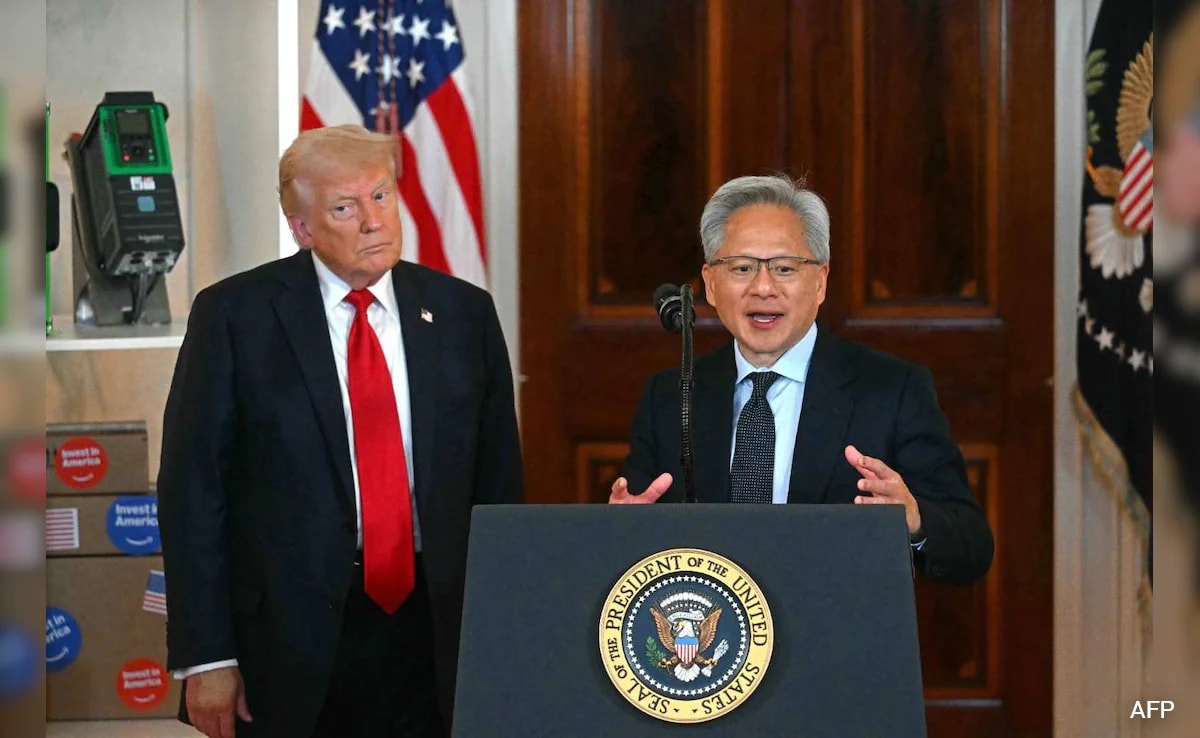
Donald Trump is heading to Beijing this week, and he’s bringing a massive entourage of American corporate power with him. Apple’s Tim Cook is on the list. Elon Musk is going. The CEOs of Goldman Sachs, Boeing, and BlackRock are all tagging along for the May 13–15 summit. But one name is noticeably missing from the guest list: Nvidia’s Jensen Huang.
The exclusion of the man behind the world’s most valuable chip company has sparked plenty of chatter in Washington and on Wall Street. Why would the president leave the leader of the AI revolution behind while taking other tech titans like Musk and Cook? Honestly, it isn't as much of a snub as it looks. It’s a calculated move that says everything about where the U.S. stands on high-tech warfare and trade.
The guest list that says it all
The White House official delegation includes 17 major executives. We’re talking about heavy hitters from across the economy.
- Finance: Larry Fink (BlackRock), Stephen Schwarzman (Blackstone), and David Solomon (Goldman Sachs).
- Tech: Tim Cook (Apple), Elon Musk (Tesla/SpaceX), and Cristiano Amon (Qualcomm).
- Industry: Kelly Ortberg (Boeing) and H. Lawrence Culp (GE Aerospace).
Trump wants to talk about big purchase agreements. He wants China to buy more Boeing planes and more American soybeans. He's looking for the kind of deals that make for great headlines and satisfy his "America First" trade goals. Jensen Huang doesn't fit that specific narrative right now because Nvidia doesn't have anything to "sell" to China that the U.S. government actually wants them to have.
Why Nvidia has nothing to talk about in Beijing
If you’re wondering why Huang isn’t on that plane, look at the trade numbers. Nvidia’s market share for high-end AI accelerators in China has effectively collapsed to zero. That wasn't an accident. It’s the result of strict export controls that have been tightening for years.
Huang himself has been blunt about this. He recently told investors that the company is "effectively foreclosed" from the Chinese data center market. There’s a massive wall between Nvidia’s best tech—the chips that drive the AI boom—and the Chinese firms that want them. Since the U.S. government has no intention of tearing that wall down, there’s nothing for Huang to negotiate.
Bringing him to Beijing would be like bringing a chef to a dinner where he’s legally banned from entering the kitchen. It doesn't make sense for Trump’s "deal-making" optics, and it doesn't help Nvidia’s bottom line.
The Huawei factor in the background
While Nvidia sits on the sidelines, Chinese companies aren't just waiting around. They’re building their own ecosystems. Huawei is aggressively filling the void, with its AI chip revenue expected to hit $12 billion this year. Their Ascend 950PR is becoming the go-to substitute for Chinese tech firms that can no longer buy H100s or B200s.
This is the real concern for Nvidia long-term. By being shut out, they’re forced to watch a domestic Chinese competitor grow stronger every day. If Huang were in the room with Xi Jinping and Trump, the conversation would likely be confrontational rather than productive. Trump wants stability and big-ticket buys; a fight over semiconductor sovereignty would just derail the "truce" he’s trying to maintain.
Why the market doesn't care
You’d think the CEO of a trillion-dollar company being left out of a major trade mission would tank the stock. It didn't. In fact, Nvidia shares rose nearly 5% following the reports.
Wall Street is smarter than the headlines. Analysts already priced China at zero for Nvidia months ago. They don't care about Beijing anymore because the demand from the rest of the world—Microsoft, Meta, and Google—is so high that Nvidia can’t even make chips fast enough to keep up.
Investors actually prefer this distance. It signals that the Trump administration is staying hawkish on tech transfers. For a portfolio manager, a "snub" is better than a "compromise" that might leak intellectual property to a global rival.
What this means for your portfolio
Don't read too much into the "snub" drama. Jensen Huang is still the most influential person in tech, whether he’s in the Forbidden City this week or not.
If you're holding Nvidia, keep your eyes on the upcoming earnings reports and the demand for the Blackwell architecture. The China trip is about planes, grain, and legacy tech. The real future is being built in data centers in Iowa and Texas, not in a diplomatic meeting room in Beijing.
If you’re looking for a play on this specific trip, watch Boeing and the big banks. They are the ones actually positioned to walk away with signed contracts. Nvidia’s growth story is completely detached from Chinese diplomacy at this point, and that’s probably exactly how Jensen Huang wants it.
Keep an eye on the official White House announcements on May 14 and 15. If Boeing walks away with a multi-billion dollar order, the "delegation strategy" worked. For Nvidia, the strategy remains simple: keep out-innovating everyone else and let the diplomats worry about the trade maps.