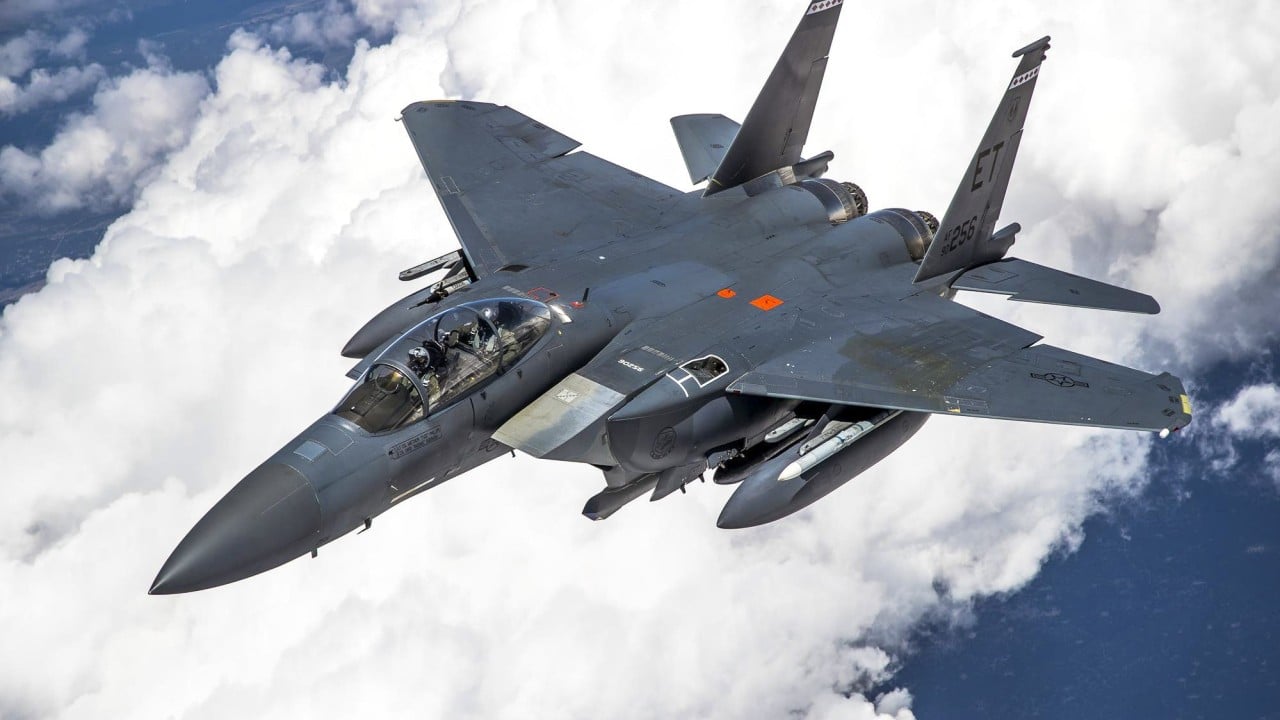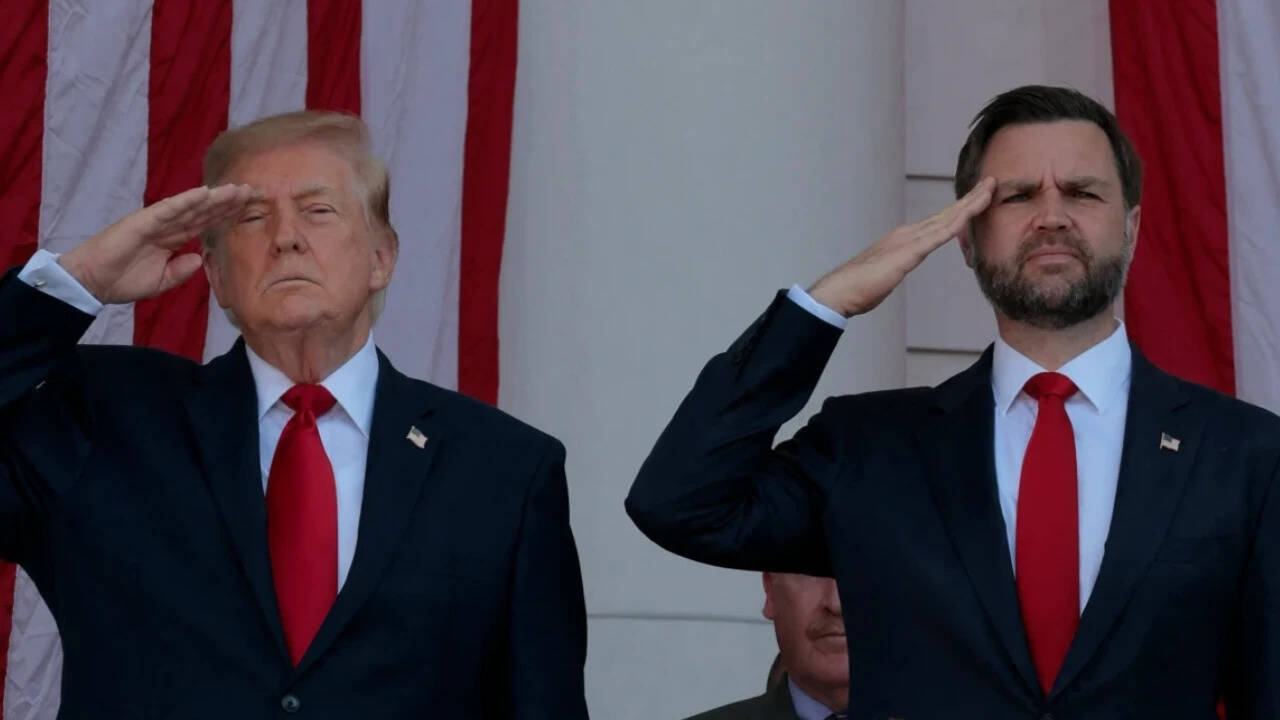
Vice President JD Vance just drew a hard line in the sand on Middle East intervention, and Washington can't stop arguing about it. While defending President Donald Trump's recent military strikes against Iranian targets, Vance made a blunt promise to an increasingly skeptical public that the United States won't get dragged into another decades-long quagmire.
Sounds great on paper. Everybody hates forever wars, right? If you enjoyed this article, you should check out: this related article.
Yet when you look closely at what the administration is actually doing on the ground—and in the air—that promise gets a whole lot trickier to keep. You can't understand the current standoff between Washington and Tehran without separating the political messaging from the military reality. People searching for clarity on Vance's comments usually want to know one simple thing. Is this a genuine shift in American foreign policy, or just familiar rhetoric wrapped around the same old escalation cycle?
Honestly, it's a bit of both. For another angle on this event, refer to the recent update from NBC News.
Why Vance Is Pushing the No Forever War Message Right Now
To understand why Vance keeps repeating the phrase "forever war," you have to look at the coalition that put Trump and Vance back in the White House. For years, the MAGA movement built its foreign policy identity around tearing down the post-9/11 neoconservative consensus. Vance himself is a Marine Corps veteran who served in Iraq, and he's spent his entire political career arguing that regime-change wars drained American blood and treasure for zero strategic return.
When Trump authorized military action against Iran, alarms went off across the populist right. Influential commentators, anti-interventionist lawmakers, and everyday voters started asking whether the administration was abandoning its "America First" restraint.
Vance stepped in to put out that fire immediately.
His core argument relies on a sharp distinction between targeted deterrence and open-ended occupation. In Vance's framing, hitting specific Iranian military infrastructure or nuclear-linked sites isn't the opening act of an invasion. Instead, it's a finite, overwhelming show of force designed to restore deterrence without putting tens of thousands of American boots on the ground.
There's real logic there. Historically, limited punitive strikes—like the 1986 U.S. bombing of Libya or the 2020 strike on Qasem Soleimani—didn't automatically spiral into ground invasions. Vance is betting that voters will accept sharp, decisive military action so long as there's no talk of nation-building, democracy promotion, or long-term troop deployments.
The Thin Line Between Targeted Strikes and Endless Escalation
Here's the problem with theories of clean, limited warfare. The enemy gets a vote.
When I've tracked Middle East crises over the past two decades, one pattern shows up every single time. Leaders in Washington always assume they can control the escalation ladder. They believe a calibrated strike will force Tehran to back down, recalculate, and accept new boundaries.
Iran rarely plays by that script.
Instead of meeting American force head-on—where the Pentagon holds an overwhelming conventional advantage—Tehran relies on asymmetric pressure across the entire region. That means activating proxy networks, threatening commercial shipping lanes in the Strait of Hormuz, or launching cyberattacks against critical infrastructure. You don't need an American invasion force in Tehran for a conflict to become a multi-year grind. If U.S. naval assets, regional bases, and global energy markets remain under constant threat for years, Americans end up fighting a "forever war" in everything but name.
Look at the mechanics of how these conflicts drag on:
- Proxy retaliation spreads the battlefield. Even if direct U.S.-Iran exchanges stop, regional militias can keep firing drones and missiles at American bases in Iraq, Syria, or Jordan for months.
- Economic shockwaves force prolonged involvement. Any disruption to oil tankers moving through the Persian Gulf spikes global energy prices, creating massive political pressure at home to keep military assets deployed indefinitely to guard shipping routes.
- Nuclear ambiguity resets the clock. Conventional airstrikes can set back research facilities and missile production, yet they rarely eliminate technical know-how. Unless a diplomatic off-ramp follows military pressure, the exact same crisis tends to reappear two or three years later.
Vance knows these risks better than most politicians in Washington. That's precisely why his defense of Trump's military action leans so heavily on defining success narrowly. By setting the goal as immediate deterrence rather than total capitulation or regime collapse, the administration is trying to preserve an exit door before the political pressure to escalate becomes irreversible.
How Trump and Vance Redefine American Restraint
Critics on both sides of the aisle love to paint the administration's foreign policy as contradictory. Hawks argue that promising not to fight a prolonged war hands Tehran a strategic advantage—essentially telling Iranian leaders they just need to wait out the news cycle. Meanwhile, strict non-interventionists insist that any bombing campaign in the Middle East is a betrayal of campaign promises.
Both critiques miss what Vance is actually trying to build.
Under the Biden administration, critics argued that American deterrence eroded because military responses were too incremental and heavily telegraphed, allowing regional proxies to harass U.S. forces without paying a prohibitive price. Vance is pitching a doctrine of asymmetric escalation dominance. Hit hard, hit fast, destroy high-value targets, and refuse to get bogged down in the aftermath.
Think of it like a heavy punch rather than a twelve-round boxing match.
Whether that doctrine actually holds up depends entirely on discipline inside the White House. Washington is full of defense contractors, think-tank strategists, and hawkish lawmakers who view every crisis with Iran as an opportunity to push for broader regime change. Vance's public insistence against a forever war isn't just aimed at reassuring voters in Ohio or Pennsylvania. It's also a warning shot aimed directly at the national security establishment inside his own government.
What History Tells Us About Limited Air Campaigns
If you want a realistic sense of how this could play out, look at past U.S. air campaigns that promised limited objectives.
In 1998, Operation Desert Fox pounded Iraqi military and intelligence sites for four days to degrade Saddam Hussein's weapons programs. It was clean, fast, and involved zero ground troops. Yet it didn't solve the underlying standoff—it simply locked the U.S. into years of no-fly-zone patrols and ongoing skirmishes until the full-scale invasion five years later.
On the flip side, look at Operation Praying Mantis in 1988. After an Iranian mine nearly sank a U.S. frigate, the Navy destroyed half of Iran's operational fleet in a single day. Tehran got the message, stopped mining the Gulf, and accepted a ceasefire with Iraq shortly after. No ground war. No occupation. Just an unmistakable display of raw capability followed by restraint.
Vance is clearly gambling that Trump's military action follows the 1988 blueprint rather than the 1998 trap.
The difference between those two outcomes comes down to two things: clear off-ramps and ruthless restraint once the immediate objective is met. If the administration declares victory after degrading specific military capabilities and resists the urge to chase every subsequent provocation, Vance's promise holds. If every retaliatory drone strike triggers another round of American bombings, the distinction between "targeted action" and "forever war" evaporates overnight.
How to Watch This Story Like an Insider
Cable news thrives on breathless breaking-news banners that make every strike look like World War III. Don't fall for the noise. If you want to know whether Vance's pledge against a forever war is actually holding up over the coming months, ignore the press conferences and track three concrete indicators instead.
- Watch troop deployment numbers, not bomber flights. Strategic bombers can fly from bases in the continental United States, drop precision munitions, and return home without altering the long-term U.S. footprint. If you see tens of thousands of ground troops, logistics units, and field hospitals moving into the Persian Gulf, the "no forever war" promise is dead.
- Follow back-channel diplomacy. Real restraint always pairs military pressure with quiet communication through regional intermediaries like Oman, Qatar, or Switzerland. When back-channel talks stay open during military flare-ups, both sides are actively looking for an exit ramp.
- Monitor Congressional war powers debates. Watch whether lawmakers from Vance's own party begin demanding formal Authorizations for Use of Military Force (AUMF) or if the White House actively works to wind down operations within the 60-to-90-day window outlined under the War Powers Resolution.
JD Vance has staked his political credibility on proving that America can project overwhelming military power without getting trapped in another endless Middle Eastern conflict. Keeping that promise requires far more than tough speeches—it demands the discipline to stop shooting once the point has been made.