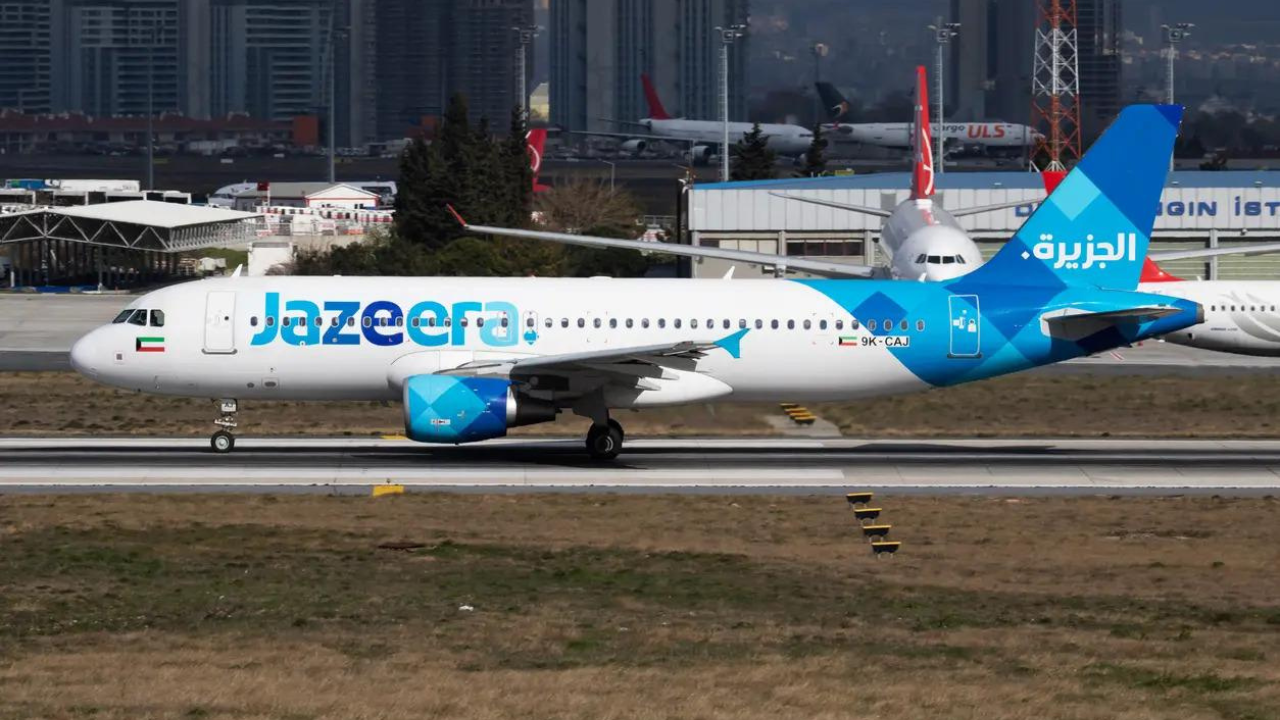
The headlines are bleeding with the same tired narrative. "Jazeera Airways halts India flights." "Mass cancellations leave passengers stranded." The industry is treating this like a sudden engine failure or a diplomatic meltdown. They are looking at the flight board and seeing red. I look at the balance sheet and see a calculated, surgical strike.
If you think this is about a lack of demand or a failure of operations, you aren't paying attention to how low-cost carriers (LCCs) actually survive in a high-interest, high-fuel-cost environment. This isn't a retreat. It is a refinement.
The Myth of the "Stranded Passenger" Narrative
The media loves a victim. Every time an airline trims a route, we get the same sob stories about missed weddings and ruined vacations. While those individual experiences are frustrating, the "lazy consensus" assumes that canceling flights to nine Indian cities until mid-May is a sign of weakness.
It isn't.
In the airline business, there is a concept known as Revenue Per Available Seat Kilometer (RASK). Most analysts focus on load factors—how full the planes are. But a full plane can still be a money pit if the yields are trash. India is one of the most price-sensitive markets on the planet. When operational costs spike or bilateral seat quotas get squeezed, the smart move isn't to "white-knuckle" it through a low-yield period. The smart move is to cut the dead weight, refund the tickets, and reallocate those airframes to routes where people aren't haggling over every last dinar.
Operational Constraints are Often Polite Lies
Jazeera cited "operational reasons" for the suspension to cities like Ahmedabad, Kochi, and Thiruvananthapuram. In the industry, "operational reasons" is the ultimate wildcard. It’s the "it's not you, it's me" of aviation.
Sometimes it means engine maintenance schedules are backed up. Sometimes it means a dispute over ground handling fees. But more often than not, it means the airline is caught in a pincer movement between the Kuwait Directorate General of Civil Aviation (DGCA) and the Indian aviation authorities regarding seat capacities.
Bilateral air service agreements are the hidden hand that moves the entire industry. These agreements dictate exactly how many seats can be flown between two countries. If an airline is hitting its cap or if the regulatory environment becomes unfavorable, it doesn't just keep flying at a loss or in violation of the law. It pulls back. It creates a vacuum.
I have watched carriers burn through millions in cash reserves trying to maintain a "presence" in a market that doesn't love them back. Jazeera is doing the opposite. They are showing a level of discipline that traditional flag carriers lack. They are willing to take the PR hit today to ensure they aren't bankrupt tomorrow.
The Refund Reflex: Why Giving Money Back is a Power Move
The competitor coverage focuses on the fact that Jazeera is offering refunds. They frame it as a consolation prize.
Think bigger.
By issuing immediate refunds instead of forcing passengers into a nightmare of rebookings on partner airlines, Jazeera is clearing its liability ledger. When an airline keeps your money and gives you a credit, they are holding debt. By flushing the system and giving the cash back, they are essentially resetting the clock.
Imagine a scenario where an airline knows that fuel prices will be 15% higher in April than they were when the tickets were sold in January. If they fly those passengers, they lose money on every seat. If they cancel and refund, they lose the transaction fee but save the operating loss. It is cold. It is clinical. It is brilliant.
India is Not a Monolith
The biggest mistake outsiders make is treating the "India-Kuwait" corridor as a single entity. It’s not. There is a massive difference between the business-heavy traffic to Mumbai and Delhi and the labor-driven migration to Kerala and Gujarat.
- The Labor Market Shift: The flow of blue-collar workers from India to the Gulf is changing. Recruitment patterns are shifting.
- The Competition Crunch: Indigo and Air India Express are aggressive. They are subsidized by massive scale or state backing.
- The Yield Trap: If the competition is willing to fly at a loss just to grab market share, let them.
Jazeera is essentially saying, "Go ahead. Take the low-margin traffic. We’ll be over here flying to destinations where we actually turn a profit." This is the core of the LCC philosophy: You aren't a public utility. You are a flying bank. If a branch isn't making money, you close the branch.
The April-May Window is No Accident
Look at the calendar. They are canceling until May 15. Why?
This period often coincides with a lull between the peak school holiday travel and the massive summer rush. By grounding these specific routes now, Jazeera can perform deep maintenance on their A320neo fleet. They are preparing for the summer surge when they can charge three times the current fare for the same seat.
Standard reporting calls this a "disruption." An insider calls it "preventative maintenance and capacity management." You don't fix your roof when it's raining; you fix it when the sun is out, even if that means the house is a mess for a few weeks.
The Hidden Cost of "Reliability"
Passengers claim they want reliability. What they actually want is cheap tickets. You cannot have both in a volatile fuel market without an airline eventually going under.
The industry is currently obsessed with "connectivity." Every airline wants to be everywhere. But the graveyard of aviation is filled with companies that tried to be everything to everyone. Jet Airways? Gone. Kingfisher? Gone. They stayed in markets they should have abandoned months earlier because they were afraid of the headlines.
Jazeera’s willingness to be the "bad guy" and cancel flights is exactly why they are one of the few profitable private airlines in the region. They don't have the luxury of a bottomless sovereign wealth fund to bail them out of bad math. They have to eat what they kill.
Stop Asking "When Will They Fly Again?"
The "People Also Ask" sections are filled with users wondering when their specific city will be back on the map. They are asking the wrong question.
The real question is: "Is your destination profitable enough for an LCC to care?"
If you are flying from a Tier-2 or Tier-3 Indian city, you are at the mercy of the algorithm. If the data says a plane is better used flying from Kuwait to Tbilisi or Istanbul during those weeks, that plane is going to Georgia, not Gujarat.
The Brutal Reality of Middle Eastern Aviation
The Gulf is the most competitive airspace on earth. You have the "Big Three" (Emirates, Qatar, Etihad) sucking up all the premium oxygen. Then you have the LCC revolution (Flydubai, Air Arabia, Jazeera, Flynas) fighting for the scraps.
In this environment, loyalty is a myth.
Passengers will switch airlines for a 5-dinar difference in price. If Jazeera knows they can’t win the price war in Kochi this month, they aren't going to show up to the fight. They are going to forfeit the match, save their energy, and wait for a more favorable bracket.
The Actionable Truth for the Modern Traveler
Stop booking the absolute cheapest ticket on a secondary route and expecting "Flag Carrier" stability. If you are flying an LCC, you are participating in a high-speed commodity trade.
- Hedge your travel: If you must be there for a hard date, book a carrier with multiple daily frequencies, not a niche player.
- Understand the refund: A refund is better than a voucher. Take the cash and re-book on a competitor immediately. Don't wait for the "suspension" to be lifted.
- Read the yields: When you see an airline pulling out of a market, it’s a signal that the market is over-saturated. Prices will likely spike as supply drops. Book your alternative now before the other airlines realize they have a monopoly.
Jazeera Airways isn't failing. They are optimizing. They are playing chess while the rest of the travel media is playing checkers with "cancelled" stamps. The nine cities in India aren't being abandoned; they are being put on the shelf until they become valuable again.
Business isn't about being nice. It's about being around to fly another day.
Stop crying about the cancellation and start respecting the math.