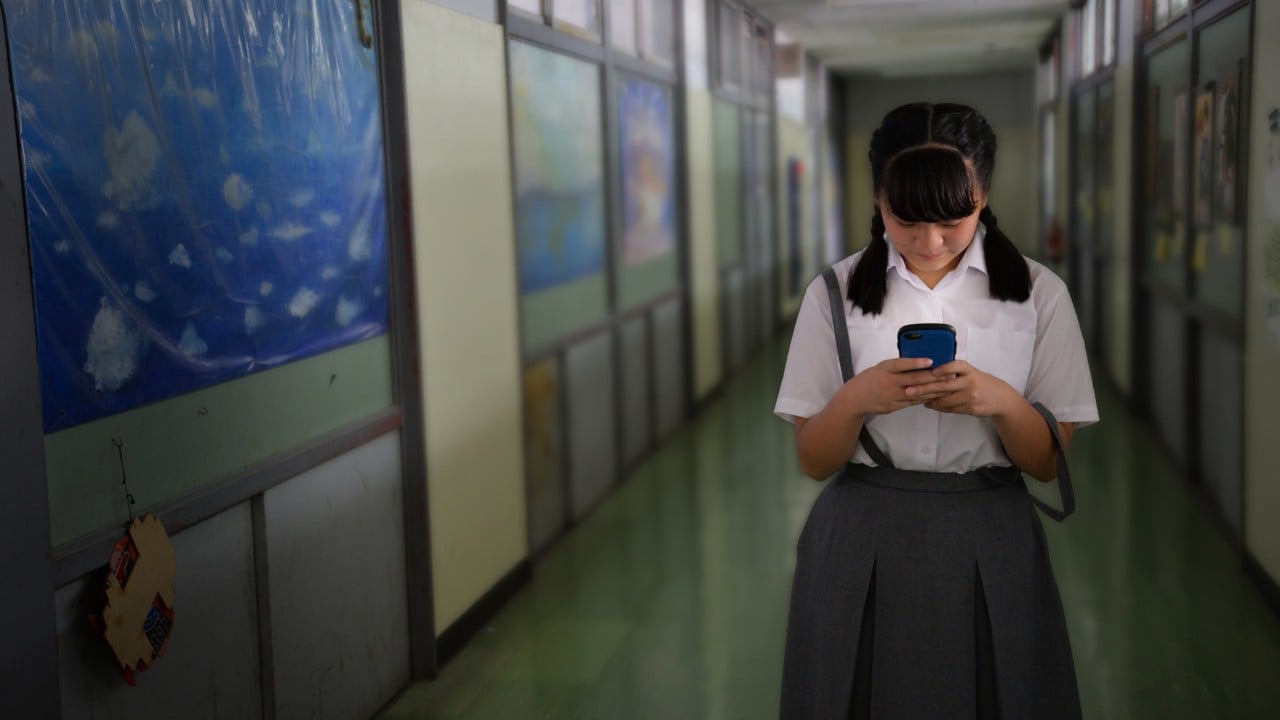
Call a teenager a "dopamine brat" to their face, and they'll probably laugh, own it, and keep scrolling.
That's basically what happened across Japan in late 2026. The word dopagaki (ドパガキ)—short for dōpamin chūdoku no gaki, or "dopamine-addicted brat"—exploded out of niche internet circles onto Japan's 2026 buzzword shortlist. It describes kids and teens who watch short-form videos at double speed, juggle a phone scroll while gaming on another screen, and fall asleep with their thumbs still twitching on glass.
Politicians saw a crisis. In November 2026, Japan's Children and Families Agency unveiled its first-ever national guidelines for children's internet use, breaking ages 0 to 18 into six developmental stages for parental supervision. Earlier, cities like Toyoake in Aichi Prefecture even passed local ordinances urging residents to cap recreational smartphone use at two hours a day.
Here's the uncomfortable truth most policymakers ignore. Rules don't break scroll loops. You can't legislate away a behavioral habit when the platforms are engineered to hijack human neurology and the adults writing the rules are just as hooked.
What Dopagaki Actually Means Beyond the Headline Slang
Linguistically, gaki is a blunt, slightly derogatory Japanese word for a bratty kid. Pair it with dopamine, and you get a sharp cultural jab at a generation raised on ten-second Reels, TikTok clips, and mobile gacha games.
Yet if you spend any time looking at how Japanese youth actually use the term online, two distinct meanings show up.
First, there's the generational finger-pointing. Older commentators and frustrated parents use dopagaki to describe children who lose their tempers the second a tablet gets taken away. In September 2026, Japanese media outlets like ABEMA and Shueisha Online ran segments featuring parents baffled by kids who couldn't sit through a normal-speed video without skipping ahead.
Second—and this is what makes the slang stick—young people turned the insult into self-deprecating humor. Unlike the Western "iPad kid" trope, which is almost always weaponized against someone else's toddler, Japanese teens and twenty-somethings routinely call themselves dopagaki. It's an admission of defeat mixed with dark comedy. They know their attention spans are fried. They just don't see an exit ramp.
The Hard Numbers Behind Japan's Youth Smartphone Dependence
Strip away the viral slang, and the underlying data from Japan is genuinely sobering. This isn't just moral panic from nostalgic adults.
According to preliminary fiscal 2025 survey results published by Japan's Children and Families Agency in February 2026, young people in Japan spend an average of 5 hours and 27 minutes online every single weekday. That jumped by roughly 25 minutes compared to the prior year.
Break that down by school level, and the curve gets steep fast:
- Elementary schoolers (age 10 and up) average 3 hours and 54 minutes daily, with 28.8% logging five hours or more.
- Junior high students hit 5 hours and 24 minutes on average, and 48.0% cross the five-hour threshold on school days.
- High school students reach an average of 6 hours and 44 minutes, with a staggering 63.3% spending at least five hours online every weekday.
Watching video dominates every single age bracket—92.0% of junior high students and 95.3% of high schoolers list it as their primary online activity.
What happens to a developing brain under that kind of constant stimulation? Researchers have moved well past guesswork. A September 2025 meta-analysis by Griffith University, published through the American Psychological Association and pooling 71 studies across 98,299 participants, found clear negative correlations between heavy short-form video consumption, sustained attention (-0.38), and inhibitory control (-0.41). Inhibitory control is your brain's braking system—the mechanism that lets you say "not right now" when a notification pings.
Closer to home, a three-year longitudinal study led by Hikaru Takeuchi and Ryuta Kawashima at Tohoku University tracked 224 Japanese children aged 5 to 18. Kids with frequent internet habits showed smaller relative gains in verbal intelligence and slower gray and white matter development across brain regions governing language, executive function, and reward processing—even after researchers controlled for baseline intelligence, age, and parental education.
The damage to reading habits is already visible in classrooms. An October 2026 report highlighted by TBS found that one in five Japanese children now spends zero time reading books.
Why Experts Doubt Government Guidelines Can Curb Dopagaki
If the data is this clear, why are child psychologists, educators, and digital wellness specialists so skeptical about Japan's wave of ordinances and national guidelines?
I've watched municipalities and school districts try top-down screen bans for years, and they almost always hit the same four walls.
1. Toothless Rules Don't Beat Algorithmic Engineering
Look closely at Toyoake City's much-publicized two-hour daily smartphone limit, which took effect in October 2025. It sounds bold in international headlines. In practice, the ordinance carries zero penalties, zero enforcement, and zero tracking. Even the city's mayor admitted the two-hour figure was mostly meant to spark dinner-table conversations rather than act as a literal cap.
Similarly, the Children and Families Agency's November 2026 national framework offers developmental advice across six age tiers, not legal mandates.
Meanwhile, on the other side of the glass sit billion-dollar recommendation engines built by ByteDance, Alphabet, and Meta. These feeds optimize for micro-second dwell time, autoplay loops, and variable reward schedules—the exact psychological mechanism that makes slot machines addictive. Asking a 13-year-old to rely on voluntary willpower against an algorithm trained on billions of human behavioral data points isn't a fair fight.
2. The Hypocrisy Gap at the Dinner Table
Kids aren't stupid. They notice when the parent lecturing them about screen time hasn't looked up from their own smartphone during dinner.
Japanese media coverage of the dopagaki phenomenon repeatedly ran into this awkward reality. Surveys and street interviews in Tokyo routinely show adults in their twenties, thirties, and forties clocking eight to thirteen hours of daily phone usage themselves. When parents treat smartphone dependence strictly as a youth discipline problem—slapping a harsh label like "dopamine brat" on their kids while doomscrolling X or YouTube Shorts on the sofa—household rules collapse within a week.
3. The "Adult Internet" Has No Walls Left
For years, Japanese families relied on curated kid-friendly portals like Yahoo! Kids as digital training wheels. That era is dead. Modern children jump between school-issued tablets, smartphones, group messaging apps, short-video platforms, and generative AI tools.
A single household rule like "no phones in the bedroom after 9 p.m." misses the reality that homework now lives on a connected device, social status among classmates happens inside LINE group chats, and entertainment flows seamlessly across every screen in the house.
4. Confiscation Triggers Backlash, Not Self-Regulation
Every specialist who works with compulsive tech use knows that sudden, punitive bans backfire. If a teenager's brain has adapted to constant dopamine hits, snatching the phone away without replacing the habit produces genuine irritability, sleep disruption, and sneaky workarounds. Kids hide secondary devices, bypass parental router blocks, or binge-scroll the moment they step outside the house.
What Actually Works When Rules Fail
If municipal ordinances and generic government pamphlets won't fix youth smartphone dependence, what does? Interestingly, some of the most promising answers are emerging right inside Japan—not from politicians, but from behavioral designers and young people themselves.
Friction Over Prohibition
Hard app blockers rarely last because teenagers treat them like puzzles to crack. What works far better is adding cognitive friction—tiny speed bumps that interrupt automatic muscle memory without banning access outright.
Take a look at Japanese anti-scroll tools like the Dopagaki Prevention Method app, which gained traction in 2026. Instead of locking teens out of TikTok or YouTube, it uses a persistent status banner and an "observation mode" that tracks cumulative minutes in real time. Hit 30 or 60 minutes, and the screen interrupts the feed with a breathing prompt or forces the user to write out kanji characters before continuing.
It sounds weirdly simple, yet it targets the exact root of the problem. Short-form video works by putting the brain into a passive trance. A ten-second physical task breaks the trance and forces the prefrontal cortex back online.
Environmental Design Beats Willpower
You don't need a city council vote to make a smartphone boring. Gen Z participants in Japan who successfully cut their daily usage from eight hours down to two reported that environmental tweaks did the heavy lifting:
- Switching displays to grayscale strips away the candy-colored visual triggers that make app icons and video thumbnails pop.
- Deleting short-form apps from mobile browsers and phones while keeping accounts accessible only on a shared laptop turns mindless pocket-checking into a deliberate desktop choice.
- Physical charging stations outside bedrooms solve the late-night scroll problem far more reliably than software curfews that teens can override with a passcode.
Replacing Passive Consumption With Active Creation
Neuroscientists point out that not all screen time hits the brain the same way. Passive scrolling—swiping endlessly through algorithmic feeds—delivers effortless micro-rewards that erode patience for slower tasks. Active creation—editing video, coding, composing music, or writing—requires sustained effort before any reward arrives.
Parents and schools get much further when they shift the conversation from "spend fewer hours on screens" to "stop letting algorithms choose what you watch." Curating subscriptions intentionally, watching long-form documentaries at normal 1x speed, or building something digital retrains the brain's reward timeline without turning technology into forbidden fruit.
Practical Steps You Can Take Tonight
Whether you're a parent watching a teenager disappear into five-hour weekday scroll sessions or an adult realizing dopagaki describes your own evening routine a little too accurately, skip the grand resolutions. Start with concrete friction instead:
- Audit actual usage together without judgment. Open Screen Time or Digital Wellbeing on everyone's phone at the dinner table—parents included—and look at the numbers honestly rather than guessing.
- Ban autoplay across every video platform. Turn off autoplay on YouTube, TikTok, and Instagram so every single video requires an intentional tap to start.
- Create one screen-free physical zone. Keep chargers in the kitchen or hallway so phones never enter bedrooms after 9:30 p.m.
- Rebuild patience in small doses. Pick one 20-minute offline activity each evening—a physical book, a board game, cooking, or walking without earbuds—to remind your brain that rewards don't have to arrive every six seconds.
Japan's dopagaki debate isn't really a story about unruly kids who lack self-control. It's an early warning for every connected society: until we change the environments and incentives around our screens, no government guideline will ever outsmart an infinite scroll.
Check out PIVOT's street interviews on smartphone dependence in Japan to hear directly from Japanese teens and twenty-somethings about how the dopagaki label reflects their daily screen habits.


