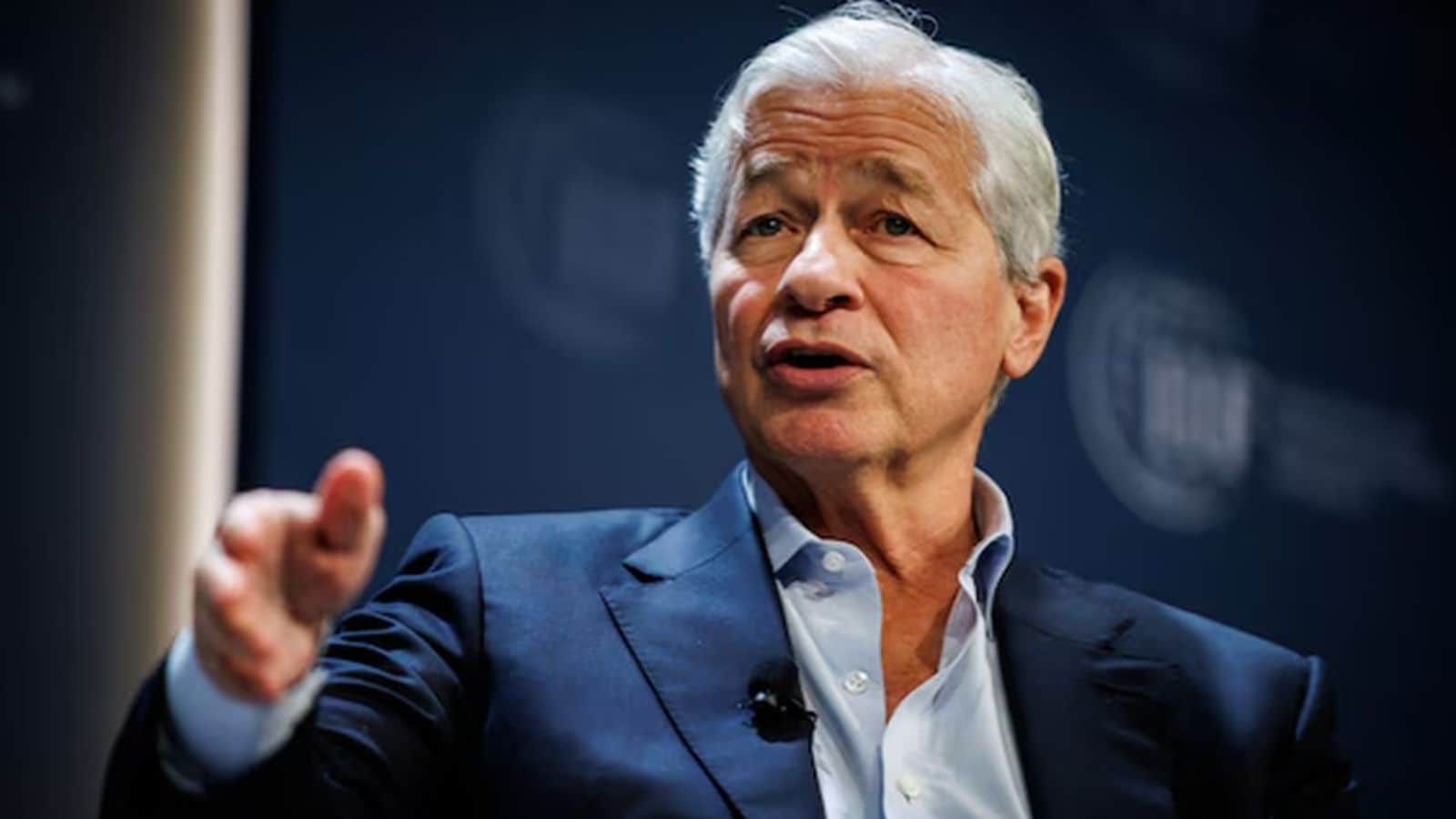
The story of modern Wall Street has a few permanent fixtures, and JPMorgan Chase CEO Jamie Dimon is right at the top of the list. For two decades, he's been the untouchable king of banking, steering his firm through financial crises, recessions, and endless regulatory storms.
But there's one shadow he simply can't outrun: Jeffrey Epstein. If you enjoyed this post, you should look at: this related article.
Just when JPMorgan thought they'd put the Epstein chapter behind them by cutting a $290 million check to settle class-action lawsuits in 2023, the past has clawed its way back. Now, a fresh barrage of scrutiny has landed directly on Dimon's desk from the United States Senate.
The latest firestorm centers on a simple, deeply uncomfortable question: Did the most powerful banker in America lobby the British government on the direct advice of a convicted sex offender? For another look on this event, check out the recent coverage from MarketWatch.
The Letter from Capitol Hill
On July 13, 2026, Senator Elizabeth Warren, the top Democrat on the Senate Banking Committee, went public with a letter she sent to Dimon. It wasn't a polite request for clarification; it was a demand for answers.
Warren's inquiry focuses on a cache of Department of Justice documents released under the Epstein Files Transparency Act. These files suggest a level of coordination between Epstein, British political heavyweights, and JPMorgan's leadership that looks incredibly bad under a modern spotlight.
"It is critical that Congress and the American public fully understand the extent of any interactions the bank and you had with Epstein."
— Senator Elizabeth Warren, in her letter to Jamie Dimon
The core of the issue is a 2009 plan to influence UK tax policy. In the wake of the 2008 global financial crash, public anger was boiling, and the British government was planning a one-time 50% tax on banker bonuses over £25,000. Naturally, Wall Street was furious. But the way they allegedly fought back is what's raising eyebrows today.
The Middleman and the "Mild Threat"
According to the unsealed DOJ documents, Epstein was acting as a high-level intermediary. He was in constant contact with Lord Peter Mandelson, who was serving as Britain's Business Secretary at the time.
On December 17, 2009, Epstein emailed Mandelson to ask if "jamie"—meaning Jamie Dimon—should make another call to Alistair Darling, the UK Chancellor of the Exchequer.
Mandelson's emailed advice was short and sharp: "Yes and mildly threaten."
Twelve days later, on December 29, Dimon reportedly made that exact call.
We know the call happened because Darling himself detailed it in his memoirs. He wrote that Dimon was "very, very angry" about the proposed tax. According to Darling, Dimon pointed out that JPMorgan was a massive employer in the UK and a major buyer of British government bonds (gilts). To seal the threat, Dimon allegedly warned that JPMorgan might cancel its planned investment in a massive new London headquarters.
This is textbook, hard-nosed lobbying. It's how Wall Street gets its way. But the fact that Epstein—a man who had already pleaded guilty to soliciting sex from a minor in Florida in 2008—was allegedly pulling the strings behind the scenes is what makes this toxic.
The Plausible Deniability Problem
Dimon's defense has remained entirely consistent for years. He claims he had no idea Epstein was even a client of JPMorgan until the financier was arrested in 2019. Under oath in a 2023 deposition, Dimon stated he had never met Epstein and didn't know anything about his ties to the bank.
JPMorgan's PR team quickly went into damage control after Warren's letter went public, releasing a statement that didn't mince words:
"Any association with the man was a mistake and we regret it, but we would not have continued doing business with him had we believed he was engaged in ongoing crimes... Any suggestion that Dimon spoke with Epstein or took counsel from him was false."
They also pointed out that Dimon "regularly speaks his mind on bad, anti-growth policy and has his own views." In other words: Dimon didn't need Epstein to tell him to hate a tax on banker bonuses. He was perfectly capable of getting angry at the British Treasury all on his own.
But that defense has some major blind spots.
First, Epstein was a client of JPMorgan for 15 years, spanning from 1998 to 2013. For eight of those years, Dimon was the CEO. Epstein wasn't some random retail customer with a checking account; he was a premier client of the private bank, bringing in millions of dollars in fees.
Second, the paper trail is messy. Internal bank reports eventually flagged roughly 4,700 suspicious transactions linked to Epstein, totaling a staggering $1.1 billion.
Third, people close to Dimon knew exactly who Epstein was. Former JPMorgan executive Jes Staley—who later ran Barclays—admitted to having a close relationship with Epstein and claimed he communicated with Dimon about him. JPMorgan claims Staley's testimony is "evasive and unreliable," but the mere existence of these conflicting accounts keeps the story alive.
Add to that an email from one of Epstein's aides in 2010 asking if food should be prepared for a meeting at Epstein's house with Staley, Mandelson, and Dimon, and the "I didn't know him" defense starts to feel incredibly strained.
Why This Matters in 2026
If you think this is just old gossip from 2009, you're missing the bigger picture. This isn't just about history; it's about the deep, systemic rot where high finance, international diplomacy, and criminal networks overlap.
The British political establishment is already feeling the burn. Peter Mandelson was sacked from his post as US ambassador last year specifically because of his historical ties to Epstein. The UK public is furious about the revelations, and the political fallout is still actively spreading through Parliament.
For Dimon, the stakes are different but equally high. He has built a reputation as the statesman of Wall Street—the one CEO who is too smart, too detail-oriented, and too powerful to get caught in the mud. He is famous for knowing every single detail of his bank's operations. The idea that $1.1 billion in suspicious transactions flowed through his bank, and that his executives were plotting tax lobbying strategies with a known sex offender without his knowledge, is hard for the public to swallow.
What Happens Next
This isn't going away. Senator Warren has requested a full accounting of all communications between Dimon, JPMorgan employees, Epstein, and UK government officials.
If you want to track where this goes, keep your eyes on these key areas:
- The House Oversight Committee: Former JPMorgan executive Jes Staley is scheduled for a closed-door interview on Capitol Hill later this month. His testimony about what Dimon knew—and when he knew it—could change everything.
- The SEC and Banking Regulators: Warren is pushing federal regulators to investigate whether current or former banking executives actively facilitated Epstein's financial activities.
- JPMorgan Succession Plans: Dimon is nearing the end of his historic run. If the Epstein files continue to drip-feed damaging emails, it might accelerate his retirement plans or complicate the succession of internal candidates like Mary Erdoes, who also has documented links to managing the Epstein account.
The lesson here is simple: on Wall Street, some debts can't be settled with a check. No matter how many millions JPMorgan pays to make its lawsuits go away, the paper trail of the world's most notorious financier is going to keep dragging its most powerful players back into the light.