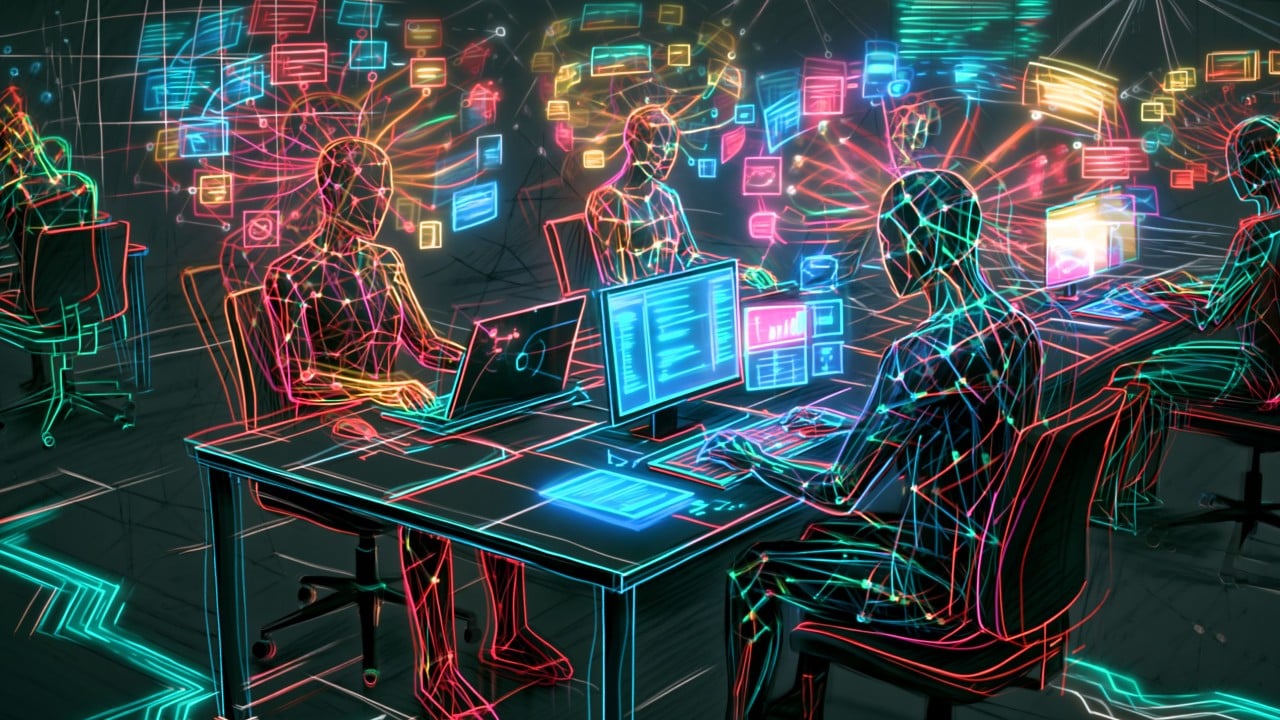
Campaign Season Just Lost Its Mind to Synthetic Media
If you scrolled through Israeli social media ahead of the October 2026 Knesset vote, your feed didn't look normal. It looked like a fever dream engineered by an algorithm.
In one clip posted directly by Prime Minister Benjamin Netanyahu's X account, candidate Gadi Eisenkot appears to share a soft embrace with Arab party leader Ahmad Tibi. In another posted by Itamar Ben Gvir, Paris burns under a giant keffiyeh above the words "Gaza ♥️ Paris". Neither event happened. Both were created with a few prompts and a handful of GPU cycles.
The tech isn't just creeping into political communications anymore. It's taking over the driver's seat. What played out in Israel's legislative campaign wasn't a minor test of new tools; it was a full-blown preview of how future elections will be fought across every major democracy.
While political analysts used to worry about shadowy state actors dropping subtle fabrications days before a vote, the reality turned out much noisier. Official campaigns are now generating deepfakes themselves, uploading them openly, and using them to set the daily media agenda.
+-------------------------------------------------------------------+
|               THE NEW SYNTHETIC CAMPAIGN TOOLKIT                   |
+-------------------------------------------------------------------+
| 1. HYPER-PARTISAN PARODY | Openly fake, highly viral visuals      |
| 2. SLOP DISINFORMATION   | Low-effort voice clones & image swaps |
| 3. CHATBOT MANIPULATION  | Persuasive AI dialogue in 1-on-1 chats |
+-------------------------------------------------------------------+
When Official Campaigns Become the Primary Deepfake Engine
The biggest surprise from recent political cycles isn't that deepfakes exist. It's who is posting them.
Historically, dirty tricks were outsourced. Operatives ran dark-money PACs or hired external click farms to do the mudslinging. In the 2026 Israeli campaign, candidates and party leaders skipped the middleman and published AI-generated content directly to their official handles.
Party strategists realized something crucial about modern attention spans. It doesn't matter if an image looks slightly off or if critics quickly flag it as synthetic. If an AI video makes people stop scrolling for three seconds, it wins the afternoon news cycle.
- Plausible Deniability: Candidates claim outrageous videos are just satire or political commentary, bypassing standard libel constraints.
- Speed Over Accuracy: Generative tools let campaign teams respond to breaking news with customized visual narratives in under ten minutes.
- Audience Segmentation: Visuals engineered for Instagram and TikTok hit younger demographics long before newsrooms can run fact-checks.
This isn't about fooling voters into believing a single fake event. It's about flooding the public square with so much synthetic noise that voters give up on figuring out what's real altogether.
The Real Danger Isn't Video, It's Interactive Chatbots
While headline writers focus on deepfake videos of politicians saying outlandish things, digital policy experts warn that we're watching the wrong shell game.
Video deepfakes are loud. They get caught, debunked, and debated on cable news. Conversational AI, on the other hand, operates completely in the dark.
When voters use AI search assistants or conversational bots to research party platforms, election dates, or voting locations, they're stepping into an unmonitored environment. A personalized chatbot can subtly steer a undecided voter's opinion over a twenty-minute conversation without leaving a public transcript.
ATTENTION VS. INFLUENCE

[ Deepfake Video ] ---> High Virality  ---> Rapid Fact-Check ---> Low Direct Conversion
[ AI Chatbot     ] ---> Zero Public Vis ---> Zero Fact-Checking ---> High Personal Influence
If a candidate uses synthetic voice clones to cold-call voters or deploys custom agents to converse across messaging apps, standard electoral oversight completely breaks down. Regulators can track radio ads and billboard spends. They can't audit millions of individualized, AI-generated private chats.
Courts and Regulators Are Fighting Yesterday's Battle
Legal systems are built for a slow world. Elections aren't.
In Israel, Deputy Supreme Court President Noam Sohlberg and the Central Elections Committee have issued rulings targeting explicit voter deception, notably in cases like Bennett 2026. But court injunctions moving at the speed of judicial review take weeks. On social platforms, a piece of political content reaches its maximum impact within six hours.
By the time a judge orders a campaign to take down a deepfake or append a disclosure label, the election news cycle has moved on three times over.
REAL-TIME ELECTION DISINFORMATION TIMELINE

Hour 00: AI video posted on official X handle
Hour 02: 1.5M organic impressions across platforms
Hour 06: Peak engagement and cable news commentary
Day 03: Opposition files formal complaint with electoral committee
Day 14: Court issues injunction to remove content
Result: Damage fully integrated into voter perception weeks prior
Current campaign laws around the world rely on concepts like "fair interference" or clear libel standards. Synthetic media demolishes both frameworks. When producing high-definition video takes zero technical skill and zero budget, enforcing traditional political advertising rules becomes almost impossible.
What You Should Do to Spot Political Synthetic Content
You don't need a degree in computer science to protect your own perception during hyper-partisan campaign cycles. Follow these straightforward steps whenever political content feels suspiciously tailored to outrage you:
- Check the Source First, Not the Audio: If a video shows a candidate making an extreme policy reversal or an illegal statement, check if established news outlets are reporting the context. If it only exists as a raw clip on social media, treat it as synthetic until proven otherwise.
- Look for Biological Artifacts: Watch fingers, earlobes, and teeth. Generative video models still struggle with seamless hand movements, unnatural blinking patterns, and light reflection consistency in human eyes.
- Listen to Pitch and Cadence: Voice cloning tools frequently miss the micro-pauses, breath catches, and natural cadence changes that happen when a human speaks under stress or excitement. Synthetic speech often sounds unnervingly smooth or flat.
- Verify Direct Claims via Official Portals: Don't rely on conversational AI or social posts for polling places, voter ID rules, or registration status. Go directly to your state or national election authority website.
The era of trusting video evidence by default is officially over. As political campaigns double down on AI-generated content to capture attention, staying informed requires treating every provocative clip as guilty of fabrication until proven genuine.