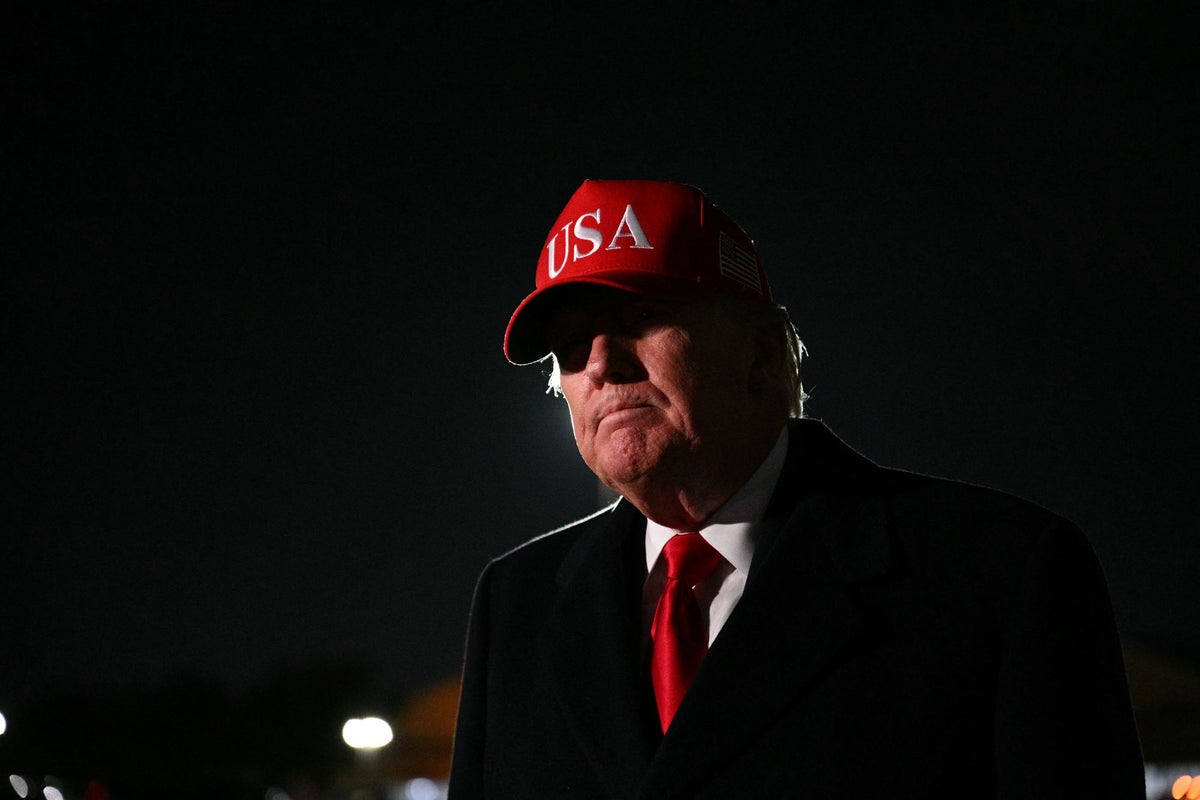
The fragile hope for a diplomatic breakthrough between Washington and Tehran didn’t just stumble in Islamabad; it hit a wall of geopolitical reality that Donald Trump now claims he is happy to walk away from. Following the abrupt disintegration of back-channel negotiations in the Pakistani capital, the former president has shifted from his usual posture of the ultimate dealmaker to a stance of total indifference. He insists he "doesn't care" if Iran returns to the table. This pivot marks a significant departure from his previous rhetoric and signals a hardening of a "maximum pressure" strategy that has historically yielded mixed results.
The failure of the Islamabad talks reveals a fundamental misalignment between the two nations that no amount of informal posturing could fix. While the world watched for a sign of de-escalation, the fundamental sticking points—nuclear enrichment levels, regional proxy activity, and the suffocating weight of economic sanctions—remained immovable. Trump’s current dismissal of the process isn't just a reaction to a bad meeting; it is a calculated political maneuver designed to project strength while the path to a peaceful resolution narrows to a sliver.
The Quiet Room in Islamabad
Negotiations in Pakistan were never supposed to be the main event, yet they carried the weight of a potential reset. Sources close to the diplomatic circles in Islamabad suggest that the meetings were intended to establish a basic framework for high-level engagement. They failed because neither side was willing to offer the "front-loaded" concessions necessary to build trust.
Iran entered the room demanding an immediate easing of oil sanctions as a show of good faith. The American delegation, tethered to Trump’s insistence on a "better deal" than the 2015 JCPOA, demanded a total cessation of enrichment and a permanent end to support for regional militias before any financial relief could be discussed. It was a classic stalemate.
The collapse happened when the Iranian representatives realized that the American side lacked the domestic political cover to offer anything substantial without an immediate, public win. Conversely, the U.S. side viewed the Iranian demands as an attempt to buy time while their centrifuges continued to spin. When the talks broke, the silence was deafening.
The Psychology of Indifference
Trump’s "I don't care" mantra is a psychological tactic he has used throughout his business and political career. By devaluing the prize, he attempts to regain leverage. If the opponent believes you are desperate for a deal, the price goes up. If they believe you are ready to walk away and let them wither under sanctions, the power dynamic theoretically shifts.
However, international diplomacy isn't a real estate closing in Manhattan. The stakes involve regional stability and the potential for nuclear proliferation. When a superpower signals it no longer cares about the outcome of negotiations, it creates a vacuum. Other players, specifically China and Russia, are more than happy to fill that space, offering Iran economic lifelines that undermine the very sanctions Trump relies on.
The Sanction Paradox
The "maximum pressure" campaign is built on the belief that economic strangulation will eventually force a regime to its knees. It is a brutal logic. While the Iranian rial has plummeted and inflation has decimated the middle class in Tehran, the ruling elite has proven remarkably resilient.
We are seeing a paradox where the more isolated Iran becomes, the more it leans into its "resistance economy." This involves developing sophisticated smuggling networks and strengthening ties with adversarial blocs. Trump’s indifference assumes that Iran has a breaking point that is rapidly approaching. History suggests that ideological regimes can endure far more domestic suffering than Western analysts often predict, especially when they feel their core survival is at stake.
The Role of Regional Proxies
One cannot discuss the collapse of talks without looking at the map. From Yemen to Lebanon, Iranian-backed groups remain the primary "insurance policy" for Tehran. During the Islamabad sessions, the U.S. pushed for these groups to be part of the primary negotiation. Iran refused, viewing its "forward defense" strategy as non-negotiable.
This remains the most significant hurdle. Even if a nuclear agreement were reached, the "gray zone" warfare across the Middle East continues unabated. Trump’s lack of interest in returning to the table reflects a realization that a "grand bargain" covering both nuclear and regional issues is currently impossible.
The Shadow of 2024 and Beyond
Domestic politics are the invisible hand at the negotiating table. Trump is operating with one eye on his base and the other on the electoral calendar. A failed negotiation is a liability; a posture of "tough indifference" is a campaign asset. By walking away, he avoids the risk of being seen as "soft" or getting trapped in a long, drawn-out process that yields no quick victories.
This creates a dangerous holding pattern. Without a diplomatic channel, the risk of miscalculation grows. If a merchant ship is seized in the Strait of Hormuz or a drone strike hits a sensitive target, there is no "red line" or direct communication link to de-escalate the situation. Indifference is a luxury only available when the status quo is stable. The current Middle East is anything but.
A New Axis of Cooperation
While Washington pivots toward indifference, Tehran is pivoting East. The failure in Islamabad has accelerated Iran’s integration into the Shanghai Cooperation Organisation (SCO) and expanded its bilateral trade agreements with Beijing. China sees an opportunity to secure long-term energy supplies at a discount while expanding its footprint in a region traditionally dominated by American influence.
This shift renders the "I don't care" strategy increasingly toothless. If the U.S. isn't at the table, it doesn't mean the table is empty. It just means the conversation is happening in a language—and toward an end—that doesn't serve American interests. The vacuum created by American withdrawal is being filled by a new architecture of global power that bypasses the dollar-denominated financial system entirely.
The Reality of Enrichment
The most pressing concern remains the technical progress of Iran’s nuclear program. Since the U.S. withdrawal from the original deal, Iran has moved closer to "breakout capacity" than at any point in history. They are enriching uranium to 60% purity, a short technical jump from weapons-grade 90%.
Trump’s assertion that he doesn't care about talks ignores the reality that time is a resource the U.S. is losing. Every day without a monitoring framework is a day the Iranian program becomes more advanced and more difficult to reverse through diplomacy. The "deal" Trump wants becomes harder to achieve with every centrifuge that comes online.
Military Options and Their Limits
If diplomacy is dead and indifference is the policy, the only remaining tool is force. However, even the most hawkish analysts admit that a military strike on Iran’s nuclear facilities would be a temporary fix at best and a regional catastrophe at worst. The facilities are deeply buried, dispersed, and defended. A strike would likely drive the program further underground and solidify public support for a regime that is currently facing significant internal dissent.
The Intelligence Gap
The collapse of formal talks also degrades the quality of intelligence. Diplomatic channels often serve as a secondary source of information, providing insight into the internal frictions and priorities of an adversary. When those channels are severed, we are forced to rely on satellite imagery and electronic intercepts, which provide the "what" but rarely the "why."
Relying on a posture of indifference means flying blind into one of the most volatile regions on earth. It assumes that the other side will eventually blink. But if they don't, the "dealmaker" is left with a set of options that are all significantly worse than the ones he walked away from in Islamabad.
The Cost of No Communication
The most immediate danger is the loss of a de-confliction mechanism. During the Cold War, even at the height of tensions, the U.S. and the Soviet Union maintained "hotlines" to prevent accidental nuclear war. The current relationship between Washington and Tehran lacks even that basic level of safety.
When Trump says he doesn't care if they return to talks, he is essentially saying he is comfortable with a high-stakes game of chicken where neither driver can see the other. It is a gamble that assumes the Iranian leadership is more rational and more fearful than their actions suggest.
The Islamabad Lesson
Islamabad wasn't just a failure of logistics or timing; it was a failure of vision. It proved that the old playbook of "squeeze until they beg" has reached its limit. Iran has learned to live in the squeeze, and the U.S. has learned to live in the frustration.
The collapse signifies the end of an era where American pressure alone could dictate the terms of international behavior. We are entering a fragmented period where middle powers like Pakistan, and emerging superpowers like China, have as much say in the outcome of a regional crisis as the occupant of the White House.
Trump’s indifference may play well in a soundbite, but it fails to address the shifting tectonic plates of global power. The deal isn't just off the table; the table itself is being moved to a different room.
The strategy of walking away only works if you don't need to go back. In the context of Middle Eastern security and nuclear non-proliferation, the U.S. will eventually have to go back. The question is how much more the "price" will have increased by the time they do. Indifference is not a policy; it is a pause button on a ticking clock.