Algorithm-driven recommendation engines and automated streaming platforms promised an infinite library while quietly flattening local culture into uniform global background noise. The music industry surrendered its physical outposts to data centres years ago, accepting efficiency over friction. Yet a stubborn corner of Western Europe continues to reject this formula. Ireland has built an entirely different economic and cultural model for sound, proving that creative survival requires human friction rather than scalable code.
For decades, analysts predicted the complete digitisation of art would erase regional scenes. Instead, Irish artists, independent promoters, and community-backed collectives engineered an alternative ecosystem. They survived the shift not by adopting Silicon Valley efficiency, but by doubling down on physical spaces, live performance traditions, and state-backed cultural infrastructure that treats music as a public good rather than a disposable software feature. Learn more on a connected subject: this related article.
The Economics of Isolation and Community
Major labels love to celebrate how remote collaboration apps let a producer in Dublin work with a songwriter in Los Angeles without booking a flight. This frictionless connectivity ignores how songs actually form. A track born in a bedroom through cloud sharing often lacks the immediate, room-testing gravity of something hammered out over three hours in a freezing basement rehearsal space in Smithfield or Cork.
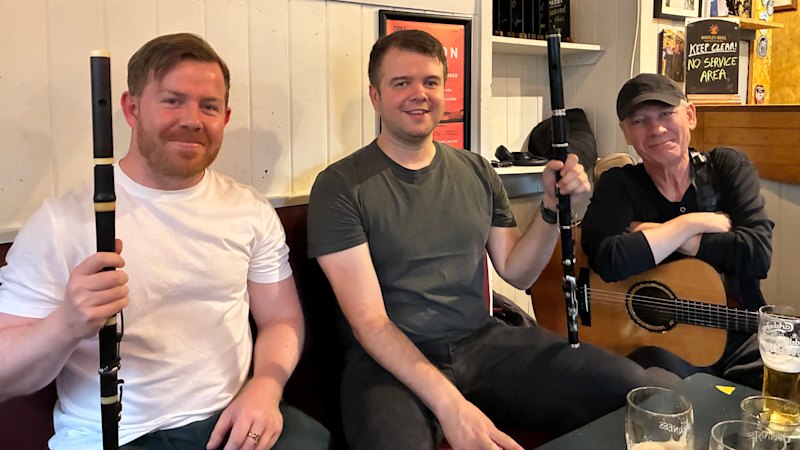
Irish traditional music sessions remain the ultimate antidote to platform-driven atomisation. These weekly gatherings operate on unwritten social contracts. There are no algorithms suggesting who should play next, no metrics tracking stream counts, and no monetization tiers. Further analysis by Rolling Stone highlights similar views on this issue.
The Session Model
Music passes from player to listener in real time within a physical room. The exchange is economic only in the sense that a pint might be bought, but the transaction is primarily cultural, ensuring tunes mutate, survive, and remain tied to specific geographies.
When tech companies try to quantify this ecosystem, they fail because the value is rooted in scarcity and physical presence. An independent venue in Galway does not compete with Spotify; it operates in an entirely different currency. While streaming services commodify attention into fractions of a cent per play, the Irish live sector relies on ticket sales, merch, and direct community patronage that keeps capital circulating within local economies rather than migrating to offshore tech conglomerates.
State Support Versus Venture Capital
Silicon Valley approaches creative industries through the lens of venture capital. Every startup needs hyper-growth, massive scale, and an eventual exit strategy or acquisition. That logic destroys niche art forms because a folk trio from County Clare cannot scale to a billion-dollar valuation without losing the specific cultural gravity that makes them worth listening to in the first place.
Ireland took a radically divergent path by treating artists as workers through the Basic Income for the Arts pilot scheme. This government initiative provides thousands of working artists with a reliable weekly stipend, insulating them from the immediate panic of algorithmic survival.
Critics from free-market think tanks frequently argue that state subsidies breed complacency. The reality on the ground tells a sharper story. Freeing a producer or a composer from the desperate scramble of working three non-musical service jobs just to pay rent in Dublin creates the mental bandwidth required to make ambitious, uncompromising work.
- State backing replaces the fickle whims of venture-backed streaming algorithms with stable civic support.
- Artists can invest years into mastering traditional instruments or complex production techniques without immediate commercial validation.
- Cultural output remains diverse because creators do not have to pander to viral trends to survive the month.
The Myth of Global Reach
Tech evangelists preach the gospel of global reach. Every bedroom producer is told they are just one viral TikTok video away from filling stadiums worldwide. This promise obscures a brutal truth. When everyone has global reach, global reach becomes worthless. The noise floor rises so high that human ears simply tune out.
Irish musicians often achieve international followings precisely by refusing to pander to global templates. Acts like Fontaines D.C. or Lankum do not sand down their accents, soften their arrangements, or optimize their song lengths for three-second attention spans. Their success rests on hyper-locality. By digging deeply into their specific cultural anxieties, historical memory, and urban or rural realities, they construct art that resonates globally through its uncompromising specificity.
Global tech platforms want interchangeable content that can be consumed anywhere by anyone. Authentic music resists this standardisation. A song about the housing crisis in Dublin or the bleak beauty of the Connemara coast carries a texture that cannot be synthesized by an automated prompt or generated via a cloud-based loop library.
Reclaiming the Physical Public Square
The most insidious victory of tech in the music sector was the closure of physical spaces. Nightclubs shuttered due to rising rents, gentrification, and noise complaints, replaced by luxury apartments and corporate co-working hubs. Berlin, London, and New York hollowed out their nightlife districts under the guise of urban renewal.
Dublin faced identical pressures, yet grassroots resistance pushed back hard. When developers targeted historic music venues, local activists, musicians, and sympathetic politicians mobilized. They weaponised planning laws, lobbied for cultural status designations, and forced municipal authorities to recognize that a city without late-night spaces is a dead asset.
Protecting these rooms matters because physical spaces act as breeding grounds for accidental collaboration. An algorithm recommends music based on your past listening history, trapping you inside an echo chamber of your own preferences. A crowded pub in Dingle or an underground club space in Limerick introduces you to sounds you never knew you hated, liked, or needed.
The Fragility of the Resistance
This model is far from utopian. Ireland faces severe economic headwinds, chief among them a catastrophic housing crisis that threatens to drive young creatives out of the country entirely. You cannot run an experimental music scene if every available square foot of urban real estate is converted into high-end hotels or data centres powering cloud servers.
Streaming services continue to squeeze the margins of independent distributors. Vinyl pressing plants face supply chain bottlenecks and rising raw material costs. The economic pressure to cave to tech platforms remains immense, and plenty of emerging artists sign away their publishing rights to major labels just to secure a modest sync deal for a television commercial.
Yet the core infrastructure holds because the people running it understand a fundamental reality that Silicon Valley refuses to acknowledge. Music is not data. It is a social ritual, a historical record, and a physical vibration that requires bodies in rooms to achieve its full weight.
Technology is a tool, not a culture. As long as artists and audiences in places like Ireland treat tech as a utility rather than a master, great music will not merely survive the digital age. It will outlive it.