Iran just blinked, but only for its biggest business partner.
According to reports from Iran's semi-official Fars news agency, Tehran started allowing Chinese-linked vessels to pass through the heavily blockaded Strait of Hormuz. It isn't a free pass for everyone. These ships are moving under a strict new "management protocol" dictated by the Islamic Revolutionary Guard Corps (IRGC) navy.
If you think this is just a minor regional update, you're missing the bigger picture. The Strait of Hormuz is the world's most critical oil chokepoint. It handles roughly 20% of global oil supplies. Ever since the US-Israeli military conflict with Iran kicked off in February 2026, the strait has been effectively a no-go zone for global shipping, sending energy markets into a tailspin.
By cutting a private deal with Beijing, Iran is showing exactly how it intends to use its geographical leverage. It's rewriting the rules of maritime transit in real-time, and the economic ripples will hit everything from global supply chains to the price you pay at the gas pump.
The Secret Diplomacy Behind the Safe Corridor
This deal didn't happen by accident. It is the direct result of intense, behind-the-scenes scrambling by Chinese Foreign Minister Wang Yi and Beijing’s ambassador to Tehran, Cong Peiwu.
Just days ago, a Chinese-owned oil tanker, the JV Innovation, came under a devastating drone or missile attack near the strait, proving that even Beijing’s neutrality couldn't protect its energy lifeline from the chaos of the IRGC's "mosquito fleet." China is the largest buyer of Iranian crude oil, and it couldn't sit back while its own economic engine starved.
Ship-tracking data from MarineTraffic confirms that at least four Chinese-linked vessels crossed the waterway via Iran's newly designated "safe" shipping corridor right after the agreement. Over 30 vessels total have been approved by Tehran under these new terms.
Here is what the Iranian "management protocol" actually looks like on the water:
- Mandatory Registration: Ships must submit full cargo manifests and crew IDs directly to the IRGC naval branch before entering the Persian Gulf.
- Strict Route Compliance: Vessels must stick to a narrow, designated corridor away from Western naval assets.
- Active Communication: Captains are required to maintain open radio channels with Iranian coastal missile batteries and fast-attack craft.
Trump and Xi Jinping Take the Stage
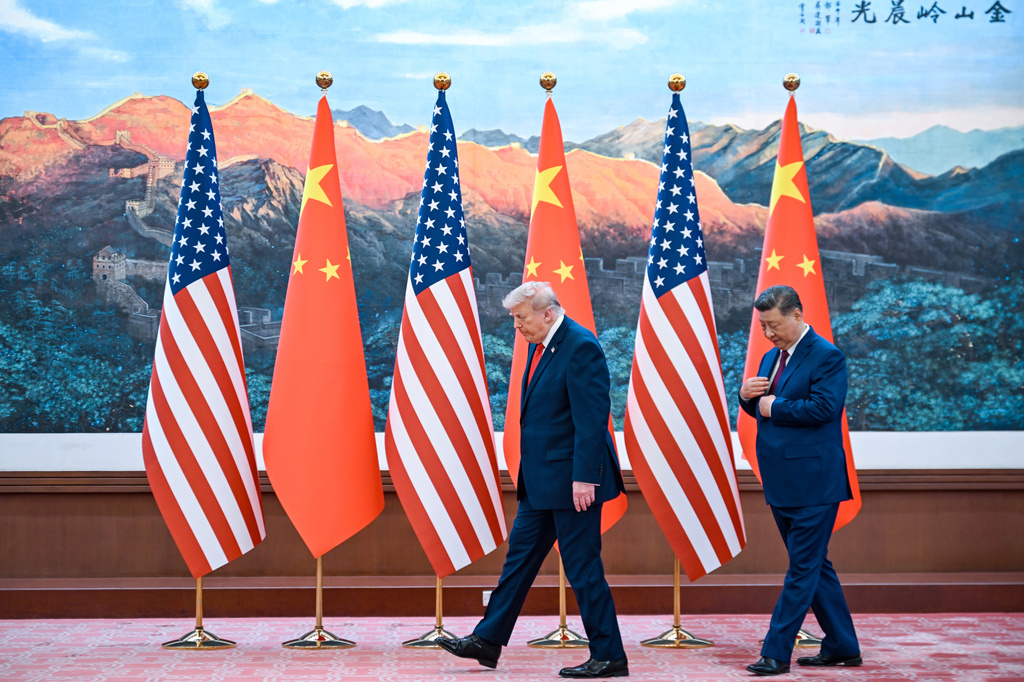
The timing of Iran's announcement couldn't be more calculated. It dropped right as US President Donald Trump arrived in Beijing for a high-stakes summit with Chinese President Xi Jinping.
The White House released a statement claiming both leaders agreed that the Strait of Hormuz must remain open for global commerce. US Treasury Secretary Scott Bessent even went on CNBC to declare that Beijing would work behind the scenes to pressure Tehran because a closed strait destroys Chinese economic growth.
But Iran's move completely undercuts the American position. By granting China exclusive access while continuing to block Western-aligned ships, Tehran is driving a massive wedge between Washington and Beijing. Iran is telling the world that the US Navy can no longer guarantee freedom of navigation in the Middle East. If you want safe passage, you have to negotiate with Tehran, not Washington.
The Reality of the Dual Blockade
What we are witnessing in 2026 isn't just an Iranian blockade; it's a brutal economic tug-of-war.
The United States has its own naval blockade active in the Gulf of Oman, trying to starve Iran of imports and stop its oil exports entirely. US Central Command (CENTCOM) recently reported that its forces redirected 67 commercial vessels and disabled four others trying to breach their net.
Meanwhile, Iran is using its swarms of fast-attack boats, kamikaze sea drones, and coastal anti-ship missiles to keep the rest of the world out. Iranian Foreign Minister Abbas Araghchi made it clear that the waterway remains closed to "hostile ships."
This creates an incredibly dangerous environment for commercial shipping. If a vessel complies with US sanctions, Iran targets it. If it complies with Iran's new protocol, it risks running afoul of the US Navy.
What This Means for Global Markets
For months, global shipping firms have been forced to reroute tankers around Africa's Cape of Good Hope. That adds 10 to 14 days of travel time, spikes fuel costs, and jacks up maritime insurance premiums to astronomical levels.
By opening a crack in the door for China, Iran is trying to normalize its control over the strait. It sets a dangerous precedent where global trade routes are no longer governed by international law, but by individual pacts with regional powers.
If you are running a logistics company, managing a supply chain, or investing in energy commodities, you can't rely on old assumptions. The rules of global shipping have permanently shifted.
Your immediate next step should be auditing your supply chain's exposure to Middle Eastern energy inputs. Look closely at the flag states of the carriers you hire. Moving forward, vessels flying Western flags or tied to US-aligned entities will face extreme risks in the Gulf, while those with diplomatic cover from Beijing might be the only ones moving through the world's most vital choke point. Expect insurance companies to start rewriting their war-risk clauses based on these exact diplomatic alignments.