An invitation is supposed to be a gesture of respect. It arrives on crisp letterhead, stamped with institutional seals, promising a meeting of minds, shared coffee in a sunlit hall, and the quiet dignity of academic exchange.
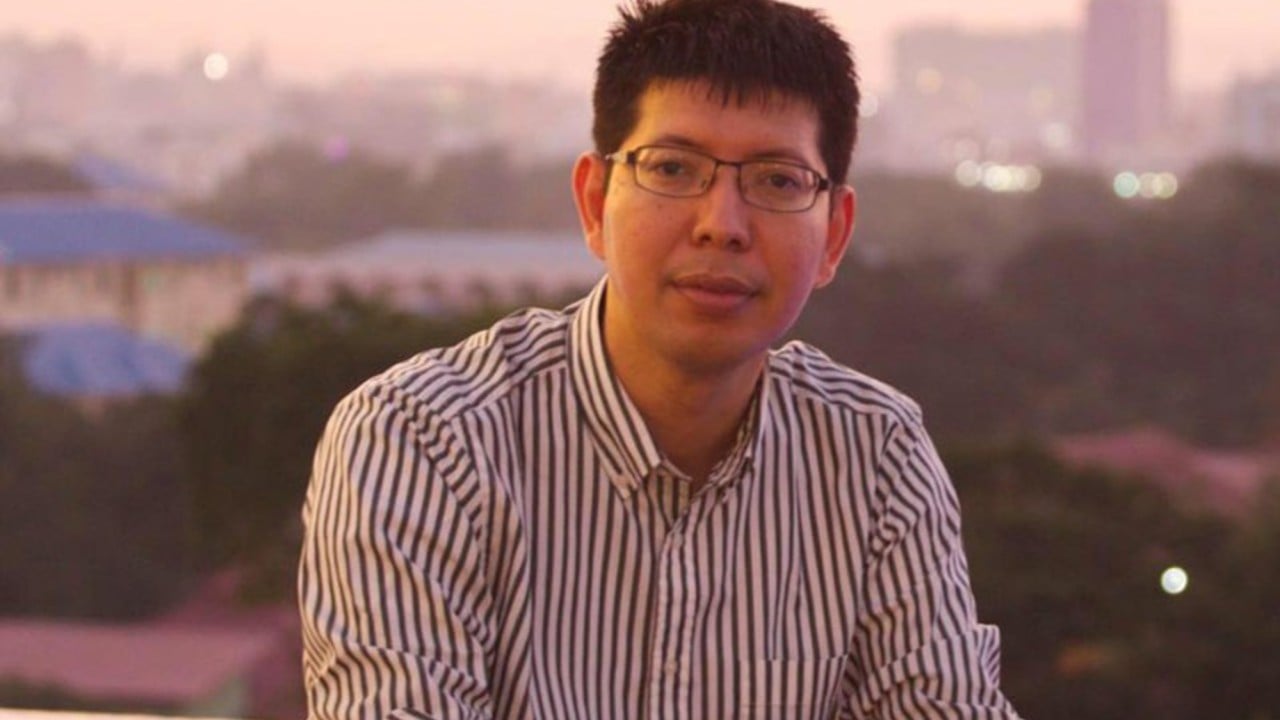
For Min Zin, that invitation came from across the border. A professor he had known for years at the Yunnan Academy of Social Science asked him to attend a conference in Kunming. It sounded routine. After all, he had traveled to China before without incident. He was a scholar, a researcher who spent his days trying to understand the fractured political landscape of Myanmar, and a man who believed that dialogue was the only antidote to regional blind spots.
So he packed a bag and crossed the threshold.
He never made it to the conference hall. Instead, the moment he arrived in Yunnan province last June, the doors slammed shut.
Months later, the United States State Department officially designated Min Zin as wrongfully detained. Secretary of State Marco Rubio made the determination following an extensive review, elevating a quiet scholarly nightmare into the harsh glare of international diplomacy. But behind the bureaucratic phrasing of a State Department press release lies a deeply human tragedy about the invisible stakes of intellectual freedom in a suspicious world.
To understand why a researcher sitting at a conference table can suddenly be labeled a threat to national security, you have to look at the contours of a life spent studying the uncomfortable truths of power.
Long before he became an American citizen, long before he enrolled as a PhD student at UC Berkeley, Min Zin was a young student activist marching through the streets of Burma in the historic pro-democracy uprisings of 1988. When the military cracked down, he did not surrender his voice; he went into hiding for seven harrowing years. He lived in the shadows, hunted by the very state apparatus he sought to reform, before finding a safe harbor and eventual asylum in the United States.
By 2012, his world had found a fragile equilibrium. He became a naturalized U.S. citizen and, more importantly, a father. Later, he returned to the region to help found the Institute for Strategy and Policy-Myanmar, an independent, non-partisan think tank designed to bring empirical rigor to the study of Myanmar’s socioeconomic and political crises.
He was not an operative. He was an observer. He wrote papers, analyzed data, and believed that understanding regional stability required talking to everyone, including Chinese academics who held immense sway over Myanmar's geopolitical destiny.
That intellectual curiosity became his undoing.
When Chinese authorities announced his arrest, the explanation was chillingly brief. Officials in Beijing claimed he was suspected of engaging in espionage and endangering national security. No public evidence was presented. No detailed charges were unsealed. Just a sweeping, ominous accusation lobbed against a man whose only weapon was a notebook and a lifetime of studying conflict.
His family back home absorbed the blow with a mixture of heartbreak and fierce denial. His brother, Aung Maw Zin, watched the news cycle with a sinking stomach, later telling reporters that the espionage accusations could not possibly be further from the truth. Yet, the machinery of state security operates on its own logic, where independent research is often misconstrued as subversion, and open-source data collection is treated like tradecraft.
Min Zin is now one of two American citizens officially designated as wrongfully detained in China, joining Dr. Youlin Chen in a grim statistical category that tests the limits of bilateral relations.
The timing of Washington's intervention is impossible to ignore. The wrongful detention designation arrives just weeks ahead of a planned diplomatic summit between President Donald Trump and Chinese President Xi Jinping. For families caught in the geopolitical crossfire, these high-level meetings represent more than handshakes and trade agreements. They are the narrow windows where human lives are traded back from the dark.
Think tanks and academic institutions across the globe have rallied behind him, issuing urgent calls for his unconditional release. They recognize a chilling precedent in his arrest. If an invited scholar traveling to an official workshop can be swept up and accused of spying simply for examining the borders of political reality, then the collaborative foundation of global research begins to crumble.
Thousands of miles away from the seminar rooms of Kunming, a teenage daughter waits for her father to come home. A brother holds onto a fragile thread of hope forged by a government designation in Washington. And somewhere behind closed doors, a researcher who spent his life mapping the invisible lines of conflict finds himself trapped entirely within one.