In a small, dimly lit grocery store in a northern district of Tehran, a man named Reza reaches for a carton of milk. He checks the price, then checks it again. The numbers have shifted since Tuesday. They always shift. Outside, the world talks about "maximum pressure" and "strategic blockades" as if they are pieces on a chessboard moved by steady hands in distant capital cities. But for Reza, the blockade isn't a strategy. It is a slow, rhythmic tightening around his throat.
The headlines coming out of Washington and Tehran today carry a sharper edge than usual. We are witnessing a war of words that threatens to become a war of absolute attrition. Donald Trump’s administration has signaled a return to a policy of "elimination"—not necessarily of a people, but of a regime’s ability to function, breathe, or trade. Iranian officials call it "pure propaganda." They claim the walls aren't really there.
They are wrong. The walls are very real. They are made of banking codes, shipping insurance, and the silent refusal of foreign ports to dock a vessel flying the Iranian flag.
The Ghost Ships of the Persian Gulf
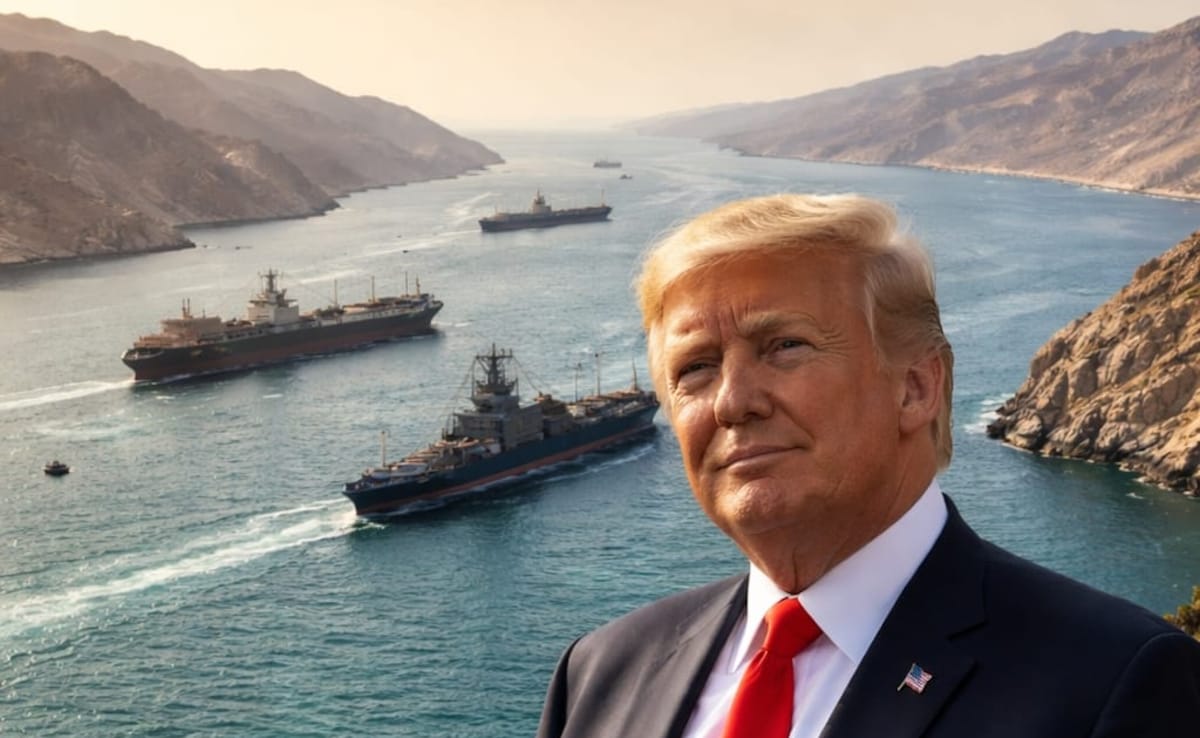
Consider the life of a tanker captain sitting in the middle of the Strait of Hormuz. Under the proposed "total blockade" strategy, this ship becomes a pariah. It isn't just about the oil inside the hull; it’s about the digital tether that connects that ship to the global economy. To the rest of the world, that ship has effectively vanished.
When a superpower decides to "eliminate" a nation’s economic footprint, it doesn't always start with a kinetic strike or a missile launch. It starts with a line of code. By cutting off access to the SWIFT banking system and threatening any third-party country that dares to buy a single barrel of crude, the blockade creates a vacuum.
Iran’s response is predictable: defiance. They call the threats empty. They point to their "resistance economy," a term used to describe a nation learning to live on its own internal organs. But a body can only consume itself for so long. The rhetoric of "pure propaganda" is a shield held up by leaders who don't want their people to see the cracks in the foundation.
The Mathematics of Despair
To understand the stakes, we have to look at the sheer scale of the intended isolation. Before the most recent waves of sanctions, Iran was exporting millions of barrels of oil a day. Under a true, enforced blockade, that number is pushed toward zero.
$X = \text{Revenue} - (\text{Sanction Costs} + \text{Black Market Discounts})$
In this equation, the result for the Iranian treasury is rapidly approaching a negative value. To get oil to market now, Tehran must rely on "dark fleets"—tankers that turn off their transponders, change their names mid-voyage, and transfer oil from ship to ship in the dead of night. It is a desperate, expensive, and dangerous dance.
The "elimination" warning isn't just about oil, though. It’s about the total removal of Iran from the 21st-century's interconnected web. This includes access to medical technology, aviation parts, and the specialized chemicals required for basic manufacturing. When a government says this is propaganda, they are gambling that the shadow economy can bridge the gap.
It can’t. Not forever.
The Human Cost of High-Stakes Poker
Step back from the map of the Middle East and look at the pharmacy shelves in Isfahan. Technically, humanitarian goods like medicine are exempt from blockades. In reality, the fear of American retaliation is so high that international banks refuse to process any transaction involving an Iranian entity.
A mother looking for specialized insulin for her child doesn't care about the geopolitical nuances of "strategic containment." She only knows that the box is empty. The blockade is felt in the heart before it is felt in the halls of power.
This is the invisible reality of the "elimination" strategy. It targets the leadership by squeezing the base. The theory is that a population under enough pressure will eventually demand change. History, however, suggests a different outcome. Often, pressure doesn't lead to a diamond; it leads to a powder keg.
The tension in the region is now at a fever pitch. On one side, you have an administration that believes the previous "Maximum Pressure" campaign was an unfinished masterpiece, a project that was inches away from a total victory. On the other, you have a regime that has spent forty years learning how to hide, how to hustle, and how to survive in the dark.
The Propaganda of Strength
Is it "pure propaganda" to say the Iranian economy is on the brink? No. But it is also a simplification to say that a blockade can simply delete a nation from the earth. Iran is a civilization of eighty million people with a history that spans millennia. They have navigated collapses before.
The danger of the current language—this talk of "elimination"—is that it leaves no room for the quiet exit. When you tell a cornered animal that its total removal is the goal, the animal stops looking for a way out and starts looking for a way to bite.
The blockade is a blunt instrument in a world that requires a scalpel. By shutting down the legal avenues of trade, the West inadvertently strengthens the most radical elements within Iran—the smugglers, the hardline paramilitary groups, and the black-market moguls who thrive when the lights go out. These are the people who own the tunnels when the bridges are blown up.
A Silence Over the Water
If you were to stand on the coast of the UAE today and look across the water toward Iran, you wouldn't see the smoke of a battle. You would see a calm, blue horizon. But that silence is deceptive.
Beneath the surface, the gears of the global financial system are grinding against one another. Every time a new sanction is announced, another wire is clipped. Every time a "warning" is issued from a podium in D.C., a businessman in Dubai cancels a contract with a partner in Tehran.
The blockade is a ghost war. It is fought in ledgers and through satellite imagery that tracks the heat signatures of "ghost" tankers. It is a war where the casualties aren't always seen on the evening news, but they are found in the empty bank accounts of the middle class and the rising price of bread.
We are entering a phase where the rhetoric has outpaced the reality. The "elimination" warning is a psychological weapon designed to trigger a collapse before the physical blockade even finishes its work. It is a test of will. It is a bet that the Iranian people will break before the Iranian government can find a new way to bypass the net.
Reza, the man in the grocery store, finally puts the milk in his basket. He pays with a stack of bills that feels heavier every month but buys less. He walks out into the sun, squinting against the glare. He doesn't know about the "elimination" warnings or the "propaganda" retorts. He only knows that the walls are moving in, and he is running out of room to turn around.
The world watches the headlines, waiting for a spark, while the real story is the sound of a door being locked from the outside.