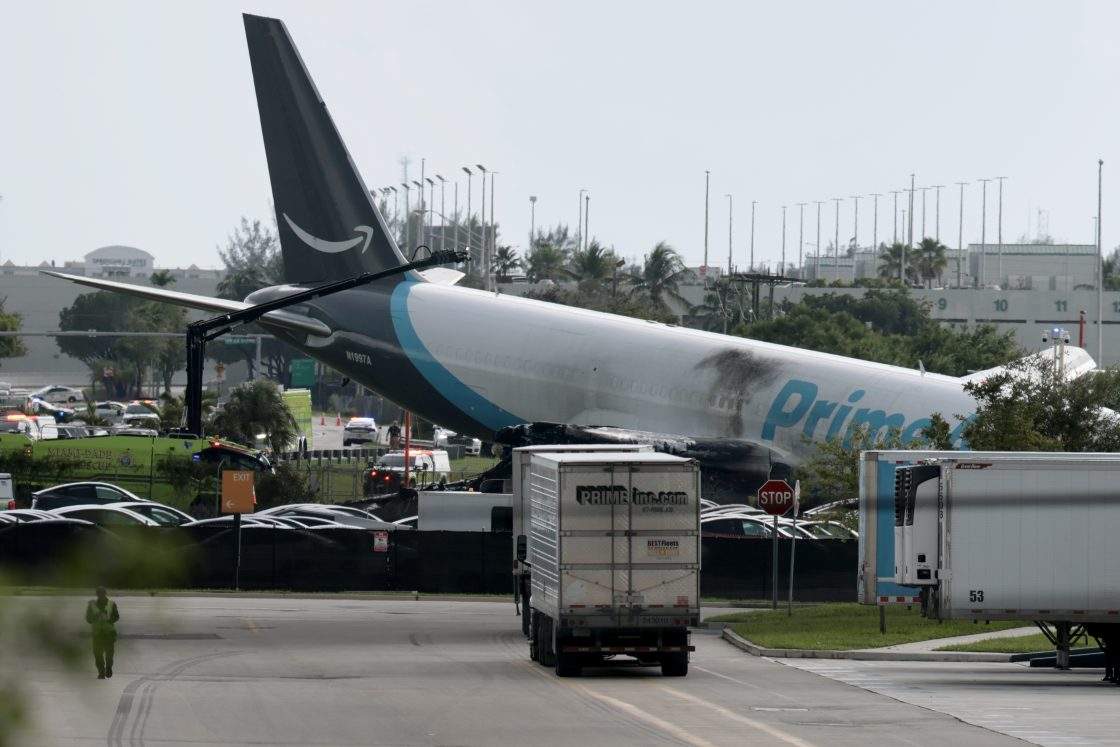
The sky over Miami was dark, humid, and heavy with the promise of a volatile southern storm.
To the passengers settling into their seats, the cabin was a familiar sanctuary of dim reading lights, the hum of the auxiliary power unit, and the quiet rustle of carry-on bags being stowed. Outside, the runway stretched out like a wet ribbon under a smear of sodium-vapor lights. Everything looked routine. Everything felt safe. In similar news, we also covered: Why Buying More Fighter Jets is Actually the Worst Defense Strategy Taiwan Could Choose.
We place an extraordinary amount of faith in the invisible architecture of aviation. We board giant tubes of aluminum, surrender our keys, our schedules, and our lives to two strangers behind a locked flight deck door, and trust that thousands of invisible systems—weather radar, air traffic control, cross-referenced instrument landings, and safety bulletins—are whispering in unison to keep us aloft.
That system broke down. The New York Times has analyzed this critical subject in great detail.
Not in a sudden, cinematic explosion of sparks and fire, but in the quiet, insidious accumulation of unshared data. According to the federal investigation reports, when the pilots of that ill-fated Miami flight prepared for takeoff, they were steering blind to a critical, shifting force of nature: the tailwinds pushing against them from behind. They were never warned.
Consider what happens next: a plane does not simply fly; it negotiates with the atmosphere.
To understand why that missing warning matters, imagine standing on the edge of a frozen pond, blindfolded, while someone gently pushes you forward from behind. You adjust your stride for a normal walk, but the unseen shove accelerates your momentum. Suddenly, your center of gravity shifts. You need more distance to stop, a different angle to turn, and an entirely different calculation of friction.
Now scale that up to a commercial jetliner hurtling down a wet runway at over a hundred and fifty knots.
In aviation, the margins are razor-thin. Weight, temperature, runway length, and wind vectors form a delicate, interlocking equation. A headwind helps a plane lift off sooner by increasing airflow over the wings at a lower ground speed. A tailwind does the exact opposite. It requires more runway to achieve the same aerodynamic lift, extending the ground roll and shrinking the safety buffer at the end of the pavement.
When the report revealed that the pilots were not warned of tailwinds, it wasn't just pointing out a bureaucratic oversight or a missing line item on a dispatch sheet. It was exposing a fracture in the shield.
(The following scenario is a hypothetical reconstruction based on standard cockpit resource management and accident investigation findings to illustrate the human element.)
Picture the scene inside the cockpit seconds before rolling down the tarmac. The captain's hands rest lightly on the yoke. The first officer scans the flight management computer, confirming V-speeds—those critical numbers that dictate when the aircraft must rotate and lift its nose. The instruments are green. The checklist is complete.
What they cannot see on their primary display is the subtle, shifting breath of the atmosphere rolling in from the rear. Air traffic control possesses the macro view, but local micro-weather phenomena—gusts sweeping across adjacent runways or shifting pressure cells—often require active, verbal relay. In the split seconds of pre-takeoff clearance, communication is a relay race. If the baton is dropped, the runner keeps sprinting anyway, unaware that the track has suddenly turned to ice.
Why does this happen? Why, in an era of hyper-connected satellite data and automated flight decks, do critical pieces of information slip through the cracks?
The answer lies in the overwhelming complexity of modern operations. We have engineered systems so vast and interconnected that humans are frequently reduced to managing the seams between them. The dispatcher assumes the pilot sees the automated terminal information service broadcast. The tower assumes the ground crew updated the wind shear advisory. The automation assumes the human is verifying every secondary data point against real-time physical sensations.
Every individual link in the safety chain believes the next link is holding the weight.
When a plane crashes, our collective instinct is to look for a villain. We want a pilot to have fallen asleep, a mechanic to have skipped a bolt, or a regulator to have ignored a glaring warning sign. Human tragedy craves a simple narrative arc with a clear moral.
Reality is rarely so accommodating.
Accidents of this magnitude are almost always archaeological digs through layers of small, seemingly insignificant human errors and systemic oversights. A missed radio transmission here. A delayed weather update there. A fatigue-induced blind spot after a long shift. Each individual factor is like a single drop of water; harmless on its own, but capable of carving a canyon given enough time and the right topography.
The omission of the tailwind warning is a stark reminder of our vulnerability. It strips away the illusion of absolute control.
We want to believe that science and engineering have conquered the sky. We buy tickets with the quiet confidence that algorithms have eliminated human error. Yet, at the core of every flight, there are still two human beings interpreting flickering screens, listening to crackling radio static, and making split-second decisions under pressure.
When the environment changes beneath them without warning, they are forced to react to a reality they were never prepared to encounter.
The investigation into the Miami crash will yield recommendations, policy updates, and perhaps new protocols for how wind data is transmitted during critical phases of flight. Procedures will be rewritten in the cold, clinical language of aviation safety boards. Checklists will get longer. Software patches will be deployed.
Yet, the deeper lesson extends far beyond the tarmac in Miami.
It touches every system we build, every organization we manage, and every life we navigate. We rely on invisible currents—economic winds, technological shifts, cultural pressures—that push against us from behind. Most of the time, we adjust without realizing it. We lean into the gale or dig in our heels.
But every so often, the wind shifts, the warning never comes, and we find ourselves rushing toward the edge of the runway, searching the horizon for a sign that was never sent.
The lights at the end of the runway blur into a single streak. The weight of the machine presses back into the seat. And in the quiet silence between heartbeats, the only thing that matters is how quickly human instinct can bridge the gap between what we expected and what is actually there.



