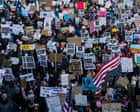
The coffee cools in the paper cup. Outside the diner window, the autumn air carries that sharp, metallic tang of change, the kind that usually precedes a march, a petition, or a Friday night gathering of people convinced they can bend the arc of history just a fraction of an inch closer to justice.
Maya sits across from me, turning her ring over and over on her finger. She is twenty-four, organized three neighborhood rent strikes last spring, and hasn't slept a full eight hours since the federal records dropped.
Not because she was surprised. That is the tragedy of it. She wasn't surprised.
"We knew," she says, her voice flat, devoid of the righteous fire she usually brings to a bullhorn. "We always knew someone was watching. You don't organize against a deportation facility or a multinational pipeline without feeling the hairs on the back of your neck stand up. But seeing the spreadsheet? Seeing the line items of our lives cataloged by people who get paid to stay in the shadows? It’s different."
Files. Meticulous, bureaucratic files.
Released through public records requests, those documents laid bare a reality that official rhetoric constantly denies: a sweeping, systematic surveillance campaign waged by federal and local law enforcement against leftwing activists, racial justice organizers, and anti-ICE demonstrators.
Cold facts. Dry statistics. Redactions leaking black ink like dried blood across government letterhead.
Behind those redactions lie human lives.
Let us be clear about what security looks like when it turns inward. It does not look like dramatic car chases or cinematic wiretaps. It looks like an analyst in a fluorescent-lit office scrolling through public Instagram feeds at three in the morning. It looks like license plate readers logging the movements of a battered Honda Civic driving to a union hall. It looks like infiltration, informants whispering in church basements, and the slow, corrosive spread of paranoia through communities that rely entirely on trust to survive.
Consider what happens next in a society that watches its own heartbeat.
Trust fractures. When Maya organizes a meeting now, she doesn't just check the logistics of the PA system and the availability of vegan snacks. She looks at new faces with a quiet, exhausting calculation. Are they who they say they are? Or are they a badge on a payroll?
That is the true objective of mass surveillance. It is rarely about stopping an imminent catastrophe. Most surveillance of political dissent yields nothing because there is nothing to yield—only bake sales, sign-making parties, and heated debates over Robert's Rules of Order. The goal is deterrence through exhaustion. It is the chill that runs down the spine of a teenager thinking about holding a cardboard sign on a courthouse step.
History is rhythmic. It repeats its heaviest notes with terrifying regularity.
Decades ago, federal intelligence agencies turned their lens inward during the height of the civil rights movement and the Vietnam War protests. Operation Cointelpro didn't just monitor dissidents; it actively disrupted them, planting false stories, destroying marriages, and fomenting violence to discredit movements for social change. We like to tell ourselves that those were different times. We whisper comforting fictions about institutional evolution and constitutional guardrails.
Yet, the records tell a different story. They show that when the machinery of state power perceives a threat to the economic or political status quo, it reaches instinctively for the same old tools, updated with modern software, high-definition drones, and algorithmic data-mining.
The targets change names, but the playbook remains remarkably consistent. Yesterday it was anti-war students and Black liberation organizers. Today it is climate activists blocking oil terminals and youth coalitions demanding human rights for migrants at detention centers.
The mechanics of this surveillance apparatus deserve close examination. It operates through fusion centers—clearinghouses designed in the wake of September 11 to share intelligence between local police departments and federal agencies. Conceived ostensibly to stop transnational terrorism, these hubs suffered from severe mission creep. They found themselves with immense budgets, sophisticated tech, and very few actual terrorists to track in suburban districts.
So they looked elsewhere.
They looked at the local chapter of Democratic Socialists of America. They looked at mutual aid groups handing out warm coats to unhoused populations. They logged the social media posts of college students organizing campus walkouts against military contractors.
To a hammer, every problem looks like a nail. To an intelligence apparatus funded to hunt threats, every citizen exercising their First Amendment rights looks like an intelligence target.
Let us walk through a hypothetical scenario, grounded entirely in documented investigative findings.
Imagine a young woman named Elena. She joins a coalition protesting the expansion of a detention center in her state. She attends her first meeting, signs a digital petition, and shares a flyer on her personal social media account. To her, this is civic participation. This is democracy in action—messy, loud, and necessary.
To the software sweeping public networks for keywords like "ICE," "occupy," or "abolish," Elena is a data point. Her network connections are mapped. The algorithm links her to her roommate, who happened to attend a Black Lives Matter march three years prior. It links her roommate to an environmental activist who was arrested for trespassing at a pipeline site.
Suddenly, Elena is part of a "network of interest."
Her face is captured on a police body-worn camera during a peaceful demonstration outside a federal building. That footage is fed into facial recognition software, cross-referenced with driver's license databases, and stored in a municipal intelligence database. Even if no charges are filed, even if the protest disperses peacefully after three hours of chanting, Elena's presence is recorded, indexed, and preserved for future investigators to unearth.
She has done nothing illegal. She has merely practiced the exact rights enshrined in the foundational documents of the nation.
Yet she is now indexed in a government database alongside suspected criminals.
The emotional toll of this reality is difficult to overstate. It creates a low-grade, chronic hum of anxiety that drains the vitality out of grassroots organizing. Movements require energy, hope, and collective effervescence to sustain themselves. Surveillance acts as a wet blanket on that fire. It makes people cautious. It encourages self-censorship.
When people believe their texts are intercepted, their meetings recorded, and their associations weaponized against them, they stop speaking freely. And when people stop speaking freely, democracy does not die in darkness; it dies in a quiet, suffocating whisper of compliance.
Defenders of these surveillance operations often lean on a familiar refrain: If you have nothing to hide, you have nothing to fear.
It sounds pragmatic on the surface. It is seductive in its simplicity. But it fundamentally misunderstands both privacy and power.
Privacy is not about hiding wrongdoing. Privacy is the sanctuary where autonomy lives. It is the space where ideas can be tested, half-formed thoughts can be spoken aloud without immediate public judgment, and alliances can be forged outside the gaze of powerful institutions that might wish to crush them. Without privacy, dissent becomes impossible, because dissent always begins as an unpopular thought shared between trusted friends in a quiet room.
Furthermore, the "nothing to hide" argument assumes that the people defining what is suspicious are always benevolent, neutral arbiters. History provides ample evidence to reject that assumption. Power defines dissent as deviance. Those who benefit from existing economic and social arrangements have always labeled those who challenge them as dangerous radicals, agitators, or security risks.
If the state gets to decide who is worth watching, those in power will inevitably choose to watch the people trying to take their power away.
Maya looks back down at her coffee. The foam has collapsed into a flat, brown ring against the white porcelain.
"We aren't stopping," she says, almost to herself. There is a quiet defiance in it now, stripped of performance, reduced to its barest components. "What else are we going to do? Look away?"
She is right. The exposure of these campaigns is uncomfortable, invasive, and demoralizing, but it is also an invitation. It strips away the comforting illusion that we live in a transparent society where institutions play by their own rules. It forces us to confront the machinery of control operating just beneath the surface of daily life.
The files are out there. The spreadsheets are public. The names of agencies, the tracking codes, the internal memos detailing the surveillance of people asking for humane treatment of their neighbors—it is all on the record now.
What happens next depends entirely on whether we treat these revelations as a temporary scandal or as an urgent symptom of a deeper systemic rot that demands structural repair.
The coffee is cold. The street outside grows dark as the autumn sun dips below the skyline, casting long, stark shadows across the asphalt where the marchers walked, and where they will walk again tomorrow, under the watchful, unblinking eye of the state.