Government regulators and multi-billion-dollar dairy conglomerates continue to insist that infant formula is safer than ever, yet a widening gap between official safety protocols and raw toxicological data suggests otherwise. While the Food and Drug Administration (FDA) maintains that current levels of heavy metals and bacterial pathogens fall within "acceptable" limits, independent health advocates and recent lab analyses point to a systemic failure to account for chronic, low-level exposure. The reality is that the safety net isn't just frayed; it was designed for an era of manufacturing that no longer exists.
The Myth of Acceptable Risk
When a federal agency stamps a product as "safe," the average parent assumes that means the product contains zero harmful substances. In the world of industrial food production, safety is a statistical calculation of "tolerable intake." For infant formula, this calculation is fundamentally flawed because it often treats infants as smaller versions of adults rather than biologically distinct organisms with rapidly developing neurological systems.
The core of the current controversy lies in the presence of heavy metals—specifically lead, arsenic, and cadmium—found in the soil where the base ingredients for formula are grown. Unlike adult bodies, which have more developed barriers to prevent toxins from crossing into the brain, an infant’s physiology is essentially a sponge. What the government calls a "trace amount" can have an outsized impact on a child's cognitive trajectory.
Why the Testing Protocols Fail
The current inspection regime relies heavily on finished-product testing, which sounds logical but misses the point of how contamination happens. Manufacturers often test batches in isolation. If a specific batch of rice-based thickener or soy protein hits the legal limit, it might be blended with "cleaner" batches to bring the overall average down. This "dilution solution" is perfectly legal under current guidelines, but it doesn't change the fact that toxins are entering the supply chain at the source.
Furthermore, many of the safety standards currently in place are based on data that is decades old. We are using 20th-century benchmarks to regulate a 21st-century global supply chain that sources ingredients from regions with varying environmental protections.
The Bacterial Shadow
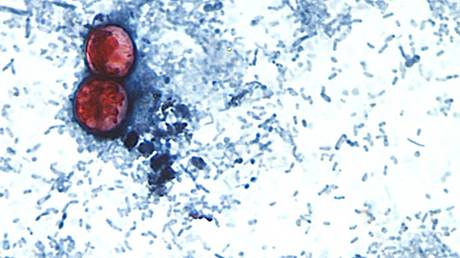
Beyond heavy metals, the recurring specter of Cronobacter sakazakii continues to haunt the industry. This is not a new problem, yet the 2022 supply chain crisis proved that even the largest players in the market are one oversight away from a national catastrophe.
The industry likes to frame these outbreaks as "isolated incidents" or the result of "unprecedented environmental factors." That is a convenient narrative that ignores the structural vulnerabilities in how formula is dried and packaged. Large-scale spray drying facilities are massive, complex environments where moisture control is a constant battle. Where there is moisture in a food plant, there is life. And in the case of Cronobacter, that life can be lethal to a newborn with a nascent immune system.
The Problem with Self-Policing
For years, the government has allowed a level of self-policing that would be unthinkable in the aviation or nuclear industries. Formula companies are often responsible for their own environmental monitoring, only reporting positives to the FDA under specific, sometimes narrow, conditions.
- Environmental Sampling: Companies test floors and equipment but aren't always required to halt production unless the pathogen is found on "food-contact surfaces."
- Voluntary Recalls: The power to pull a product resides primarily with the corporation, not the regulator, leading to delays that can be measured in sick children.
- Transparency Gaps: When a facility fails an inspection, the specific details are often buried in redacted FOIA documents that take months or years for the public to access.
This lack of real-time transparency means that by the time a warning reaches the kitchen counter, the "suspect" batch has already been consumed.
The Economic Pressure Cooker
To understand why safety standards haven't evolved, you have to look at the balance sheet. The infant formula market is an oligopoly. A handful of massive corporations control the vast majority of the global market share. This concentration of power creates a political gravity well that makes it incredibly difficult for regulators to impose stricter, more expensive mandates.
When a regulator proposes lower limits for lead or arsenic, the industry response is predictable: "This will drive up costs and cause shortages." In a post-2022 world, the threat of a shortage is the ultimate trump card. No politician wants to be responsible for empty shelves, so the status quo remains, and the "acceptable" limits stay exactly where the industry needs them to be to maintain their current margins.
The Cost of Ingredient Sourcing
The quest for cheaper ingredients often leads to sourcing from regions where soil contamination is high. For example, inorganic arsenic is naturally more prevalent in certain types of soil used for rice cultivation. If a company switched to more expensive, strictly monitored sources, their stock price might take a hit. In the eyes of a corporate board, a 0.05% increase in a contaminant is a statistical abstraction; a 5% drop in quarterly earnings is a crisis.
Data Contradictions and Parental Trust
Advocates are now pointing to internal FDA memos and independent third-party testing that show a disconnect between what the agency says in press releases and what it knows behind closed doors. While the official line is one of confidence, internal discussions often highlight the "known unknowns" of cumulative toxic exposure.
We are seeing a rise in "clean label" certifications and independent testing groups because the public no longer believes the government’s "Safe" sticker is a guarantee. These third-party groups often use more sensitive testing equipment than the regulators themselves, uncovering levels of contaminants that technically pass federal muster but fail the "would you give this to your own child" test.
The Impact of Processing
It isn't just the raw ingredients. The process of turning liquid milk or plant proteins into a stable, shelf-ready powder involves high heat and chemical stabilizers. Some research suggests that the ultra-processing involved can create byproducts—such as advanced glycation end products—that we are only beginning to understand in the context of infant health. The government doesn't regulate these because, quite frankly, they don't yet have the framework to measure them.
Rebuilding the Foundation
The solution isn't more "guidance" or "recommendations." It requires a fundamental shift in how we define food safety for the most vulnerable population.
- Zero-Tolerance for Pathogens: The distinction between "food-contact" and "non-food-contact" surfaces in a formula plant should be abolished. If Cronobacter is in the building, the building is a risk.
- Mandatory Raw Material Testing: Companies must be required to test every lot of raw ingredients for heavy metals before they enter the production line, rather than relying on finished-product averages.
- The Precautionary Principle: Instead of waiting for "conclusive proof" of harm—which can take decades of longitudinal studies—regulators should set limits based on the lowest detectable levels of known toxins.
If the technology exists to detect a part per billion of lead, that should be the benchmark, not a legacy number negotiated in a boardroom twenty years ago.
The current system relies on the hope that the "small" amounts of toxins don't add up. But hope is not a regulatory strategy. Parents are being told to trust a data set that is incomplete, managed by agencies that are underfunded, and influenced by corporations that are focused on the bottom line. Until the government prioritizes biological reality over industrial convenience, the warnings from health advocates will remain not just relevant, but essential.
Check the batch codes on every tin. Demand the full COA (Certificate of Analysis) from the manufacturer. If they won't provide it, find a company that will. In the current landscape, the burden of verification has been shifted from the state to the parent, and ignoring that shift is the greatest risk of all.