The map on the wall of a basement office in New Delhi does not look like the ones in school textbooks. It is not colored in neat pastel shades of blue and green. It is marked in red ink, spider-webbed with intersecting lines that track the silent migration of white powder across thousands of miles of open ocean and porous earth.
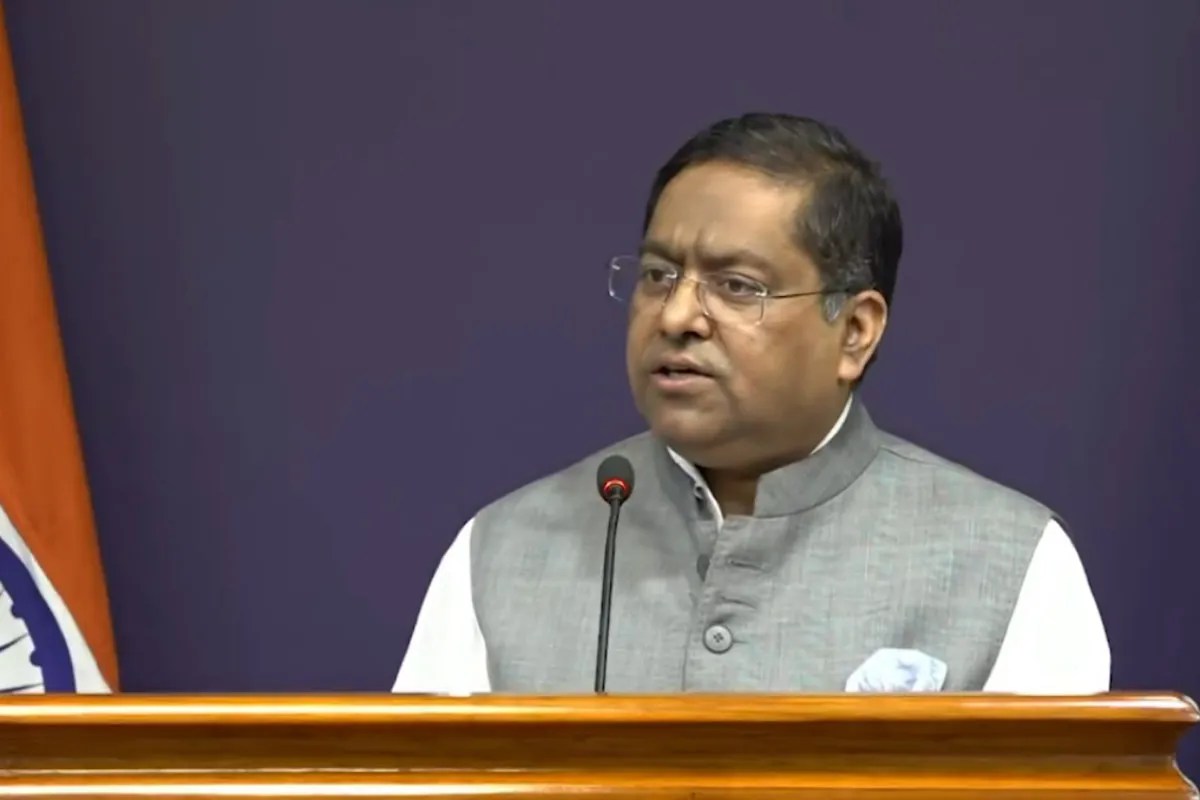
Randhir Jaiswal sat behind a microphone in a room that smelled faintly of dry paper and cold coffee. Outside, the capital was waking up to another heavy, smog-filtered dawn. Inside, the official spokesperson for India’s Ministry of External Affairs was addressing a phantom that haunts millions of homes from Mumbai to Ohio. Drug trafficking.
He was responding to a report from across the Pacific—a document compiled in Washington that attempted to measure the unmeasurable. It tried to quantify the weight of human misery in metric tons, the financial streams of cartels in billions of dollars, and the diplomatic friction between two massive democracies trying to plug a dyke with their bare fingers.
Most people read those reports and see numbers. They see dry statistics about seizures at ports or synthetic precursors manufactured in clandestine laboratories. But numbers are an anesthetic. They dull the senses so we do not have to look at what is actually happening in the dark.
To understand why two nations on opposite sides of the planet are suddenly whispering about an unbreakable alliance against the trade, you have to walk away from the podium in New Delhi and look at a kitchen table two continents away.
Picture a mother in Ohio sitting under a flickering fluorescent bulb at three in the morning. Her phone rests face down on the laminate surface like a loaded weapon. Her son is twenty-four. Once, he played varsity soccer; now, his life is measured by the frantic ticks of a clock and the suffocating terror of whether he will breathe through the night. Synthetic opioids—fentanyl manufactured with precursors that started their journey in chemical plants thousands of miles away—have turned ordinary bedrooms into emergency wards.
Now shift the lens. Picture a small-business owner in a bustling suburb of western India, a man whose legitimate pharmaceutical warehouse has just been flagged by international monitors. He did not set out to be a villain. He bought chemicals for painkillers, for cough syrups, for legitimate global health needs. But somewhere along the supply chain, a ledger was altered. A shipping container was mislabeled. A middleman with cold eyes and deep pockets made an offer that was too easy to accept when inflation was eating the margins of an honest living. The chemicals leaked out of the lawful stream and into the underground kitchens where death is brewed into neat, white crystals.
This is the bridge between New Delhi and Washington. It is not built of treaties or diplomatic handshakes alone. It is built of shared vulnerability.
For decades, the narrative of the global drug trade was geographically lazy. The West blamed the East for producing; the East blamed the West for consuming. It was a comfortable game of ping-pong played across ocean trenches. It allowed politicians to posture and police forces to point fingers while the cartels laughed all the way to offshore bank accounts.
That game is over.
When Randhir Jaiswal spoke to the press about the joint counter-narcotics partnership, his tone was measured, diplomatic, precise. But beneath the bureaucratic cadence lay an urgent admission: the old borders do not matter anymore. Digital supply chains move faster than customs inspectors. Cryptocurrency transactions clear before a wiretap can even be authorized. A chemist in a remote industrial park can sell a formula to a broker in a Telegram channel who pays in digital coins that vanish into a decentralized ledger.
When crime goes digital, diplomacy has to get personal.
Consider what actually happens when nations decide to cooperate on this scale. It is unglamorous work. It is not like the movies where agents in sharp suits kick down doors in slow motion. It is thousands of hours of forensic accountants staring at spreadsheets at midnight. It is port authorities in Gujarat coordinating shipping manifests with federal agents in Miami. It is rare earth minerals experts, chemical engineers, and cybercrime units sharing encrypted databases because a single missing decimal point in a chemical formula can mean the difference between a legitimate antibiotic and a lethal synthetic drug.
The United States report had pointed fingers, as these reports often do, measuring gaps in regulation and enforcement. It is the nature of great powers to grade each other's homework. But Jaiswal’s response was not defensive. It was a pivot toward a shared mirror. He acknowledged the American concerns not with a shrug, but with an invitation: If the water is rising in your house, do not pretend it is not leaking through our shared floor.
There is a profound psychological weight to being a transit or source nation in the modern global economy. India is a pharmaceutical giant—the pharmacy of the developing world, exporting life-saving medicines to the most vulnerable populations on Earth. The vast majority of its chemical industry is honest, vital, and miraculous. But that very industrial strength makes it a prime target for exploitation. If you build the largest chemical manufacturing capacity in the world, you also build the largest haystack for someone to hide a needle in.
Criminal syndicates know this. They exploit the sheer volume of global trade. They rely on the fact that human eyes cannot inspect every single crate, barrel, and vial that leaves a port. They count on our fatigue.
And that is why the partnership matters. Not because it will magically eradicate the trade tomorrow—anyone who promises a drug-free world is either a fool or a politician running for reelection—but because it changes the architecture of pursuit.
When intelligence flows freely between Washington and New Delhi, the timeline of the cartels shrinks. A shell company registered in a tax haven can be unmasked in hours instead of months. A suspicious cargo manifest flagged by an automated system in an American port can trigger an inspection at an Indian manufacturing facility before the ship even clears the harbor.
We are living through a quiet restructuring of international security. The traditional threats—armies massing at borders, missiles in silos—are increasingly accompanied by asymmetric wars fought with chemicals, algorithms, and supply chains.
As the press conference concluded, the cameras clicked and the reporters packed their gear, moving on to the next daily scandal or political squabble. The red lines on the map in the basement office remained unchanged. But somewhere out there, in the vast, humming machinery of global trade, a database was updated. A message was decrypted. Two investigators, ten thousand miles apart, drank the last dregs of their cold coffee and kept working.
The night outside deepens. The kitchen light in Ohio stays on. The ledger in Gujarat balances another line of code. And somewhere in the dark, the invisible border holds, just barely, against the tide.