Antibiotics are a blunt instrument. When you swallow a pill for a stubborn infection, it does not discriminate. It acts like a carpet bomb dropped on a delicate city, wiping out the pathogenic invaders while simultaneously flattening the beneficial microbial communities that keep your digestion humming and your immune system vigilant. We have spent nearly a century treating microscopic warfare with brute force. We spray poison and hope the collateral damage remains manageable.
Bacteria are adaptable. They outsmart our chemistry with chilling speed, mutating faster than our pharmaceutical pipelines can churn out new formulas. We are losing ground in a war waged on a scale too small for the naked eye to witness.
Then came a quiet breakthrough at Stanford University. Researchers decided to stop fighting evolution and start using its own tools against it.
Consider a hypothetical patient named Elena. She sits in a sterile hospital room, clutching a glass of water, waiting for lab results that determine whether a routine urinary tract infection has mutated into something resistant to every drug in the cabinet. She does not care about the nomenclature of molecular biology. She cares about a fever that refuses to break. She cares about the clock ticking down.
For decades, scientists viewed viruses as strictly the enemy. Phages—viruses that hunt bacteria—existed in textbooks as ruthless predators. But the team at Stanford looked at these natural predators and saw an engineering blueprint. Using artificial intelligence, they did something unprecedented. They built a custom virus from the ground up, designed with surgical precision to target and destroy E. coli.
Not all E. coli is villainous. Strains of the bacteria quietly reside in the human gut, acting as harmless, even helpful, roommates. But pathogenic strains can trigger severe illness, turning a biological coexistence into a hostile takeover. Traditional treatments attack both the good and the bad. The newly engineered synthetic virus behaves differently. It possesses a digital origin, born from algorithms trained to understand the microscopic geometry of bacterial membranes and protein locks.
Think of it as a master key. For years, scientists tried to grind down existing keys to fit new locks, often failing because the locks kept changing. The artificial intelligence looked at the lock, calculated its atomic coordinates, and printed a brand-new key out of code and protein.
The process feels less like medicine and more like architecture.
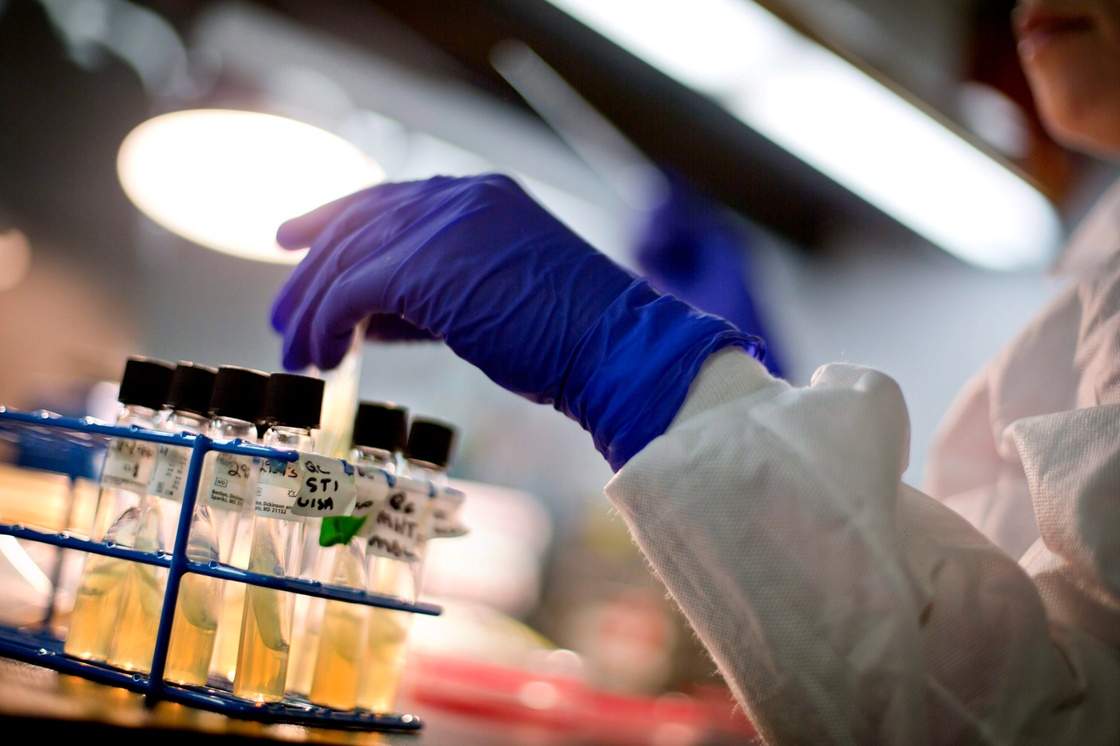
To understand the weight of this achievement, you have to step back into the laboratory smell of cold steel, bleach, and warm agar. Walk down a research corridor at two in the morning. The hum of ultra-low temperature freezers provides a steady, low-frequency drone. Inside those boxes, strains of bacteria sit suspended in time, waiting for a chance to swap genes and build resistance to our best defenses. The researchers working there are acutely aware of the existential math. Every time we deploy a conventional antibiotic, we hand the surviving bacteria a survival guide for the next round.
Machine learning changes the calculus. Instead of screening millions of natural compounds through endless trial and error, the algorithm models thousands of variations in silicon. It predicts how a synthetic viral shell will fold, how it will bind to the surface of a rogue cell, and how it will inject its payload without triggering an inflammatory panic in the human host.
When the Stanford team tested their creation, it did not stumble. It locked onto the target strain with chilling efficiency. It bypassed friendly cells. It delivered its payload, dismantled the invader from the inside, and then vanished.
There is a profound humility required when studying biology. For all our technological prowess, we are dealing with systems that have spent billions of years optimizing their own survival. When we try to outsmart them with blunt force, we usually lose. But when we learn to speak their language—translating genetic sequences into computable parameters—the dynamic shifts.
We are entering an era where medicine is written in lines of code before it is brewed in a vat.
Yet, this triumph carries an undertone of vertigo. Building a targeted virus to take down a specific bacterium opens a door we cannot easily close. If an algorithm can design a microscopic hunter to neutralize a pathogen, what happens when those same tools are pointed elsewhere? The boundary between healing and harm grows razor-thin when your medium is programmable life.
Elena does not know any of this as she finally receives her discharge papers. Her infection is gone, cleared by a regimen that left her microbiome largely intact. She walks out into the afternoon sunlight, feeling the warmth on her face, completely unaware of the invisible architecture that saved her life—an algorithm humming in a server room thousands of miles away, designing a ghost to hunt a shadow.