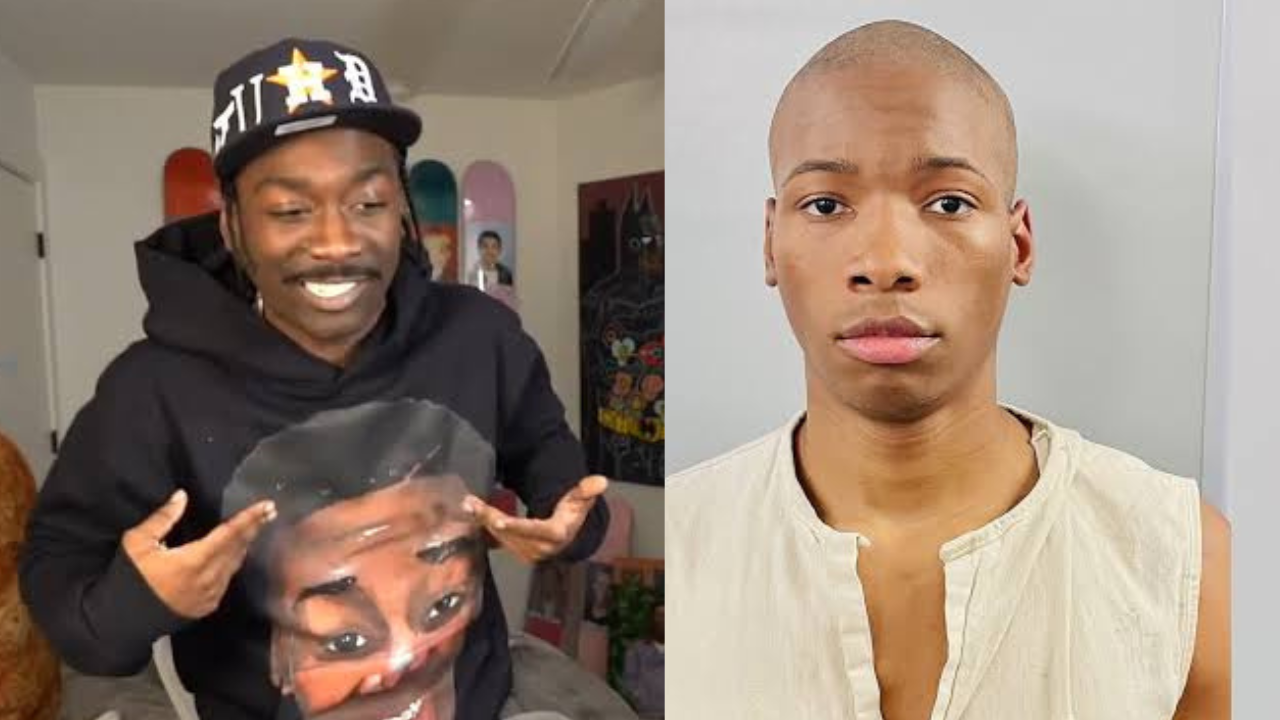
When a high school argument ends in a fatal stabbing, the tragedy usually stays confined to the local community and the families devastated by the loss. But the murder conviction of 19-year-old Karmelo Anthony in Collin County, Texas, has broken completely out of the local news cycle, transforming into a massive, racially charged internet firestorm.
At the center of the recent online explosion is popular Twitch streamer and content creator BruceDropEmOff. Just days after a jury rejected Anthony's self-defense claim and sentenced him to 35 years in prison for the murder of 17-year-old Austin Metcalf, Bruce dropped a public message of support that lit social media on fire. In similar news, take a look at: The Voices Pakistan Tried to Leave Behind.
"I stand with Karmelo Anthony," Bruce wrote in a post shared across platforms like X. "Every picture you see of this young black man his head is up don't let them break you bro. #FREEHIM."
The backlash was instant. For many, a high-profile influencer using his massive platform to demand the release of a convicted murderer felt like a slap in the face to a grieving family. For others, Bruce's post tapped into deep-seated frustrations regarding the Texas justice system, race, and the line between self-defense and intent. It's a messy, polarizing situation that shows exactly what happens when online fan culture collides with real-world criminal justice. BBC News has provided coverage on this critical topic in extensive detail.
The Bleacher Confrontation That Turned Deadly
To understand why people are arguing online, you have to look at what actually happened on April 2, 2025. It was a rainy afternoon at Kuykendall Stadium in Frisco, Texas. A high school track meet was underway, bringing together students from various area schools. Neither Anthony nor Metcalf actually attended the host school, and the two did not know each other.
According to court testimony and police affidavits, the confrontation started over something incredibly trivial: seating arrangements under a stadium tent. Austin Metcalf, along with his twin brother Hunter and several other Memorial High School students, approached Anthony and asked him to leave the seating area.
The interaction escalated fast. Witness statements show that Anthony grabbed his bag, reached inside, and told Metcalf, "Touch me and see what happens."
Metcalf reportedly pushed or touched Anthony after the warning. Anthony then pulled a knife from his bag and stabbed Metcalf once directly in the chest before fleeing the stadium. Metcalf later died at a local hospital from the single wound to his heart.
When police arrested Anthony, the teenager reportedly asked officers if Metcalf was going to be okay and immediately asked if the incident could be considered self-defense.
Inside the Collin County Courtroom
The trial began in McKinney, Texas, and wrapped up with a swift and decisive conclusion. The defense team tried hard to push two distinct narratives. First, they argued Anthony acted strictly in self-defense, claiming he felt outnumbered and threatened by the group of students confronting him. Second, during the punishment phase, they asked the jury to consider the legal concept of "sudden passion"—meaning Anthony acted under the immediate influence of fear, shock, or anger caused by provocation, which would have capped his maximum sentence at 20 years.
The prosecution painted a completely different picture. They called 21 witnesses to the stand, establishing that Anthony escalated a verbal dispute by reaching for a weapon before any physical contact occurred. They argued that a single push did not justify lethal force with a knife.
The jury didn't take long to decide. They completely rejected the self-defense claim, found Anthony guilty of first-degree murder, and shot down the "sudden passion" argument.
Because Anthony was 17 at the time of the killing, he was tried as an adult under Texas' concurrent jurisdiction laws, exposing him to a sentence ranging from 5 to 99 years, or life. The jury landed on 35 years. Under Texas law, he must serve at least half of that time—17.5 years—before he even becomes eligible to apply for parole.
The Race Variable and the Internet Reaction
The online debate surrounding BruceDropEmOff’s "#FREEHIM" post isn't just about the legal definitions of self-defense. It's heavily driven by race and the optics of the case. Anthony is Black; Metcalf was white.
Almost immediately after the 2025 stabbing, social media channels began treating the case like a ideological battleground. When Anthony’s initial $1 million bond was lowered to $250,000, allowing him to stay on house arrest with an ankle monitor until his trial, local officials faced immense backlash and threats. Fake GoFundMe pages popped up, claiming to raise money for his defense, forcing Anthony's parents to hold a press conference to clear up the misinformation.
Following the verdict, protesters gathered outside the Collin County Courthouse, furious over the 35-year sentence given to a young man who had a 3.7 GPA, no prior criminal record, and had earned enough credits to graduate high school. On the internet, commenters aligned with BruceDropEmOff's stance argue that young Black defendants face harsher treatment and more aggressive prosecution in suburban Texas courts. They look at Anthony's stoic demeanor in court photos—the "head held high" look Bruce mentioned—as a sign of resilience against a system they believe is inherently biased.
Conversely, critics of the streamer point directly to the facts established in court. To them, defending Anthony means ignoring the reality that a 17-year-old boy was killed over bleacher seats. Austin Metcalf’s father, Jeff Metcalf, has repeatedly pushed back against the online noise, stating clearly that the tragedy was "not a race thing" and asking outsiders to stop using his son’s death for political points. During the emotional victim impact statements, Metcalf’s mother looked directly at Anthony and noted that while he received 35 years, she was sentenced to a lifetime without her son.
What Happens Next for the Case
The legal battle isn't entirely over. Within 24 hours of the sentencing, Anthony’s legal team filed an official notice of appeal in Collin County court.
Legal experts point out that the appeal won't be a simple re-hash of whether Anthony stabbed Metcalf. Instead, it will likely focus on procedural issues during the trial itself. A primary target for the defense will be the jury selection process, specifically looking at whether the prosecution improperly used peremptory strikes to eliminate Black jurors from the pool, which would violate Batson v. Kentucky.
For now, Anthony remains in custody waiting for transfer to the Texas Department of Corrections to begin serving his time. Meanwhile, the digital fallout serves as a stark reminder of how disconnected online commentary can be from the grim reality of a courtroom. Influencers like BruceDropEmOff can trigger massive hashtags and intense debates with a single post, but those internet campaigns don't change the evidence reviewed by twelve jurors, nor do they lessen the tragedy for the families involved.